
When I quit my job in 2008, I feverishly researched what I would need to pack, plan, and budget for a round the world trip. Stressed with the idea of trying to cover all my bases before embarking on a life change, I struggled to find all of the information I needed.
When I kept traveling, and my “trip” accidentally became a career change, I decided to make all of the notes and pages I found available for free here. My goal: create a huge travel resources page, perfect for those seeking make a change but unsure of where to start.
All the Travel Resources You’ll Need…
This long resources page is available on Legal Nomads freely, but it is supported by Amazon affiliate links for the products I use on my travels. You can also support this site by joining my Patreon, where I share resources for dealing with or being a support for someone who has chronic pain.
Or, you can purchase one of the hand-drawn typographic maps of food that I designed. They’re available in posters, tote bags, and t-shirts. Currently in the shop: Vietnam, Italy, Thailand, Portugal, Japan, and Mexico.
-Jodi
Pre-trip Travel Planning

Research Before You Go!
While it’s a warning sign to plan your entire itinerary — it takes away some of the great last-minute changes that can make for awesome trips – it’s essential to do some research before you set out for a long-term trip.
Here are some starting points to focus your energy:
Research the Weather. Do not discount weather in your planning. While wet and dry seasons are less delineated these days, it still makes good travel sense to get a rough idea of when to go. The best times are usually shoulder seasons, on the cusp of the high or low periods. Prices are lower and while you might get some bad weather you’ll also avoid a good amount of the crowds. There are blog posts about weather and travel for quite a few countries if you search online. For example, see this useful post from Vietnam Coracle about when to visit Vietnam.
- Resources: The Traveler’s Handbook, Travel Independent’s country guides, Shoulder Seasons Around the World
Learning about The Culture: Part of what makes the world interesting is to explore a country through its cultures and customs. This custom deep dive can refer to table manners, tipping styles, or simple the ways that people say hello and goodbye.
The following are great links to start with, each talking about etiquette (don’t put your chopsticks face-down in a bowl of rice, for example, in much of Asia) as well as business faux pas:
- 65 Examples Of Taboos (Cultural, Religious & Food) from around the world
- Gestures from around the world.
- Business etiquette around the world.
- International tipping etiquette.
- Country guides with etiquette and customs from Commisceo global consultancy.
- For women, Journeywoman’s “What should I wear there” guide compiles advice from other female travelers, sorted by destination.
- Hand gestures you want to avoid (or get right!) as you travel, with slideshow.
Learn and Get Inspired with Some Great Travel Reads
In addition to the links on etiquette above, here are some deep-dives into culture in the form of my favorite travel reads:
- The Devil’s Picnic: Travels Through the Underworld of Food and Drink by Taras Grescoe. Travel with Grescoe as he criss-crosses the globe, researching food and drink that are forbidden along the way. From absinthe to coca leaves to raw-milk cheese, you’ll get a history of each place and the food he’s covering. A great way to inspire yourself to travel!
- Taste of Persia Cookbook by Naomi Duguid. I’ve known Naomi for years and she has won many well-deserved awards for her writing and cookbooks. Her newest is about the Persian world, and covers Armenia, Azerbaijan, Georgia, Iran, and Kurdistan. Plus, LOOK at that cover.

- Cod: A Biography of the Fish That Changed the World by Mark Kurlansky. One of the microhistories that launched the gendre, Cod covers religion, the era of discovery, and foods that keep us alive when resources are lacking, all in one informative read. For anyone visiting Canada, Portugal, Brazil, or Spain — this is a must-read, since it goes into the old and new world journeys that helped form the world we live in today.
- Appetites, by Anthony Bourdain. Bourdain’s new book is sharp and opinionated, much like his shows, and full of recipes from around the world. A great way to inspire prior to taking a long trip.
- In Arabian Nights: A Caravan of Moroccan Dreams by Tahir Shah. Not to be confused with Arabian Nights the movie, this great book follows Shah’s move to Dar Khalifa in Morocco. Beautifully written, great emphasis on storytelling, and I send it to anyone heading to North Africa since it’s such an insightful perspective on that region.
- Swallowing Clouds: A Playful Journey Through Chinese Culture, Language, and Cuisine by A. Zee. For those of you (like me) who love food, this is a wonderful book that dives into both the backbone of Chinese radicals and language, as well as the foods that helped shape them both. If you’re heading to China, it’s highly recommended.
- Seven Ages of Paris by Alastair Horne. A long, beautifully-written love letter to Paris, covering its tumultuous history of the city with narrative, biographies, and photos.
- Catfish and Mandala: A Two-Wheeled Voyage Through the Landscape and Memory of Vietnam by Andrew X. Pham. A great story, but also an interesting perspective on post-war Vietnam and what it might feel like to return there if your family left during the war. Haunting family saga.
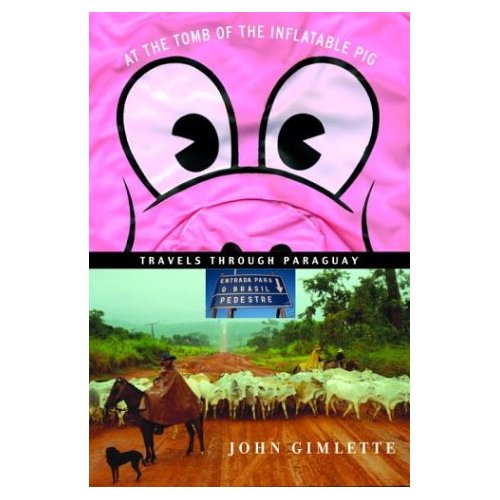
- At the Tomb of the Inflatable Pig: Travels Through Paraguay by John Gimlette. A must-read for anyone travelling through Paraguay, Uruguay, or Argentina, as this book provides an invaluable perspective of the region and the Tripartite war. Gimlette mixes despots with cultural oddities and personal stories with great humor.

- The Geography of Bliss: One Grump’s Search for the Happiest Places in the World by Eric Weiner. This book was a donation from friends and I could not put it down! Chapters are by country, and the book focuses on Weiner’s search for the origins of happiness, from Moldova (not so happy) to Iceland (happy) and the places in between. A self-described grump, Weiner is the perfect narrator for this kind of discovery and his years as an NPR correspondent have trained him to dig deep. Great read.
- A History of the World in 6 Glasses by Tom Standage. Another great way of learning about history: through drink! This book covers the landscape of humanity from the Stone Age all the way through to the 21st century through the lenses of beer, wine, spirits, coffee, tea, and cola. Fascinating book.
Visas for Travel: Not so Fun
Depending on your nationality, you will need visas in some countries, but might receive a visa waiver or visa on arrival in others. This aspect of travel isn’t the most fun but unfortunately it’s also unavoidable. Since many countries require a visa ahead of time, one that cannot be obtained when you enter the country, it’s best to read up ahead of time about each country and its requirements.
- Resources: For American Citizens, entry requirements are here; for Canadian Citizens, entry requirements are here.
- IATA’s global visa database is also a great resource for anyone – plug in the country you’re from, your resident country and where you are headed.
- Project Visa will help you find your visa requirements ahead of time.
- Also take a look at country reports for your destination. The Government of Canada’s landing page for international travel is here (and they’re on Twitter here) and the USA’s Department of State country warnings are here.
- General visa questions can be found at Do I Need a Visa For, which lets you select your country and the country you are heading to next.
- See the “Work and Travel” section of my Digital Nomad page for more about work/travel visas.
Medical and Travel Insurance
Travel and Medical insurance. There were several times on this trip where I got sick, and while some countries are not expensive to find good medical care, others break the budget. Medical insurance is something that you hopefully won’t need on your travels, but if you do get sick, you’ll be relieved to have a policy to protect you.Bootsnall.com has a handy comparison chart for several medical insurance plans popular with round-the-world travelers.
Note that during COVID-19 it is critical that you contact your insurance company to confirm that you are covered before departure. While travel is limited presently, it also needs to be protected by insurance before you leave – especially given the pandemic.
Nomadic Matt has tips for picking travel insurance, along with some suggestions. The Broke Backpacker also has a thorough breakdown for the best travel insurance for those of you backpacking around the world.
- Note for long-term travelers: there is a big difference between travel medical insurance and general travel insurance. If you are covered as you travel, in the event of a huge health disaster or accident, customarily you will be sent back to the place that you marked as your place of residence. If you are a long-term nomad this means that you might not have an actual residence, so your coverage needs to take that into account. As a Canadian, I have not been eligible for medicare for years, as I have not been a resident of Canada since the early 2000s when I moved to New York. Thus, if something goes really wrong and they send me back to Canada I won’t have coverage. I had to find a primary insurance policy that would cover me as I travel AND if I happen to be sent to Canada. I use Patriot’s Global Medical Policy (not an affiliate link) because their other policies are short term travel medical policies. Many friends use World Nomads as their short-term medical policy. I am not eligible because I do not have a primary policy that would cover me in Canada.
- Note for Canadian long-term travelers: In addition, I receive many emails from readers asking about suspension of medicare in Canada. Each province has its own rules for suspending medicare but not losing coverage, but for most provinces you lose coverage if you are not in Canada for a period of 183 days per year. Note that this is different from general tax residency as it is for the purposes of medicare only. For QUEBEC: readers have put their medicare on hold with RAMQ and taken out a Blue Cross policy to cover them during that period. Per the RAMQ site, you can put your medicare on hold once every 7 years for a maximum of 16 months. See the section on exceptions here. I have no experience with this as I am not covered any longer but I’m reporting back on reader experiences.
- For UK readers, please see Bridges and Balloons, who cover their travel insurance here.
Important Vaccinations
Yes, you need them. Not all of them, but some basics are important before you head to environments wholeheartedly different from the one your body is used to. Regardless of country, I’ve always made sure I had the following shots up to date:
- Hepatitis A
- Hepatitis B
- Meningitis
- Yellow Fever
- Tetanus booster
- Typhoid/Diphtheria
- MMR booster (measles, mumps and rubella)
- Polio. There are others such as cholera, rabies, and Japanese encephalitis that are more subjective based on budget and destination, and your doctor will be able to help ascertain how necessary they are.
For diseases borne my mosquitoes, like dengue, chikungunya, or zika, there are no widely used vaccines but they are being developed and some countries like Mexico and Singapore have been offering them. Please see my piece about dengue (which I contracted in Vietnam) for more. Malaria can be mitigated with prophylaxis, depending on where you are traveling. See the maps below for more.
During the COVID-19 era, a Covid vaccine is no longer a necessity for entry to many countries. It goes without saying but I’m saying it anyhow: since a chunk of the world does not have access to care like we do in the West, it is irresponsible to travel and not be aware of how you can transmit disease in the process. With spots that have limited access to medical care, during a pandemic if you have not been vaccinated. It is also unfair to go to a place with less medical care, the consequences of doing so can be deadly. If you are sick, please wear a mask at a minimum when you are around other people. We do not want to be the cause of further destruction in a place we are visiting.
Resources: The Adventure Doc’s vaccination page, CDC’s Malaria Hub (Country by Country Risk Assessment), CDC Traveler’s Heath recommendations, World Health Organization’s Country-specific Reports.
Finding Accommodation and Booking a Place to Stay
Ah, the accommodation question. Many a reader email has come about this, and I understand why. It was one of the many things that kept me up at night before I started my travels: what if I can’t find a place to stay? Of course, there are always places to stay, even if they are not what you initially planned. That’s the most important thing to remember. The worst case is often a matter of wasted money, which isn’t ideal – but if it gets you out of a scary or uncomfortable situation, it is simply one of the lessons learned during travel.
These days, there are quite a few options for searching for and booking accommodation. I’ve taken to using AirBnb more, especially in cities, as I like the quiet space. For more social trips, there are hostels and camping options. And of course, hotels and B&Bs still abound.
Searching for Accommodation
- I start with a Google Search to determine the area I want to stay in. I’ve found the biggest, most overwhelming of options is – what PART of the city do I want to stay? I’ll search for things like “best areas to stay [Insert City]” or “safe and central neighbourhoods [Insert Place]”. Because I’m food obsessed, I’ll also often search for the places with street food hubs, or nearby morning or nighttime food markets.
- Then I look at both accommodation sites, hotels, VRBO, Airbnb. Sometimes it’s not easy to decide what you’ll want to choose, a hotel or hostel, or an AirBnB. These days hostels are a lot more upmarket than they used to be, but there are times that quiet is more important. I’ll often compare the costs between Airbnbs or hotels/hostels and weigh that into my decision.
Tips for Choosing the Best Accommodation
- I don’t usually use guidebook recommendations, as I’ve found that highly-recommended spots start to slide in terms of quality after a few years. Instead, I’ll go to that area, and look around nearby. Often enterprising hotel owners will open spots right next to popular recommendations, to account for the overflow.
- Look at reviews on accommodation bulk sites like Booking.com and Hostelworld, as well as Agoda (especially for Asia). I’ll search the keyword for what matters during that trip – e.g. quiet or noisy (to see what others have said), or centrally located, etc.
- For AirBnb apartments, I’ve enjoyed every stay I’ve had and have kept in touch with some of the owners over the years, having bonded over a shared love of food or travel. Using the site has allowed me to just parachute into an area and feel far more like a local than I would otherwise. The hosts have been really happy to give food suggestions and given that the apartments are not in touristy areas, and it also allows me to see more of a city or parts of it that I might have missed. The rates in bigger cities are usually far below hotels, and I’ve found often similar in cost to private rooms in a hostel, with the privacy and comfort of an apartment. Even in times that I’ve rented a private room vs. my own place, I’ve found the hosts to be fun and gracious. When I search for a place, I’ll use the neighborhood parameters from my Google search, above, and start narrowing down based on reviews, location, and responsiveness.
Additional AirBnb thoughts: If a host isn’t willing to respond consistently to potential guests, I don’t really want to engage with them. If a host has cancelled listings close to their beginning date (these are noted in the property reviews), then I don’t think I’ll book. And finally, if a host has lots of great properties but just listed a new one and THAT place has no reviews, I’ll still take a chance based on their other confidence from travelers.
Accommodation Options to Stretch Your Travel Budget
Keeping budget low is, of course, a bit of a priority for most of us. Other than the usual — eating street food, cooking when you can — there are ways to minimize costs and get creative.
Some options:
- WWOOFing: working on farms as a means to supplement housing costs. Here’s a 2019 Thrillist piece about someone who ate for free around the world while WWOOFing.
- HelpX: trading accommodation for services in a wide variety of industries.
- WorkAway: Another site for trading lodging for services.
- Housesitting: several options exist for house-sitting gigs, and each site has pros/cons. For more info see Housesitting 101 from the Hecks, but here are the main ones: House Carers, Mind my House, Caretaker’s Gazette, Nomador, and Trusted Housesitters
Mental Mindset: Prepare for the Worst, and Hope for the Best!
Some additional tips for worst-case scenarios.
- PDF copies of your things to yourself. Before you leave, PDF yourself (and archive) copies of your passport, your visas obtained in advance and any other documents you might need to show and/or potentially lose on the road.
- Consider getting a Google Voice number so you can receive emails of voicemail transcripts or texts left for you while you were on your travels.
- Resources: Companies like Carbonite, or BackBlaze will backup your laptop or desktop to the cloud. I currently use Carbonite. Dropbox subscribers can also upgrade to 1TB of storage and backup their files there. There’s also Time Machine if you have a Mac, but two sets of backups is a safer bet, especially if you have many photos and files you want to protect.
- For your photos, SmugMug is another good option. I host all of my photos on SmugMug, who have very reasonable storage plans and a great interface for building photo albums. This affiliate link gets you 20% off a new SmugMug account. And if you want to see what their galleries look like, my photo albums are here.
Packing tips and Detailed Packing Lists for Travel

Choose your bag for travel.
There are so many backpacks, suitcases, and duffels on the market that it is no surprise that the “what bag to use?” question is one of the most frequent that I receive.
My advice: pick your bag based on your needs, and how well it fits.
- If you’re looking for a suitcase to check, think about a packing system like Eagle Creek: I use Eagle Creek’s packing systems for packing cubes and toiletry cases for the most part. When traveling with a suitcase, I used bags from their Load Warrior series, now renamed “Gear Warrior”. I’ve used the Load Warrior 26 for a lightweight checked bag, which is now the Gear Warrior 26, equating to about 60L.

My bag’s insides are a tetris-like mix of packing cubes and other sachets. After traveling this long, I have a system!
- For toiletries I use the Wallaby foldable accessories case — it houses everything from shampoo and soap and face wash and makeup, as well as important medicine and some of what’s in my first-aid kit above.
- To pack inside the suitcase I use the full size rectangular packing cubes (their “M size”). I use 3 if I’m checking a bag: one for tops and sweaters, one for bottoms and dresses, and the third for shoes — since I have such small feet they fit.
- If space and weight are an issue, the thinner siliconized nylon version are a great alternative to the packing cubes.

- If you want a smaller daybag: I went through a slew of different daypack options over my 5 years of travel but have ended up with a 19L Synapse bag from Tom Bihn for the last few years, which I bring with me regardless of suitcase I choose. It’s small but holds more than you would think. It is extremely well built, with strong seams and zips, and has a very useful pocket system that spreads your weight out evenly.

- If you want an amazing carry-on suitcase: I now use the Timbukt2 Co-Pilot 20″ suitcase, and I am in awe of it each and every time that I pack it because it’s such a great bag. (I bought it outright – this is not a sponsored message!) It unzips right in the middle of the suitcase, meaning that both the lid and the base can be used to shoulder half your items. Unfortunately, it’s presently out of stock, but hopefully they will restock soon. Two Eagle Creek full-sized mesh packing cubes fit perfectly in the bottom half, my bathing suit and bras go in the mesh zip dividing the two parts of the bag, and then my Wallaby of toiletries, another packing cube with my shoes in it, and an extra-small siliconized packing cube with socks and underwear go in the lid.
The bag has a zip to access the lid, meaning that if you’re traveling carry-on only (as I now do with this bag), you can just quickly unzip and access your liquids for TSA security. If that wasn’t enough the front zip fits up to 13″ MacBook Pro if you only want to use this bag, and the wheels are skateboard wheels (I know) so you can replace them pretty much anywhere if needed. I can’t think of anything else I’d add to the bag, to be honest. Maybe an alpaca photo on the front? That’s about all.

- If you want a bigger backpack and you’re a short woman like me: For longer trips where I need a technical pack that fits well, I go with a Gregory packs. They’re one of the few companies that has an XS torso size – LIFESAVER! Try the Deva 60 (this was the bag I used for a few years of my round-the-world travels, or the smaller Jade 38, or for the minimalist packers, the Jade 33.
I’ve yet to find another brand of bag that fits my small torso as snugly for trekking or backpacking. I no longer use this in my day-to-day travels as a back injury has led my doctor to request I stick to wheels for my larger bag, but when needed for camping or short technical trips, these Gregory bags fit to a T. - If you’re looking for a carry-on only backpack that is your only bag: Try the Minaal, which was built by two Kiwis who decided they just couldn’t find the backpack of their dreams and so they needed to make it themselves. It’s got a clamshell packing system, a separate suspended laptop compartment, and the size also fits with those packing cubes I mention above from Eagle Creek.
Packing for Medical Emergencies and First Aid
Round out your First Aid Kit. A first aid kit is a must. While I have been mocked for carting it around with me most of the time, the travelers who did fall/break something/tear their calf open while jumping off a boat were among the supporters. Many of these can be purchased and/or replaced from the road, but if starting out in a more remote destination, it’s a good thing to have a more thorough kit from the get-go.
Here is a list of items that I don’t leave home without when traveling to developing countries:
- Neosporin or a similar triple antibiotic cream; (Note: if you’re going to be spending a good part of your time in the tropics or somewhere with high humidity (Southeast Asia), you might want to also include antiseptic powder. I’ve had deep cuts where using the cream actually made it worse, because the cut never dried out. In high-humidity environments, antibiotic powder is your friend).
- Anti-itch cream;
- Small sutures/stitches;
- Burn gel;
- Diclofenac gel or cream (anti-inflammatory cream/gel sold over the counter);
- Gauze;
- Ciprofloxacin (if you get food poisoning/stomach infections)
- A “Z Pack” aka, Azithromycin (another option for stomach infections as many bacteria in Southeast Asia are becoming resistant to Cipro, discussions with doctors there)
- Metronidazole (for giardia or amoebic dysentery; I’ve picked these up for reasonable prices in Thailand or other parts of Southeast Asia);
- Immodium, but only to take if absolutely necessary since trapping whatever bacteria you’ve got in your intestine is a bad idea. I only use it if I’m about to board a bus for 8 hours and know that I’m not going to make it without copious bathroom breaks.
- Sewing kit;
- Ibuprofen (Advil);
- Benadryl or other anti-histamine pills. While Benadryl can help you sleep, it’s also an anti-cholergenic and shouldn’t be used long term. If your doctor says longer-term H1s are what you need, I would recommend Zyrtec for anti-histamines.
- Anti-malaria meds (consult your doctor about using these as a prophylactic; I keep a dose on me in the event I do contract malaria and no doctor is nearby);
- Band-aids. I use waterproof Band-Aid brand ones, to keep unfamiliar bacteria out, and give my cuts a chance to breathe;
- Waterproof matches (the ones I link to come with a carrying case too – handy!)
- Moleskin and 2nd Skin for blisters (the former for regular walking, the latter for hikes);
- Charcoal tablets for your stomach, to help absorb the bad stuff after a bout of food poisoning;
- Oral rehydration salts (this brand is great for electrolyte replacement due to heat stroke / exercise, as well as traveler’s sickness – it’s also not chock full of fake flavouring like some sports drinks!);
- Diflucan (for the ladies);
- Anti-mozzie spray – here’s a DEET-free one, or a mid-range DEET product that’s a lotion – this won’t leak in your bag!, plus one small bottle of Ben’s 100% DEET (for spraying in tough spots NOT on your body – this you need to double bag when you pack);
- Sterile syringes, short gage with tips – if you can’t get a sterile syringe, having a few of these on hand is a good idea;
- Alcohol wipes; and
- Tweezers (I swear by Tweezerman!)
Research your Water Purification Options. Safe water is an important part of travel, and thankfully there are a several options that are easy to keep with you that won’t weigh you down. The popular SteriPEN, a small wand that you insert in a glass of water, powered by AA-batteries.

- For filtering there is the Sawyer Squeeze filter system, which is compact and comes with 3 collapsible bottles. It screws onto the bottle you are drinking from, so it provides fast filtration with no awkward parts you can lose.
- Aquamira chlorine dioxide water treatment drops are inexpensive and really lightweight, with two small bottles that require an hour wait prior to use. (Note that these treat viruses as well as filtering bacteria and parasites).
Safety Whistle: A safety whistle is small, but important. I wrote a post about how my safety whistle saved me on three separate occasions in Asia. It’s a small piece of plastic, but when you need it, you need it. Highly recommended. You can pick one up from Amazon or at your local outdoor store.
Doorstop. Small and easy to carry but brings some extra peace of mind if you’re staying somewhere and are worried about someone trying to get into your room at night. While not fail-safe (of course!) I’ve used my doorstop several times on my travels and it’s been a small tool I am glad I had.
Waterproof your Electronics. I use lightweight dry bags from Sea to Summit to keep my electronics dry and dust-free. If you’ll be headed to the islands or will be on water, I’d recommend a sturdier, more waterproof bag like this see through dry bag to be able to quickly find what I need.
General Packing Tips and My “Don’t Leave Without It” Essentials
Don’t forget wool socks. I live in my SmartWool socks, which I’ve been buying and wearing long before I set out to travel. I keep a pair of the expedition weight socks with me because I’ve found that as they are worn, they compress so that they provide a bit of cushion but are still quite warm. Their regular hiking socks work for those who — unlike me — are not freezing all the time. Wool socks! Don’t leave home without them.
Earplugs are your friend. I am a very light sleeper, and regardless of whether I stay in a crowded dorm room or a chaotic city like Saigon, I always have a pair of earplugs with me to quiet noise when I am ready to sleep. I have tried so many different earplugs. So many. The ones I’ve found work the best for me are Spark Plugs, the official ear plugs of NASCAR. If they work for racing cars, they work for me.
Packing Cubes or Compression Sacks. I love the Tetris game that is my packing strategy! For suitcases, I use the packing cubes I mention above, but for backpacks and their rounded shape compression sacks (siliconized nylon and super thin so they don’t take up extra room) are ideal. The compression sacks have the added bonus of being water resistant.
Headlamp: I’ve used my headlamp (I have had the same Petzl Tikka headlamp for years, but the closest currently for sale is the Petzl Tikkina headlamp. It’s come in handly in a broad cross-section of situations, from cave spelunking to reading in a tent to navigating my way to the bathroom in a hostel at 4am.

Get a Point It Dictionary: People often write to ask how I get by in places where I don’t speak the language. This Point-It Dictionary is a big help. From a homestay in Siberia to ordering food in China (by pointing to my meat of choice in the book) to entertaining kids in Burma, this dictionary comes with me no matter what. It’s wise to learn a few safety words (“fire”, “thief”, “help” and the like) in the local language to be able to shout at the top of your lungs, should you need to.
Duct Tape: For everything from taping up ripped window screens (Jodi 1; mosquitoes 0), to rips in my pack to a cut that won’t close, I don’t leave home without it. You shouldn’t either. Adventure Medical Kits makes miniature duct tape rolls that are lightweight with no center cardboard, so they are easy to carry in any bag, via hilariously-named “SOL Store”;.
Smartphone. I’ve found having a smartphone on the road a very useful thing, especially now that mobile photography has become a fun and interesting way to share stories. If the phone is unlocked, SIM cards are very cheap and easy to procure from the road – in Thailand, for example, my SIM cost me $1.50 and came preloaded with enough to make several calls. In Vietnam, data plans are 70,000 dong ($3.19) for unlimited monthly data. In Greece, it was 15 Euros for 5gb of data on WIND Gr.
- Resources: Too Many Adapters rounds up the many SIM card options in Southeast Asia here, and there is a worldwide prepaid SIM card wiki here.
Sleep sheet. I live in mine whenever I’m outside North America, and sometimes within it too. My preference is the Sea to Summit cotton and silk blend sheet — cool, but also stretchy. For those who get really warm. atnight, there is also a CoolMax option here.
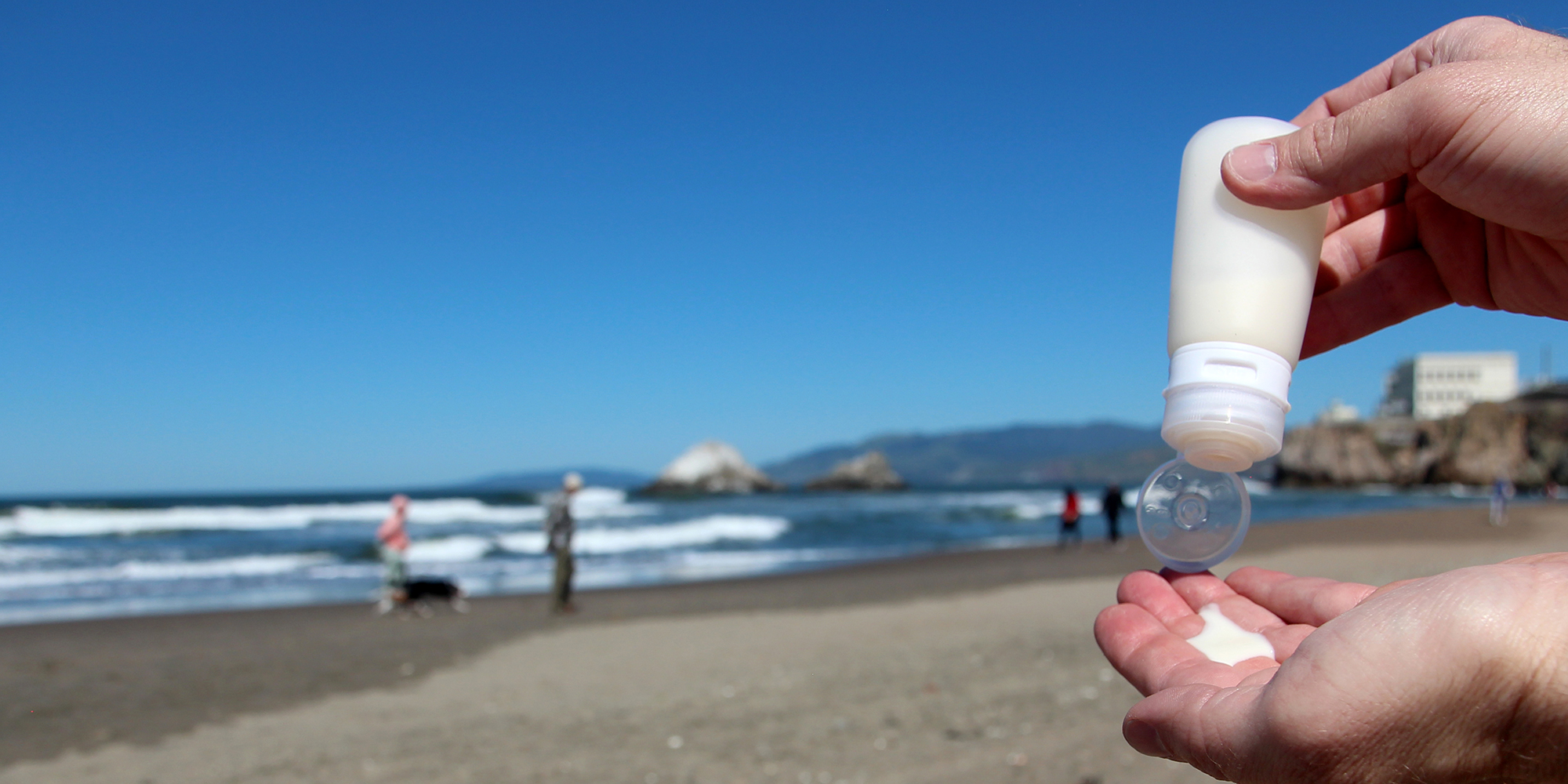
GoToob Travel Sized Containers. I’ve been traveling for over a decade, and let me tell you I have tried many travel sized containers. Many leaked, broke, or were generally too cumbersome to open and close. I settled on GoToob, and I have not been disappointed. They come with a lifetime warranty, are approved for airline carry-on, are food-safe per the FDA, and they’re 100% BPA-free and PC-free.
Thank you cards. A great gesture for anywhere you stay or are invited to eat, bringing a thank you card is an excellent option when you don’t know what to bring but don’t want to show up empty handed. A lovely option here.
Bring business cards for meeting and greeting. Working as a lawyer for several years meant that I was guaranteed a very staid, simple business card. So when I decided to head out and travel, I was excited to get something a little more fun. I ended up with Moo Cards, which allow me to upload my own photos (up to 50 of them per order) to the front of my card, as well as a headshot on the back. I currently use a version of these cards with my Legal Nomads logo on them, and they’re of good quality and durable. People love them.
Packing Tips for Women
A Menstrual Cup. For the first two years of my round-the-world travels, I lugged around Ziploc bags of tampons, in case I found myself in countries where they could not be bought. No longer! I now have a reusable menstrual cup. While not necessarily the most popular topic for dinner conversation, I’ve encouraged quite a few female friends and readers to buy one, as it truly has been life changing.
One of the questions I often receive is how to sterilize the cup on the go, especially if you don’t have access to pots/pans to boil it for 20 minutes. What I’ve done is taking denture cleaning tabs — which are available in many countries around the world, though I carry a few. After my cycle is over, I use half a tab inside the cup and the other half outside the cup, and soak for 5 minutes. I then rinse the cup out with warm water, and boil some water to let it sit with a lid for 10 minutes. It’s a lot easier than trying to boil it when you don’t have access to a full kitchen!
- I use the Lunette, which was recommended for shorter torsos. On their website, they also sell cleaning wipes, which are useful in between sterilization of the cup.
- If you’re in North America, the Diva Cup is likely the easiest to find. Plenty of women I’ve spoken with are equally as happy with their cup as I am with mine. If you are worried about leakage, start using it mid-period, but I promise that I have never had any trouble with it. Because it’s made with medical grade silicon, it can be left in longer than a tampon, and it can be used just before you are due to get your period, in case you’re on a long bus ride and worried about timing.
- If you want a more detailed write-up of the Diva Cup, Shannon from A Little Adrift has a review here.
Foldable flat shoes. In my post about 21 tips from four years of travel, I advocate packing jeans as a way to both fit in with others when you’re dining out in a city, and feel like yourself despite being far from home. Another arm of the same advice would be to find a pair of foldable flat shoes you can take with you, which dress up even the most casual of outfits. I’ve never found anything as comfortable as Tieks, since they’re padded and made of leather so they stretch. These were sent to me for review, and they are quite expensive but I stand by the fact that they are very comfortable. I’ve actually never found a pair that fit this well and didn’t give me blisters. Other less expensive options are Silky Toes Sidekicks. Of the two, the Tieks are more comfortable, and more padded.
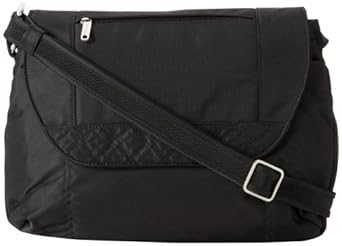
Travelon Classy Cross-Body Purse. It’s hard to find a good cross-body purse that will stand up to long term travel, but not scream “I’m a tourist.” This Travelon travel purse is large enough for airplane trips but small enough to take out every day. The purse has slash proof main compartment that locks, as well as an expansion pocket, and stylish stitching on the front that makes it look more like a regular purse than a travel option. Good if you’re moving around and need something sturdy but elegant. If you wanted a bucket version of a cross-body bag, I’d recommend this one.
If this isn’t your style, Travelon has a huge selection on Amazon. Their more slouchy hobo bag with RFID protection is a very popular option among friends, and a cheaper buy. For smaller bags, I love this floral clutch, also with protection for slashing and theft.
Packing Tips for Digital Nomads or Remote Workers.
I write from wherever I am, and that means that I need to build a fairly comfortable workspace quickly, and keep my electronics organized. Here’s what I can’t live without:
Cord Tacos. These little leather moons fold in half around your cords and keep them separate so you don’t have a temper tantrum at the airport. Or at your coworking space. Or even in the privacy of your own home. If you’re like me and all your cords get tangled, this is for you.

The Roost Laptop Stand. Of all the things on this list, the Roost Stand changed my life the most. The first day that I used it was the first day in years that I was able to write on my laptop without searing pain at the end of the day. I have problems with chronic pain, so this was essential – and an amazing change in my work routine. I use it every day and it’s so small it adds almost no weight or bulk to my bag.
To use the Roost you’ll need a keyboard and mouse. I used the Logitech K811 and but have moved to the Logitech MX Keys Minimalist Keyboard for Mac, along with a simple external mouse.


Should you book a round-the-world ticket? When I set out in 2008, this was the question widely debated in travel forums. Personally, I don’t advocate it becasue because some of the places I loved the most – and spent the most time in – weren’t even on my initial itinerary. Flexibility is key!
Some pros and cons of each, plus the ever-popular travel hacking – using creativity, offers from credit cards and smart mileage awards to sharply lower your costs of travel.
Round-the-World Ticket
For those people who feel more comfortable knowing the general route and schedule in advance, this is a perfect option and generally cheaper than the pay-as-you-go ticket buying, below. Conversely, the downside to these types of tickets is a lack of flexibility in destinations and mode of transportation, as well as the limit of 12 months.
Resources:
- Star Alliance – Air Canada, Air China, Air New Zealand, ANA, Asiana Airlines, Austrian, bmi, EgyptAir, LOT Polish Airlines, Lufthansa, Scandinavian Airlines, Shanghai Airlines, Singapore Airlines, South African Airways, Spanair, SWISS, TAP Portugal, Thai Airways, Turkish Airlines, United, US Airways. RTW ticket is based on mileage (and not “stops”). Overland mileage between destinations counts toward your total.
- One World – Aer Lingus, American Airlines, British Airways, Cathay Pacific, Finnair, Qatar Airways, JAL, Iberia, Lan and Qantas, offering either of a Global explorer or a oneworld explorer, depending on the amount of continents and stops you want to include in your trip. Good for South America due to the inclusion of LAN in the OneWorld alliance.
- SkyTeam Alliance – Aeroflot, Aeromexico, Air France, Alitalia, China Southern Airlines, Continental Airlines, CSA Czech Airlines, Delta Air Lines, KLM Royal Dutch Airlines, Korean Air, Northwest Airlines, Air Europa, Copa Airlines, Kenya Airways.
- Airtreks RTW ticket options is another option. I used them for the first series of long-hauls I booked on my travels, a set of open-jaw tickets when I knew I had to be somewhere specific. E.g. I booked a flight from NY to Santiago and then several months later, a flight from Buenos Aires to Cape Town. This can be done separately, of course.
- BootnAll’s travel planner is further option for planning round-the-world travel. A new offering from Bootsnall, you can use them to add custom build and price itineraries for your long and short haul ticket strings.
- Airtreks has a sample timeline for potential round-the-world travelers here.
As-you-Go Flying
For many travelers, the idea of a RTW trip often includes freeing themselves from whatever routine or life they have been living and giving themselves up to the unknown. If this feeling/goal is more important than knowing where are heading next, opting against a RTW ticket might be better for you. As-you-go flying means taking advantage of the budget airline options out there, as well as any other modes of transportation between countries (trains, buses, motorbikes, etc). It also means that you might decide to change your itinerary entirely upon meeting people headed in a different direction, and that you need to do a lot less pre-trip destination planning since you could inevitably end up somewhere entirely unexpected.
Resources:
- Google’s flexible flight finder
- Wikipedia’s list of low cost airlines
- Skyscanner is a good option for searching from a specific country to “Anywhere” or from general countries to countries to sift the cheapest endpoints to the top of your list.
- Which Budget helps search budget airlines from specific points as well.
Travel Hacking
- Nomadic Matt’s Travel Hacking Guide (primarily US-focused) on mileage and airfare.
- For the Canadians, Steven’s Travel Hacking for Canadians.
- Starting out? See Chris Guillebeau’s Travel Hacking for Beginners or Nomadic Matt’s Ultimate Guide to Travel Hacking.
- When I started my trip in 2008, I had no laptop and no smartphone. As the years have gone by and I’ve continued my travels, I’ve picked up a phone and kept an eye out for apps that help me as I navigate strange places, be it via language, food or helping make my life a little easier as I go
- Skype: Being on the road for over three years means that I’ve had no SIM card and no home base. As a result, Skype has been a savior – it allows me to use WiFi to reach my friends, I can forward its services to a local number, and I’ve added SkypeOut credit for those family members (*cough* dad *cough*) who refuse to get an account themselves.
- Google Voice: For those who are in the States, getting a Google voice number is free and simple, and has been great on the road. It allows me to call my family from my computer for free, and when they ring me on my local number it calls me on my computer
- ICOON Global Picture Dictionary: When words just won’t work, be it because you can’t speak the language or you need a doctor ASAP, this is your friend. Photos by category, foods, body parts, lodging basics and more. A decent alternative is Picture Dictionary by Ectaco.
- Google Maps: it works in a startlingly comprehensive list of countries; it helps when you’re really exhausted and just cannot figure out where your hostel is and all the street signs are in an unfamiliar language. If you’re directionally disabled like me, Google Maps is a must, especially when you can use it to show your taxi driver where you need to go in their native language.
- Oanda’s Currency Conversion App: Currency conversion is a helpful thing to have available on the road, especially farther afield where you are sometimes negotiating for rates when changing money. Those countries with a closed monetary system (Myanmar, for example) won’t really care what your app says, but for the most part it’s very helpful to have an interbank rate at your immediate disposal. I’ve used this app throughout my worldwide travels and it comes in handy not just for ensuring I get a decent rate, but also to keep track of what I’m spending by converting to USD as I go. Another option is XE’s Currency App.
- Duolingo: I’m currently using this free app to learn Portuguese, but there are many other languages to learn with daily exercises and a great interface. I love it.
- Evernote: I use Evernote on my laptop to keep notes on a destination, and the iOS app to have those notes accessible as I roam around. Often with addresses of restaurants or places to visit. Very useful.
- Prey: Security and tracking app Prey helps you find your phone if it is lost or stolen.
- Pocket: My go-to for saving longreads from around the web, it integrates with Twitter and you can set up automated IFTTT recipes where favouriting a Tweet sends the link directly to your Pocket. Great for reading when you have no internet, the app has an excellent interface and I use it daily.
- For those of you in warmer, sunnier climates: you can opt for this Poweradd solar-powered bar for battery-charging goodness.
- For technology and travel (targeting digital nomads specifically) see Dave Dean’s book Too Many Adapters website, where he reviews products for the road.
- Everyone tells you to eat at the stalls with the longest line of locals, but an important addition to that is to opt for the stalls with women and children in line, too. More variety in the customer base usually means the stall has been vetted enough that it’s safe for everyone.
- For a cheap lunch, go to the local university and find a place nearby. Students are a hungry bunch without much to spend on food, and throughout the world cheap stalls pop up around universities.
- When choosing a stall, try to make sure the woman or man running it doesn’t touch both the money and the food with their bare hands. Either pick a two-person stall where someone’s handling the cash and someone else the food, or a place where the chef is wearing plastic gloves while making the food, and touching the money without them.
- It’s important to pay attention to local mealtimes as a guard against gettingsick, especially in developing countries where refrigeration lacking. Again, be it tiny stalls or restaurants or street eats, you want to be consuming the food when turnover is high and it is still hot.
- Aim for food that has been fully cooked. My worst bout of food poisoning was from eating a llama empanada on the Bolivian border that was not cooked the whole way through. Despite knowing it was likely a terrible idea, I ate it, and then paid for it in spades. If your dish is cold in the center, you want to order something else or ask for it to be put back in the oven or wok for another few minutes.
- Cutlery is often the culprit for bacteria while the food is safe and fresh, since the water used to wash the utensils or bowls might be contaminated. This can be an issue in places like India or where river water is used to wash the cutlery instead of fresh water. A priceless tip is to take portable chopsticks, useful in the rare cases where food is fresh but where the utensils might not be washed as thoroughly as you might like. A second best: baby wipes to wipe down the utensils you receive. You might get a few funny looks, but your stomach will thank you later.
- Some of the advice for street food or food in developing countries is quite aggressive and means you would miss out on one of the best parts of travel! I would never tell someone “Avoid all fruit!” or “Avoid anything with ice!” As with any place, research is needed. Does the city have a subsidized drinking water scheme, such as Bangkok or Saigon? In those cases the ice might be readily available with filtered water. I would agree that it is wise to avoid fruit that cannot be peeled when you do not know the place well, especially those from countries with heavy pollution. Bananas, longan, lychees, mangoes, rambutan, and mangosteen are all incredibly delicious and have an outer skin to peel away. Strawberries, while temping, ought to be avoided in those cases.
- Translation help. You could also bring a Point It Dictionary if you’re concerned about eating food you can’t place. For those with iPhones, there’s an app for that: ICOON . Both can be useful when you have questions about what is being served, but no language in common.
- For those of you who are celiac or gluten free, visit the gluten free travel page which deals with this dietary requirement specifically. I write regular posts there about where to eat safely as a celiac. I’ve started compiling my own gluten-free translation cards in several languages for Legal Nomads readers. These include not just “I can’t eat wheat” but also lists of what foods should be avoided that have wheat in them. Many countries do not realize what has wheat in their dishes, since there is no reason to be vigilant. These cards will hopefully go a long way toward getting sick.They go a long way toward getting your point across — certainly more so than my initial “gesture feverishly while mimicking getting ill over food” — and Select Wisely has a strongly worded option for those with more life-threatening allergies.
- Read How to Shit Around the World before you go. Written by a doctor with a great sense of humor, the book aims to demystify street food, help you stay healthy and get people to give you strange looks when you read the book on the subway. Ok, the latter is my own contribution but riding the R in New York was much more fun with this book in hand.
- Carry a rubber doorstop (I’ve been doing this for years), to wedge from the inside of your room at night.
- Carry a safety whistle (also keeps the monkeys at bay – trust me).
- Pay a bit more to stay at a central hostel or guesthouse in a well-lit area of town, with a 24 hour front desk.
- Watch your drink and certainly don’t get drunk, especially if you’re alone.
- Err on the side of dressing conservatively. I don’t want to get into a “but it’s an issue of men’s perceptions of women” debate because the reality remains that when you’re traveling, you do need to err on the side of dressing conservatively. I bought a longyi in Myanmar, I covered my head in parts of Indonesia, I wore long sleeves and long dresses and scarves throughout the Middle East and parts of Morocco. In the end, I still stood out, but in respecting the local dress, I definitely felt and saw a difference in the way I was treated.
- Be vague about your hostel/guesthouse. Sometimes a casual conversation will lead to a question about what hostel you are at, or where you are headed next. It’s wise to stay purposefully vague, or have a (faux) backup hostel or guesthouse in mind for those situations. I’m always wary of giving too much information about my whereabouts when traveling alone. This applies, of course, to men as well.
- Be aware that eye contact in some countries can invite aggressive behavior. Again, it’s not the message I’d like to put out (as in, I wish this wasn’t something we had to worry about) but it can be the case. I am mindful of this fact, especially as a Montrealer – a city that has proudly declared its love of eye contact.
- If you are travelling in a country for more than a few days, register with your local embassy. I’ve done so here for Canada in Vietnam, as have my American and Australian friends in town. Most consular services do include registration for citizens abroad, and it is very helpful in the event of emergency (or even natural disasters). For Canadians, it’s here. For Americans, here.
Best Apps to Download for Travel
How to Eat Safely on the Road, Without Getting Sick

Eating, as many of you know, is the main reason I travel. And I don’t mean at fancy restaurants — I mean the tiny plastic tables and chairs at the side of the road. I’ve found, too, that talking about food can bridge cultures, allowing me to slide sideways into kitchens and bakeries, butcher shops and market stalls.
But there were two problems: how to eat cheap food without getting sick (and I got sick many, many times — from lukewarm llama empanadas in South America to contaminated soup in Myanmar), and how to eat on the road despite having celiac disease. Over the years, I gathered tips for eating safely, and that’s essentially how The Food Traveler’s Handbook was born.
Tips for Eating Street Food Safely while Traveling

Solo Female Travel

I don’t brand myself as a solo female traveler, because I can only travel in the body I’ve been given. And that body happens to be that of a five foot tall female. That said, I receive many questions from worried women or girls, who want to travel but are afraid of what’s out there. I thought I would add a section to this resources page with my tips for solo travel.
I want to reiterate that violence against women happens everywhere, at home or abroad. The question should not be “should I travel as a woman, alone”. It should be “why is it unsafe for me to walk alone at night in so many countries of the world?”
Things – bad things, ugly things, evil things – often cannot be mitigated or planned. Nor do they only happen in countries far away.
It is almost exclusively the women who write with concerns. I understand. However, the tips below can and should be applied by both genders, despite the label of this section.
A good resource for female travelers — solo or otherwise! – is the ad-free (and free of charge) resource Gynopedia, with detailed information about sexual health from 50 different countries around the world.
Many are common sense.
