
Ah, France. Land of cheese and baguettes. A country of delicate, fluffy pastries and croissants, of pies and crepes, and so much more. I lived in France before I was diagnosed as celiac, and my copious consumption of gluten in the form of bread products and pastries certainly led to my finding out fairly dramatically that my body was not able to tolerate it. The good news is that these days, traveling in France is very possible while strictly gluten free.
Being a celiac in France means availing yourself of all the wonderful, quality base ingredients that are found throughout the country. In the years since my diagnosis in the early 2000s, the country has become much more inviting for celiacs. From fabulous cheeses to buckwheat crepes, gluten free croissants, pain au chocolat, and other pastries, amazing patisseries, stews, salads and so much more, there is plenty to eat that won’t get you sick.
This guide will help you navigate the dishes you will find, as well as offer alternatives when you are eating out.
NOTE! If you are looking for a French translation card but aren’t only traveling to France, you can skip to my General French card here. This card is translated for travel to West Africa, Guadeloupe, and elsewhere (like my home province of Quebec!) that speaks the French language, without “France” on the card
Happy and safe travels!


A detailed gluten free card for France
This detailed French gluten free restaurant card will help communicate your eating restrictions, and allow you to understand what is safe and unsafe from the menu.
Note: The card is available for purchase via Gumroad, a trustworthy 3rd party site that uses Stripe, so you know your information is safe.
Why is this gluten free card different?
I used several different translation cards on my travels, and I still got sick. I may be more sensitive than some celiacs, but even a small amount of frying oil that had contact with wheat, or wheat-thickened sauce in the food, is enough to make me ill for days. Let alone the joint pain later that week, and the fatigue. And regardless of whether we feel it or not, ingesting any amount of gluten is a problem if we are celiac.
Why choose a Legal Nomads detailed gluten free restaurant card?
✅ Each card is carefully crafted by someone with celiac disease, and then goes through 2 sets of translations to ensure accuracy.
✅ Unlike shorter, less-detailed cards, each card it lists out local ingredients and dishes that have hidden (and not hidden!) gluten in them. Saying “I can’t have gluten” just isn’t usually enough to keep celiacs safe — many people preparing your food don’t know what ingredients have gluten in them.
✅ It expressly mentions that we cannot eat food from pans, shared fryers, or cooking surfaces that have had cross-contact with gluten.
✅ To ensure the card is taken seriously, it adds an apology for the inconvenience, and emphasizes that avoiding gluten is a medical obligation — not a choice.
✅ It is instantly downloadable in both PNG and printable PDF file formats, to help you eat safely as you travel.

While the card above contains the safest way to communicate celiac disease in France, here are three quick phrases that you can also use:
(I chose these three as a French speaker – and I was living in France when I was diagnosed. See below for additional names of different dishes/foods)
- Je suis céliaque – I am a celiac
- Est-ce que ceci contient du gluten? Does this contain gluten?
- Est-ce que cette sauce / jus de viande était épaissie avec de la farine de blé? Was this gravy thickened with wheat flour? (This is important as French gravies are often formed via roux, with flour)
Eating gluten free in France: dishes, desserts, and snacks
The following dishes are commonly wheat-free in France.
As with any destination, at home or abroad, it’s important to confirm on a case-by-case basis that no flour was used in the sauces, or to thicken.

Gluten free dishes in France
- Riz (rice) or farine de riz (rice flour) are both good terms to know, especially when looking for gluten free products in grocery stores.
- A Breton crêpe or galette is a must-have for celiacs in France. These delicious pancakes are similar to their famous cousin the crêpe, but galettes are made with buckwheat flour, called farine de sarrasin or blé noir, and are usually savoury rather than sweet. There are many variations on this dish, one of the most popular being the galette complète, with grated cheese, ham and egg cooked on the galette. While in most restaurants the galette will be made with 100% buckwheat flour, it’s always important to ask, as some places may cut the buckwheat with regular wheat flour as well.
- Chestnuts are a popular ingredient in French cuisine and can be called châtaigne or marron, while chestnut flour is usually just farine de châtaigne.
- Fromage – cheese, glorious cheese! As one of French cuisine’s claims to fame, there are so many to try, but a few to stay away from! More on that later, but for now…a few of the safe ones: Brie is a rich, creamy white cow’s milk cheese with an edible rind and a flavour that strengthens with age. Camembert is a soft, creamy cow’s milk cheese from Northern France in the Normandy region. Roquefort is a tangy, crumbly, cave-aged blue cheese made from sheep’s milk. *Note: previously, blue cheeses were classified as unsafe for celiacs but new research has shown otherwise. See here. Fromage frais is creamy, fresh, unripened cheese. Fromage blanc is similar, but the fermentation process has been stopped. Faisselle, much like fromage frais or fromage blanc, is often served as a dessert, both savoury or sweet.
- Omelette au fromage – Omelette with cheese. Generously buttery French omelettes come in many forms, and are usually served for lunch or dinner, rather than for breakfast.
- Charcuterie plates should usually provide some safe and tasty options for celiac travellers, but remember to double check that all the meats are safe and that bread (pain) is served separately. Some charcuterie options may include:
- Pâté – ground meat and fat mixed with herbs, spices, and veggies and cooked into a spreadable paste. Often made with liver and other offal. Note: in recent years, pâté is thickened with wheat in many French shops and restaurants. It is very important to ask whether the pâté you’re ordering has been thickened with bread crumbs, flour or wheat. Also: avoid pâté en croute, which is encrusted in pastry like a pie.
- Terrine is similar to pâté, but features more coarsely chopped meats cooked in a mold and most often served cold.
- Rilletes are again made with chopped meat, heavily salted and slowly cooked. Much of the fat content is maintained, which lends itself to the paste-like consistency perfect for spreading. Traditionally made with pork, but there’s no limit to other types of meats than can be used.
- Boudin blanc de Rethel is a specific type of pork sausage whose name is protected by the EU protected geographical indication (PGI). This means if it’s listed as boudin blanc de Rethel, it can only contain pork, milk, and eggs, and zero added starches. But be sure to ask, as not all boudin blanc are guaranteed to be safe. The same goes for boudin noir, a traditional blood sausage.
- Saucisson is a dry cured pork or mosty pork sausage similar to salami. Variations include different herbs and spices, and in the case of Saucisson aux noisettes, hazelnuts.
- Foie Gras is a controversial but luxurious French delicacy of fattened duck or goose liver. It’s rich and buttery, and may be served as a mousse or pâté, or on it’s own as a main dish. Despite the contentious production methods, foie gras is a deeply engrained part of French gastronomic culture.
- The French love oysters (huîtres), and for good reason—they have some of the most famous oyster growing regions in the world! Best eaten au naturel or with a splash of lemon juice.
- Moules marinières a classic dish of mussels in a sauce of white wine and cream. Ask about any potential flour used for thickening the sauce, but it should be both safe and delicious!
- Tartiflette is a dish from the Savoy region of the French Alps made with potato, reblochon cheese, pork fat and onions. Potatoes are a staple food of the Savoy region, and thus are featured in many of the traditional regional dishes.
- Traditional Salade Niçoise is a salad of tomato, olives, hard-boiled eggs and anchovies dressed in olive oil. Although it originates from the city of Nice, variations have spread all over both France and the world. Other ingredients may include: tuna, potatoes, green beans, red peppers, artichokes, spring onions and so much more. The argument over what constitutes a salade nicoise is fierce and continuous, but in most cases, it should be safe for celiacs.
- Ratatouille– a Niçoise veggie dish of eggplant, zucchini, onion, garlic, tomato and bell pepper stewed with fresh herbs until soft and creamy.
- Socca, a speciality from the South of France, is a perfect example of simple ingredients cooked to perfection. Made with chickpea flour, olive oil, and very little else, it’s naturally gluten free and traditionally cooked in huge cast iron pans over a fire. Recipe here, if you want to try at home! For those heading to Nice, see my socca recommendations below.
- Escargots à la Bourguignonne – snails cooked in garlic and herb butter.
Gluten free desserts in France
- Macarons are popular meringue and almond cookies sandwiching buttercream or jam filling. These colourful confections are pretty trendy on a global scale right now and flavors can vary from the traditional to the experimental. Many, many French patisseries have a selection of macarons to choose from, but it’s always best to check that no wheat flour has been added!

- Made from simple whipped egg whites and sugar, the stiff peaks and crispy exterior of meringues can form cloud like structures that are both visually impressive and Meringues may be flavored with almond, vanilla or coconut and served on their own or as part of another dish.
- Calissons or Calissons d’Aix are delightful almond-shaped treats made from a paste of ground almonds and candied fruit, often melon or citrus, topped with a bit of icing. Almost always safe, but again, it’s best to ask. This was the first thing I ate for dessert once diagnosed, and they still hold a happy place in my heart for their delicious hit of marzipan sweetness.
- Pâtés de fruits are a simple treat made from fruit cooked with sugar and pectin and then cast into a mold. Served cold.
- Caramel or chocolate bon bons, called bouchées, should be safe.
- Mousse au chocolat – rich, creamy chocolate mousse made from chocolate, eggs and cream or butter.
- Crème brûlée is vanilla custard with a hard burnt layer of caramel on top. Yum!
- Floating island or île flottante is rich dessert made of meringue “floating” in light vanilla custard.
- Tergoule– a rice pudding made with milk, cinnamon, sugar and nutmeg and slowly baked in a terrine for hours in order to create a caramelized crust. A speciality of Normandy.

Celiac-safe shopping and gluten free restaurants in France
As with each of my celiac travel guides, this section is divided into shops, restaurants, bakeries, and more.
Gluten Free grocery and specialty stores in France
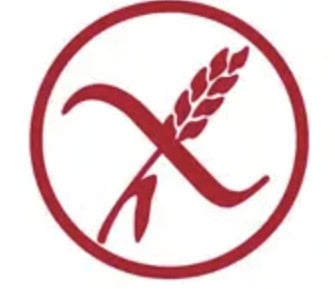
In France, products marked “Gluten-free” must contain less than 20 mg/kg of gluten (equivalent to 20 parts per million/ppm), and the use of the logo to the left is protected by the European celiac associations that are members of the AOECS (Association of European Coeliac Societies). In France, the society is called AFDIAG. More than one hundred gluten-free product brands currently benefit from this label in France, representing 3,500 product references out of the 19,000 available in Europe. Products bearing the “crossed grain” logo (called “épi barré” in France) are therefore certified as gluten free.
- Carrefour is a supermarket chain with shops across France. They carry a range of gluten free products, including their own brand.
- Most major supermarkets, such as Intermarché, carry a range of gluten free products, often in a separate aisle with other “free from” foods.
- Un Monde Vegan is a vegan supermarket in Paris with extensive gluten free section.
- Causses is a high end, slow food inspired grocer in Paris with dedicated gluten free section and tons of local products. There are two locations to shop in Paris, in the 3rd and 9th arrondissements, and they include restaurants as well.
- Naturalia and Biocoop are organic health food chains with gluten free options available.
- Niepi is a French magazine all about gluten free life, recipes included, for those who live in France longer-term.
- You can also search for “magasin bio” + the name of the town you’re in; most “bio” stores will have gluten products or even carry ready-made foods that are safe.
Gluten free restaurants in Paris

I was diagnosed as celiac in France, and in the decades since I have returned quite a few times to enjoy an increasingly accessible amount of French pastries. It was almost impossible to find a gluten free croissant when I lived there, and now not only are there several different 100% gluten free bakeries to choose from in Paris, but there are pain aux chocolats, éclairs, galettes, and so much more. One of the items I never got to try gluten free when in Paris was tarte Tatin, an upside-down apple tart allegedly created on accident at Tatin sisters’ hotel in Lamotte-Beuvron in the 19th century. The story goes that one of the sisters accidentally dropped an apple tart while preparing it, and instead of throwing it away, she flipped it over and re-baked it, leading to a caramelized, upside-down treat. I’ve added a few more bakeries where you can find Tarte Tatin and many more sweet and savoury pastries. (See below for Strasbourg, too, since they also have Tarte Tatin.)
To the food:
- Thrillingly, Chambelland is a gluten free bakery in Paris serving beautiful sourdough loaves as well as fresh cakes, pastries and sandwiches. Not only are all their naturally wares gluten free and organically grown, they even mill the flours in their own Chambelland mill, which serves some of the gluten free bakeries in town.
- Helmut Newcake was the first gluten free patisserie in Paris, and it boasts a wide selection of exquisite treats to try. Part coffee shop, part “store éphémère” with gluten free groceries, it’s a spot you need to keep on your list for a Paris visit. While they were closed in the early days of the pandemic, as of August 2022 they have reopened. Everything is delicious, but don’t miss their lemon meringue tart—you won’t regret it.
- Maison Kayser is well-known French boulanger Eric Kayser’s chain of bakeries that spreads across multiple French cities. Not every shop carries the range of gluten free loaves, but the ones that do (try the location nearest the Louvre in Paris) are worth a try! To protect from cross-contact, gluten free products are made off-site, and double packaged before entering the shop.
- Copains is another bakery with a large variety of treats on offer, including babkas, turnovers, financiers, brioches, tarts, eclairs, flans, and many more goodies. I only wish there was this level of choice when I was living in France!
- Tasca Bio is a gluten free Italian restaurant serving pizza, gnocchi, pastas, desserts (including tiramisù!) located near the Eiffel Tower, which makes it a perfect spot to dine if you’re checking out one of the city’s most famous landmarks. Founded by Italian brothers who moved to Paris decades ago, their dedicated gluten free Italian spot is a great treat and they have a fixed-price lunch available if you have a bigger appetite than normal.
- Noglu, a well-established 100% gluten free institution in Paris (hence, that Independent article above!) Noglu is renowned for its fresh ingredients, fabulous breads, and ability to maneuver the menu to suit vegetarian and lactose-free diners as well as celiacs. Multiple locations in Paris. Plus, Saturday brunch!
- Affiliated with Noglu is Le Pont Traversé, also entirely gluten free (though you wouldn’t know it from their menu — it’s in small print at the bottom!). Pastries, sandwiches, GF beer, and more at this cafe in the 6e arrondissement. The name comes from a collection of stories by Jean Paulhan, and it is a celiac’s dream.
- Crêperie Brocéliande is not fully GF, but has knowledgeable staff and assorted galettes and crepes on offer that are safe for celiacs.
- Italian restaurant Baffo has an entirely gluten free menu, including organic pastas, risottos, and a list of tasty appetizers.
- Another Italian fave for celiacs: Little Nonna’s, located in the 17th arrondissement. Marco, their chef, makes it clear that their establishment is 100% gluten free, with zero wheat or gluten on premises. Their pizzas are made from a base of rice, corn, and buckwheat. And desserts are safe for the eating too. But the best bonus: gluten free focaccia. A dream.
- Craving Thai food in Paris? Reader Hugo wrote in about a chain of Thai restaurants called Kapunka, where several of the locations are gluten free, and the other two are mostly gluten free with staff that was very knowledgeable about celiac. 6 locations to choose from!
- Another amazing Asian food option, a Thai-Cambodian restaurant that is 100% gluten free: Thaïsil. Their menu includes classics like tom kha gai coconut, galangal, and chicken soup, chicken skewers, som tum salad (green papaya salad), and main courses like chicken khao soi noodle soups in a rich coconut spicy broth, pad thai, and curries. Desserts are coconutty, vegan, and oh-so-amazing.
- Another addition for patisseries: Maison Plume. Almost achingly beautiful pastries, cakes, and coffees, this 100% gluten free bakery is well worth a trip. They’re open Tuesday 2-7pm, Wed-Sat 11am-7pm, Sunday 11am-6:30pm.
- Su Misura serves 100% organic and gluten free Italian food with stunning views of the Eiffel Tower. What could be better?! Translated from the words for “tailor-made” in Italian, Su Misura’s menu has been designed to accommodate those with celiac disease. Feast on antipasto, pasta, risotto, pizza, and warm focaccia, all made on-site. And make sure to save room for dessert, which includes panna cotta, artisanal tarts, chocolate mousse, and more. Open seven days a week from noon until 10pm.
- Readers report back that LouLou’s Friendly Diner in the Latin Quarter will offer any burger or sandwich on gluten free bread, prepared in a separate region of the kitchen. Their fries are also fried in separate fryers with no-cross-contact. So while not a 100% gluten free establishment, they remain the kind that I love to visit with friends: accommodations that suit my stomach, but everyone else doesn’t need to change their meal for me!
- For gluten free gelato, two great options in Paris: Grom (100% gluten free gelato AND cones – they make their cones themselves and they are also without vegetable oils), and Gelati d’Alberto (almost all of their gelato is gluten free gelato, but the cones are not safe).
- Breizh Café, specialising in naturally gluten free 100% buckwheat galettes (crepes) has locations in Paris, as well as in Lyon and Brittany.
- Reader Alison reports that La Manufacture Du Sans Gluten makes incredible croissants. It’s a Paris bakery not too far from Sacré-Cœur in Montmartre with breads, sandwiches, tarts, and croissants, as well as many other treats, all 100% without gluten. (Unrelated to the “Manufacture” down in Aix-en-Provence.)
- For a Japanese option, Cococo is 100% gluten and lactose free, and offers vegan options for those who want them. Beautifully-crafted bento boxes and delicious food.
- Also gluten free and lactose free, Café Maréva is a decadent option for an early meal. With two locations serving smoothie bowls, sweet and savoury waffles (their savoury waffles are made from sweet potatoes), and house made gluten free bread—you won’t leave here feeling hungry! As Time Out Paris said about Maréva: “why wait for the weekend to go for brunch?”
- La Sajerie is a great choice for those craving Middle Eastern cuisine in Paris. 100% gluten free, there’s a huge selection of lunch and dinner dishes, with everything made in-house. Wraps are a huge hit here; make sure to add the freshly made hummus, labneh, or mutabbal. And stick around for coffee and dessert!
- L’Atelier des Lilas is a 100% gluten free bakery and traiteur specializing in cakes, quiches, salads, muffins, tarts, and other little and delicious treats, made to order and carried in cafes and shops around Paris. They’re located about 7km outside of Paris in Montreuil, for those wanting to stop in!
- Judy Paris, a 100% gluten free cantine with two locations in Paris now, one on rue de Fleurus and one on Rue Jean Jacques Rousseau, offers all-day brunch, creamy lattes, cold-pressed juices, and a selection of gluten free desserts at the latter location, as well as some additional lunch options at the Rue Fleurus location (like noodle bowls).
- Riz Riz is 100% gluten free and vegan, is a fusion of many different cuisines that love their rice. Mango and sticky rice for dessert (a common Thai dessert), plus Indian-style curries and dhal, plus guacamole and mezzes like hummus for appetizers — you’ll find something for everyone, but you know it’ll be safe for the celiacs among you. If you can’t decide what to get, they do offer a “riz table” option, with a tasting menu to split among the table.
For more gluten free restaurant Paris options, see Matt at Wheatless Wanderlust’s guide here.
See also the amazing 5.5-hour, close to 20km walking tour of Paris if you are looking for detailed history and visits to Notre Dame, the Arc de Triomphe, the market on Rue Mouffetard, the Jardins du Luxembourg, the Louvre, the Eiffel Tower, and lots more. Turn on the CC to read as you watch, giving you all the history you may not get if you visit at a time when tours are not yet back in full swing.
You can also follow Soraya from Gluten Free in Paris (founder of the ‘week without gluten’ even there!) on Instagram, here.
Gluten free restaurants in Brittany (Bretagne)
In northwestern France is Brittany, known for many things — the walled city of Saint-Malo, the ramparts of Vannes, the Port of Saint Goustan in Auray, and more. But for me, it is the galettes that were a respite for my taste buds. My mum and I drove through Brittany in 2002, and having found very little celiac-safe breads or pancakes, these savoury buckwheat crepes were a lifesaver. Quite a few memories of our trip involve stops to buy them wherever we went.
Galettes been a staple of Breton cuisine for centuries. Buckwheat, known as “blé noir” or “sarrasin” in French, was introduced to Brittany in the 12th century and quickly became a fundamental part of the local diet due to its ability to thrive in the region’s acidic soil. The tradition of making galettes evolved over time, but in the 19th century, cast-iron crepe griddles called “billigs crêpière” revolutionized the galette-making process, allowing for thinner and more evenly cooked crepes when the griddle was placed over an open fire. In the 1940s, a family-owned company named Krampouz built an electric version, still used today.
Galettes come in savoury or sweet variations, but my preference is a simple egg, ham, and cheese. In Brittany, you can find them in many restaurants, but not all spots use 100% buckwheat. It’s best to check for whether there’s a dedicated surface to cook them on as well.

© 2026 Briezh Cafe
- For the safest bet, opt for Breizh Cafe. They serve traditional buckwheat galettes made with local ingredients and best paired with a traditional cider. Breizh has locations in Paris as well as in the Breton town of Saint-Malo, and its nearby neighbour Cancale, a commune dubbed the “oyster capital” of Brittany.
- Also in Saint-Malo is 100% gluten free cafe and bakery La Palabre Mouline, founded by a Senegalese woman turned Maloine (resident of Saint-Malo) who became a pastry chef before realizing she could no longer eat wheat. There is a menu of the day, take out options for pastries and gluten free bread, and other treats.
Gluten free restaurants in Annecy
- Liber Art in Annecy has it all: a tea room, restaurant, bakery, pastry shop, chocolate shop, and grocery store all under the same roof. And it’s 100% gluten free. The spot prioritizes high-quality materials: alternative flours (including chestnut, buckwheat, and chickpea), local products, and a meticulous selection of each ingredient to meet their gluten free standards. Enjoy a mouthwatering selection of sweets from the pastry and chocolate shops (that include fun seasonal items such as a Matcha Yule log for Christmas) as well as homemade breads from the bakery. You can also dine in for lunch, afternoon tea, or a quick coffee break. Open Tuesday to Saturday, 10am to 7pm.
Gluten Free in Nimes
- Les Bartavelles is a dedicated gluten free restaurant located in the heart of Nîmes. Enjoy delicious gluten free pizza, beer, desserts, and more, all in a friendly and welcoming atmosphere. Hours can fluctuate here, so it’s advised to call ahead to ensure the restaurant is open when you plan to visit (+33466213018).
Gluten free in Amiens
- Snack’in is a 100% gluten free restaurant in the northern city of Amiens. There’s a great selection of lunch items to choose from — try the quiches, they are are divine — as well as an ever-changing specials menu. Noted for its cozy atmosphere and reasonable prices, there are plenty of burgers and pastries and beer on offer to compliment your travels.
Gluten free restaurants in La Rochelle
- No Gluten Lover’s is located in the beautiful coastal city of La Rochelle on the Bay of Biscay in Nouvelle-Aquitaine. As the name suggests, this is a dedicated gluten free spot! It’s a grocery store and pâtisserie, and is ideal for a takeout meal of pasta, sandwiches, or quiche. While there, stock up on items such as bread, muffins, sweets, and more, including more of those gluten free croissants I know you’re craving.
Gluten free restaurants in Lille
- Og Boulangerie is in Villeneuve-d’Ascq, one of the main cities of the Lille metropolitan area. This 100% gluten free bakery is also dairy free and fully organic! Discover a range of bread products, including those made with buckwheat, rice, and chestnut flours, as well as desserts like lemon meringue tartlets, vanilla mille-feuille, and chocolate cookies. They sometimes offer sandwiches as well.
- Tigermilk is a chain of Latin American restaurants found across France, with locations in Lille, Paris, Bordeaux, Lyon, Nice, Marseille, and Strasbourg. While not a dedicated gluten free restaurant, there are multiple gluten free options on the menu and staff are knowledgeable about celiac disease. Dine on corn tortilla tacos, ceviche, pork ribs, quinoa salad, and more.
Gluten free restaurants in Provence-Alpes-Côte d’Azur (Aix-en-Provence, Marseille, Nice, Cannes, and more)
- Mac & Choc can be found in Six-Fours-les-Plages, not far from the city of Toulon. This 100% gluten free spot is perfect for when you’re exploring the Provence-Alpes-Côte d’Azur region and need a little treat! Open since 2022, the bakery and pastry shop specializes in baked goods, chocolate creations, and a solid array of breads to choose from. From custard tarts to praline pastries and, of course, a delicious menu of macarons, there’s something for every sweet tooth here.
- Le L Creperie is a cozy spot in Villeneuve-lès-Avignon that serves gluten free crepes, galettes, and a variety of tasty sweets. Don’t miss a chance to enjoy their shaded terrace on a hot summer’s day. Reservations are recommended! It’s not far from Châteauneuf du Pape, so if you’re in the region for wine tastings, a meal here could be wonderful side trip for your day.
- At Choopy’s, you’ll find an entirely gluten free menu. It’s a tiny coffee shop in the Côte d’Azur resort town of Antibes.
WHERE TO EAT IN NICE
- Gigi Tavola Autentica is the first gluten free restaurant in Nice, as certified by the French celiac association. Grilled meat, pizzas, and a whole lot more.
- While not 100% gluten free, Popote Bistrot (formerly Pop O Thym) in Nice serves gluten free crepes made of sarrasin (buckwheat), as well as a nice selections of healthy, naturally gluten free salads.
- If you love macaroons (description above) as much as I do, don’t look further than ANGEA in Nice. Since they’re a one-stop-macaroon-shop, their menu is safe for celiacs (or was at the time of writing – please do double check if you’re there). The have gorgeous flavour combinations and frankly you can’t go to France without indulging in a macaroon – or 10.
- A naturally gluten free dish in Southern France is socca, made from chickpeas (as noted above). In Nice, two great spots to try it are at Chez Pipo and Chez Theresa. Chez Pipo is definitely my first recommendation of the two. Note that this dish is usually cooked over a fire, in a huge, shallow cast iron. So while it’s important to ask about cross-contact in terms of preparation, the cooking itself is usually not an issue if cooked – as these two restaurants do – in the traditional manner. See this post for photos.
- La Môme Plage is not a GF establishment, but menu items are clearly marked and staff is knowledgeable about the condition.
- Amour patisserie vegetale is, as the name suggests, a loving ode to patisserie without gluten. They offer 100% gluten free treats like cookies, tarts, pancakes, banoffee, and a selection of hot drinks to go with them. They also make omelettes and the occasional quiche for those who want a meal before your sweet tooth kicks in.
WHERE TO EAT IN CANNES AND SURROUNDS
- In Cannes, Maison Charlotte Busset bakery has a large gluten free and vegan selection. Note however that while they are aware of celiac disease and cross-contact care, they are not 100% gluten free.
- Au Ptits Anges in Cannes is also not fully gluten free but has many items on the menu that are safe, as well as gluten free desserts, and also a knowledge of cross-contact.
WHERE TO EAT IN MARSEILLE
- Also in Marseilles, La Pepite, a self-described “laboratory of pastries,” offers only gluten free and dairy free pastries, using local organic ingredients. They’re also able to make vegan cakes or low glycemic index cakes on demand (with pre-order), and some of their cakes are already vegan for those who are celiac but also avoiding animal products.
- Les Pâtisseries de Lily is a 100% gluten free bakery in Marseille with only a Facebook page right now, but they do also offer low sugar and lactose free treats for those seeking them out.
- Restaurant le Balagan is a small restaurant with organic, gluten free, and vegan options to enjoy, including gluten free falafel (safe fryer) and soups, salads, and desserts.
WHERE TO EAT IN AIX-EN-PROVENCE AND SURROUNDS
- In Cadenet you’ll find Auberge la Fenière, a wonderful restaurant and auberge with a Michelin star since 1995—the first Michelin star for a fully gluten free dining spot. Initially run by Reine Sammut, one of France’s top chefs, the Mediterranean cuisine was not a gluten free spot. But now that Reine’s daughter Nadia has gotten involved in the restaurant, it is entirely gluten free as Nadia is celiac. (There are also a lot of lactose free options!) The mother-daughter team were curious if they would keep their Michelin star, but the guide awarded it to the gluten free menu as well, making it “the only completely gluten-free restaurant in the world so honoured.” Reservations required in advance!
- Le Poivre d’Ane (link is to their FB page, where they post menus) is a restaurant that is not fully GF, but marks their items clearly on a rotating menu based on what’s in season. Known for their tasting menu, they also offer set menus as well as occasionally a-la-carte options. Staff knowledgeable about celiac disease, but make sure you tell them you have the condition.
- La Manufacture Bio is an organic, gluten free bakery in Aix-en-Provence—one that I really wish was there during my year in Aix! This is unaffiliated with the “Manufacture Sans Gluten” in paris. The bakery is the brainchild of Franck Belleton, a chocolatier, pastry chef and confectioner, who was diagnosed as celiac in his 40s, and had to rediscover his relationship to food. They have breads, brioches, cannelés, pancakes and gluten-free waffles, and lunch time options like sandwiches, bagels, and quiches. They’ve also got a section for pre-made GF pasta, pizzas, and pastries. And they sell chocolates and chocolate-coated fruit. Can’t go wrong here!
Gluten free restaurants in Toulouse
- La Sandia is a Mexican spot that has the corn-filled, naturally gluten free classics like tamales, tacos, quesadillas, sopes, and more — all corn-filled and delicious. Their menu is almost entirely gluten free (except the totopos especiales, which are made with wheat tortillas), but please confirm that they are not using the same fryer for these totopos and the tortilla chips made from corn.
- Silex & Fourchette is a dedicated gluten free restaurant that serves up raw, seasonal cuisine inspired by Paleolithic hunter-gatherers, so expect lots of fruits, vegetables, nuts, and berries on your plate. There’s a wide variety of experimental dishes here – think pastas, soups, omelettes, and tacos, all on the same menu – so it’s easy to satisfy whatever craving you’re having.
Gluten free restaurants in Montpellier
- In Montpellier, Les Demoiselles is an ‘allergy free’ tea house that also offers catered / takeout meals and in-house dining. They specialize in gluten free, nut free, and other ‘free from’ dishes.
- Vegan and gluten free salads, smoothies and freshly pressed juices are available at Joy Yoga Healthy Food, with staff knowledgeable about allergens and able to modify options to eat if needed.
- Le Sheri’s offers traditional hearty, delicious fare, fondues, and meat-heavy mains — so if you’re vegan you may want to check the menu before you go. Staff is knowledgeable about celiac disease, and the fondues are delicious. Kids menu available as well.
- 100% gluten free (and dairy free!) Takkito Montpellier’s menu has many vegan options for those who want it. The owner is lovely, and understands the pain of food restrictions well. Their menu of bowls and rolls is a fusion of flavours: chili, jerk chicken, guac, and more, all safe for celiacs.
- Il Fornetto offers gluten free pizzas and is knowledgeable about celiac disease; confirm prior to ordering that care is taken for cross-contact in and out of the oven.
Gluten free restaurants in Grenoble
- Au Clair De Lune in Grenoble is not a dedicated facility, but they are very knowledgeable about celiac disease, and can easily adapt their menu to suit gluten free needs, including of course being aware of and protecting against cross-contact. At the time of writing, their desserts were also 100% gluten free, but please confirm as they noted that they had a rotating, seasonal dessert menu.
- Another knowledgeable restaurant where celiacs can dine is Grenoble’s Auberge Napoléon. Their menu is online (gluten free dishes noted as well here), and the staff are trained to cater to celiac restrictions, including prep to avoid any cross-contact.
Gluten free restaurants in Lyon
- As the name suggests, Sans Gluten Pizza is a spot serving uniquely gluten free pizza pies, and drinks, and is an excellent option for 100% gluten free pizza where you won’t need to worry about cross contact — there’s nothing to contact with. It’s a limited menu of 10 pizzas, but do you need more when they’re all delicious? Recommend the ricotta pizza, with mozzarella, zucchini, ricotta, arugula and no tomato sauce. Sublime.
- Les Gasteliers is another 100% gluten free establishment in Lyon. They sell pies, breads, pastries, cookies, and catering items all made with Chambelland’s gluten free flour (which is also available for purchase). Closed Mondays.
- Since I wrote this guide, Copains opened two new 100% gluten free bakeries in Lyon! You can see all their locations here, and head on over for incredible baked treats.
Gluten free restaurants in Obernai
- L’Eden is a completely gluten free bakery and tea room in Obernai with a beautiful menu and zero traces of cross-contact.
Gluten free restaurants in Bordeaux

- IS&I Kitchen in Bordeaux is entirely gluten free and even offers up gluten free cooking classes.
- BAG (Bakery Art Gallery) is a bakery-patisserie-restaurant that is 100% gluten free and uses organic ingredients — and also houses an art gallery in the center of Bordeaux.
- Copains has also expanded to Bordeaux, with Copains Sainte-Catherine. Another great bakery for you to enjoy and safely indulge a sweet tooth in.
Gluten free restaurants in Strasbourg
Strasbourg, the capital city of the Alsace region in northeastern France, is a blend of French and German influences with a history that dates back to ancient times. While there is evidence of settlements dating as far back as the Paleolithic era, it was during the Middle Ages that Strasbourg rose to prominence as a thriving center of trade, culture, and learning. Its strategic location along the Rhine made it a hub for commerce and diplomacy, attracting merchants, artisans, and scholars from across Europe.
One of Strasbourg’s most iconic landmarks is the Cathedral of Notre Dame, a masterpiece of Gothic architecture that dominates the city’s skyline. You can climb to the top of the cathedral for panoramic views of Strasbourg and the surrounding Alsace countryside. Please don’t miss La Petite France, either: it’s a UNESCO World Heritage site, filled with half-timbered houses, cobblestone streets, and winding canals.

- Le Resto du Coin is located in Strasbourg and offers specialized gluten free menus that have been approved by the French celiac association, including a reasonably-priced menu of the day.
- Café Bâle offers up a gluten free menu that includes delicious charcuterie and cheese boards to dine on, as well as other dishes that can be safely made for celiacs.
- Madame Julia is a spot that serves healthy sandwiches, bowls, and thick pancakes that can be safely made for celiacs and look really pretty to boot.
- Bistrot & Chocolate has risotto, ramen, and grilled skewers that are both vegan and gluten free, as well as desserts like Tarte Tatin, black forest cake, and other treats.
- Not for celiacs: Mama Bubbele makes a gluten free version of an Alsatian specialty: flammkuchen (also called flammekueche or tarte flambée). Flammkuchen are thin dough discs, usually rectangular or oval, covered in cheese — usually fromage blanc, but sometimes munster or other cheeses — and topped with bacon and onions or other toppings. It’s rare to find a GF version, so I’m sharing, but the restaurant notes that traces of gluten are possible and it does not recommend them for celiacs.
- Harmonie Bowl and Juice is a vegan, gluten free cafe that serves rice bowls, smoothies, main dishes like curry, a vegetarian and Asian-inspired noodle soup, and desserts. You can choose from a list of organic/bio wines to wash it all down.
- Since they are naturally gluten free, I ate a lot of corn arepas when I traveled. Venezolatino is a spot in Strasbourg that offers gluten free arepas with a variety of fillings, sweet or savoury, for your enjoyment. Note: their fryer is shared with cheese sticks that are breaded, so you can only eat the arepas here, and ones without fried plantains or other items inside, unless something changes.
- Eden Libre de Gluten — as the name suggests, this spot has no gluten in sight and is a good bet for celiacs in the region. It’s got sandwiches, quiches, pizzas, and burgers, as well as tarts, patisseries, breads, and more. They’ve also got a few vegan options on hand. And giant, delicious pretzels, as well as gluten free flammkuchen in several different flavours. Closed Sundays and Mondays.
What foods AREN’T gluten free in France?
- When eating gluten free in France, two important words to watch for and avoid are pannée (breaded) and croûte (crust), as well as the obvious pain (bread).
- The pain category includes baguettes, perhaps the most iconic of French breads with its distinctive length and crispy crust. It also includes Brioche, a light and tender bread made with extra eggs and butter, as well as pain boule, a round loaf known to stay fresh longer than thinner loaves.

Other off limits pastries include:
- Beignet, a French donut that differs from the American style ones with holes cut from the middle. Beignets are deep fried pastry dusted in powdered sugar.
- Those buttery, flaky, crescent shaped puff pastries known as croissants (sob).
- Pain au chocolat is made with the same layered puff pastry dough as croissants, but instead is formed into a rectangular shape with a few pieces of dark chocolate folded into the middle.
- Madeleines are small traditional sponge cakes from the Lorraine region of France, now also served at Starbucks around the world. Some variations include ground almonds or lemon zest.
- Éclairs are oblong pastries filled with variously flavored custards or creams and topped with icing.
- Financiers are small almond cakes flavoured with a warm brown butter sauce called beurre noisette. Often contain wheat flour, though may be able to find variations sans gluten in certain places.
- Petit fours – bite sized pastries, both sweet or savory. They come in several main categories: glacé (glazed), tiny cakes covered in icing, such as small éclairs or tiny tarts. Salé (salted), appetizers that are savoury, often called “hors d’oeuvres” in North America, and sec (dry), small cookies, baked mini pies, macarons, and puffed pastries.
- Croquembouche are towers of pastry balls laced together with caramel or spun sugar and decorated with chocolate, edible flowers or fruit. Most often served at special events like weddings or baptisms, and not celiac friendly.
- The list of glutinous pastries continues, but don’t fret over that… think of how many macarons you get to eat!

Other dishes likely to be unsafe for celiacs in France:
- Soufflé is a baked egg dish characterized by its puffiness, a result of beaten egg whites. Soufflé can be served as a savory or a sweet dish, depending on what the egg mixture is mixed with. It’s possible you can find a gluten free version, but most soufflé dishes include wheat flour.
- Quiche, a pastry crust filled with eggs, cheese, vegetables and/or meat.
- Croque-Monsieur, the famous gourmet grilled or baked ham and cheese sandwich.
- Soupe à l’Oignon Gratinée, a meat stock and onion soup usually thickened with flour.
- Coquilles Saint-Jacques, scallops in cream sauce, sadly made with flour or breadcrumbs.
- Blanquette de Veau, a popular veal ragout, with a sauce traditionally started with a (flour-based) roux, and adding eggs and cream.
- Cassoulet, a classic but contentious stew of meat and beans, served with much argument over which version is the “real” one. In some towns, the stew is made with pork shoulder, sausage and duck confit, in others it includes mutton, and in others still, only duck or goose meat is allowed. This wide variation means that some cassoulet may be safe for celiacs, but others not at all. A Cassoulet de Toulouse, for example, will always have a crust of breadcrumbs on the top, whilst the same dish in Auch will not. No matter where you are though, it’s always good to ask!
- Coq au vin, chicken braised with wine. Chicken may be dusted/dredged in flour before being seared, and a roux (flour-based) likely used to thicken the sauce.
- Bœuf bourguignon or beef burgundy, also likely to have flour added in the cooking process.
- A few cheeses from Northern France bordering Belgium may not be safe for celiacs. Maroilles cheese, with its pungent scent and reddish-orange rind is sometimes washed with beer in the maturation process and therefore should be vetted before consumption. Similarly, Boulette d’Avesnes, a cheese made from immature or “inferior” Maroilles mixed with parsley, tarragon and cloves is often off-limits for us celiacs, as it can also be beer-washed. Occasionally you’ll run across a cheese that’s been breaded, which is a great time to look out for those vocabulary words — pannée (breaded) and croûte (crust).
Best books to read before visiting France
For those of you looking to visit, here are some wonderful books to help learn a little more about France and its food before you get there:
- For historical reads, head to Seven Ages of Paris by Alastair Horne. “Whereas London…has clear male orientations, and New York has a certain sexual ambivalence, has any sensible person ever doubted that Paris is fundamentally a woman?” Thus begins Horne’s long love letter to Paris, starting with Caesar and Abélard and moving through the ages. Horne tackles the tumultuous history of Paris in a series of ambitious biographical essays, infused with captivating narrative and an attention to detail. The book skilfully blends the passionate politics of the city, with its art and music and scandalous royal class, resulting in a dense but enlightening book spanning Paris’ lifetime.
- Mastering the Art of French Cooking by Julia Child. This classic cookbook, first published in 1961, is a comprehensive guide to French cuisine, and really needs no introduction. In two volumes, the cookbook explores both the technique and the pleasure of French gastronomy. A must have for anyone hoping to bring a bit of haute cuisine home.
- My Paris Kitchen by David Lebovitz is a reflection on how modern Parisians eat and includes 100 recipes, both sweet and savoury, meant to convey this gastronomic landscape. The sense of place created by this mix of recipes is only enhanced by the quirky stories and gorgeous photography dotted throughout the book. (A fun book to follow this up is L’Appart: The Delights and Disasters of Making My Paris Home, also by Lebovitz.)
- French Country Cooking: Meals and Moments from a Village in the Vineyards by Mimi Thorisson will make you want Mimi’s life. This book is one part cookbook, one part château renovation memoir, and one part portrait of French village life. Through photographs, anecdotes and of course, recipes, we meet a cast of characters inhabiting perhaps the most idyllic French village there ever was.
- A Bite-Sized History of France: Gastronomic Tales of Revolution, War, and Enlightenment. Taking us through the cuisines of France’s most well-known cities as well as its underexplored regions, the authors show us how food is intertwined with the social and political trends that propelled France’s rise as a dominant influence on the world stage. From Camembert to croissants and oysters to champagne, enjoy stories of gastronomy, culture, war, and revolution. A must-read for foodies and Francophones alike!
- Pâtisserie Gluten Free: The Art of French Pastry: Cookies, Tarts, Cakes, and Puff Pastries This warm and inviting cookbook celebrates French baking through a gluten free lens. With a huge array of gluten free recipes, learn how to make your favourite French cookies, cakes, puff pastries, and more… even almond croissants!
- The Physiology of Taste by Jean Anthelme Brillat-Savarin. This classic work, first published in 1825 but never out of style, is a comprehensive exploration of French food culture and culinary traditions. It covers a wide range of topics, including the history of French cuisine, the role of food in French society, and the relationship between food and health.
- A History of Food in 100 Recipes by William Sitwell: This book offers a concise and engaging overview of the history of food in France, covering everything from ancient Roman cuisine to modern-day molecular gastronomy. Each chapter focuses on a specific recipe and explores its cultural, historical, and culinary significance.
- The Food of France by Waverley Root: This book offers a sweeping survey of French food culture, covering everything from the history of French cuisine to the role of food in French society. Root provides in-depth information on the ingredients, techniques, and traditions of French cooking, and includes a wide range of recipes for classic dishes.
