
When I first visited Thailand, I thought eating gluten free would be a simple endeavour. For one, many Thai restaurants run by Thai people in North America and Europe have curries, meat dishes, and noodle dishes that are gluten free. I ended up living in Bangkok and in Chiang Mai for several winters, and learned that eating in Thailand as a celiac isn’t as simple as I initially thought.
There are several reasons for this. First, because soy sauce generally contains wheat — though there is a brand in Thailand that is gluten free! As is the case elsewhere in the region, when wheat-based soy sauce is used as a marinade for meats, or flavouring for soups and noodle dishes, gluten free eating is more complicated than it may seem.
Second, additives used locally to impart umami flavours — like Maggi sauce, Knorr cubes, or RosDee — can have wheat in them. As you’ve seen in other celiac guides, Knorr has begun to modify its ingredients in some parts of the world, removing wheat from its cubes and instead replacing them with a gluten free alternative. Unfortunately, that is not the case everywhere.
And finally, knowledge of the condition is sparse, and understanding of how contact with gluten can harm celiacs is not common. Street vendors and small restaurants often use the same wok, oil, and utensils for multiple dishes without washing between orders. Even if a dish is prepared without gluten, residue from previous dishes can be enough to cause a reaction for someone with celiac disease without the use of a clean wok.
I had a much harder time eating in Thailand than I did in Vietnam, especially at street stalls where I most loved to eat.
As noted above, there is a 100% gluten free soy sauce made in Thailand that is also certified non-GMO, MSG-free, and free of artificial colours. It’s called Megachef soy sauce, and is served in some restaurants but can also be purchased at Villa Supermarkets, at Lotus supermarkets, some Big C supermarkets, and also in some rural areas of the country. You can purchase it and take it with you as you travel.
I started these gluten free guides because when I started traveling the world in 2008, there was very little online for celiacs who didn’t want to stop traveling because of food restrictions. I added the gluten free translation cards in 2014 to help more travellers do so safely. While some places are harder for us to travel in than others, the overall message remains: with care, research, and help communicating, the world is open to all of us.

A detailed gluten free restaurant card for Thailand
This detailed gluten free restaurant card will help communicate your eating restrictions, and allow you to understand what is safe and unsafe from the menu.
Note: The card is available for purchase via Gumroad, a trustworthy 3rd party site that uses Stripe, so you know your information is safe.
Why is this translation card different?
I used several different translation cards on my travels, and I still got sick. I may be more sensitive than some celiacs, but even a small amount of frying oil that had contact with wheat, or wheat-thickened sauce in the food, is enough to make me ill for days. Let alone the joint pain later that week, and the fatigue. And regardless of whether we feel it or not, ingesting any amount of gluten is a problem if we are celiac.
Why choose a Legal Nomads detailed gluten free restaurant card?
✅ Each card is carefully crafted by someone with celiac disease, and then goes through 2 sets of translations to ensure accuracy.
✅ Unlike shorter, less-detailed cards, each card lists out local ingredients and dishes that have hidden (and not hidden!) gluten in them. Saying “I can’t have gluten” just isn’t usually enough to keep celiacs safe — many people preparing your food don’t know what ingredients have gluten in them.
✅ It expressly mentions that we cannot eat food from pans, shared fryers, or cooking surfaces that have had cross-contact with gluten.
✅ To ensure the card is taken seriously, it adds an apology for the inconvenience, and emphasizes that avoiding gluten is a medical obligation — not a choice.
✅ It is instantly downloadable in both PNG and printable PDF file formats, to help you eat safely as you travel.
A big thanks to Candice and Rikker for their help in translating this card, as well as two readers who are gluten free, who took it out to street stalls to test it.
Eating gluten free in Thailand: dishes and snacks
For more about the foods of Thailand and the dishes mentioned below, see the links at the bottom of this page for books about the country’s incredible food.
Gluten Free Dishes in Thailand
Dishes that are possible to eat gluten free in Thailand
Before diving in, a word of caution applies to nearly everything on this list.
Many of the dishes below are naturally gluten free in their traditional form, but Thailand’s cooking culture relies heavily on soy sauce and RosDee (รสดี) as everyday flavour boosters, and both are added liberally at street stalls and home kitchens alike.
A dish that is gluten free can become unsafe fairly quickly for celiacs the moment a splash of soy sauce or a pinch of RosDee goes into the process. This is true even of dishes whose traditional recipes contain neither.
This is why communicating clearly is just as important as knowing what to order. A translation card that names these ingredients specifically — not just “I can’t have gluten,” but “please no soy sauce, no RosDee, no Knorr cubes, no oyster sauce” — makes an enormous difference. I’d recommend having it in hand before you approach any stall or restaurant, and using it every single time, even for dishes you’ve ordered safely before. Kitchens change, vendors change, and habits vary from cook to cook.
With that in mind, here are the dishes that are your best bets in Thailand, approached with care, and with your translation card ready!
- Rice noodles (เส้นก๋วยเตี๋ยว), made from rice flour (แป้งข้าวเจ้า), abound in Thailand, and as long as they’re not cooked with: soy sauce (ซีอิ๊ว), seasoning sauce (ซอสปรุงรส), RosDee (รสดี), oyster sauce (น้ำมันหอย / ซอสหอยนางรม), or Maggi, they are customarily safe. There are a few different kinds of rice noodles, including sen yai (เส้นใหญ่, thick flat noodles), sen mee (เส้นหมี่, thin vermicelli-type noodles), or sen lek (เส้นเล็ก, flatter noodles like the ones often used in pad thai).
- Wun-sen (วุ้นเส้น), also written woon sen, are clear “glass” noodles made from mung bean starch that are also gluten free. Confirm that they are not blended with wheat flour.
- White rice can be ordered as khao suay (ข้าวสวย, steamed rice) or as khao bplao (ข้าวเปล่า, plain rice). Sticky rice (khao neow, ข้าวเหนียว), despite also being known as glutinous rice, is naturally gluten free and fine for celiacs. It’s glutinous, not glutenous! This includes khao neow mamuang (ข้าวเหนียวมะม่วง), the ever-popular mango sticky rice.
- Tofu (taohu, เต้าหู้) is fine if not pre-fried, marinated, or cooked in any of the off-limits sauces.
- Seafood (ahan talay, อาหารทะเล) — including prawns (gûng, กุ้ง), fish (bplaa, ปลา), clam (hôy, หอย), crab (pu, ปู), and oysters (hoy nang rom, หอยนางรม) — is generally safe when simply grilled or steamed.
- Meats like chicken (gai, ไก่), pork (moo, หมู), or beef (nuea, เนื้อ) will be safe if grilled, but not so if pre-marinated in one of the seasonings mentioned above. Unfortunately many are marinated before cooking. The same applies to beans and vegetables of all types, which are often featured in Thai cuisine.
There are quite a few tasty soups to enjoy in Thailand, though care must be taken when ordering them:
- Tom kha (ต้มข่า) is a coconut milk soup made with galangal, and often chicken — tom kha gai (ต้มข่าไก่) — though other variations include seafood, mushrooms, pork, or tofu. It has always been one of my favourites. Provided no wheat-containing seasonings are used (the traditional recipe does not call for them), this soup will be safe.
- Tom yum (ต้มยำ) is a delicious hot and sour soup made with chili, galangal, and lime, and may include shrimp, fish, or chicken.
- Khao tom (ข้าวต้ม) is a mild rice soup seasoned usually eaten for breakfast. Many soups in Thailand do contain soy sauce, and it’s important to ask.
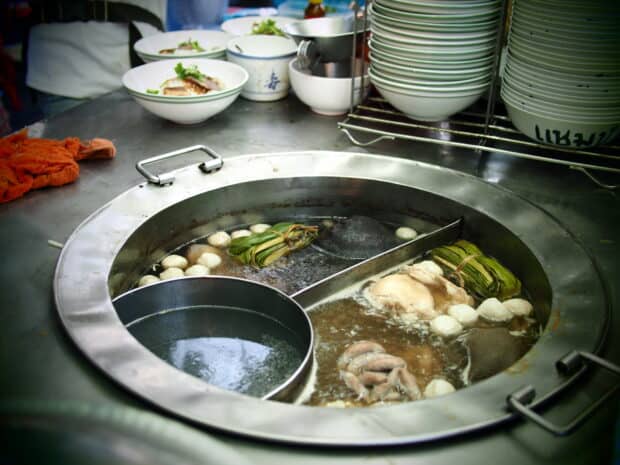
With all soups, it’s a good idea to check that your meal is prepared without Knorr stock cubes, RosDee (รสดี), or soy sauce (ซีอิ๊ว). For noodle soups, it’s also important to note that most soup vendors warm up their noodles by ladling them into hot water or broth. So, if you pick a soup stall that serves both egg or wheat noodles and rice noodles, it’s important to check that wheat noodles are not cooked or reheated in the same broth used for your order, and that a separate pot of water is used instead.
- Similar in texture to tapioca or arrowroot (tao yai mom, ท้าวยายม่อม), sago (sa koo, สาคู) is a starch derived from the pith of tropical palms and can be found in numerous dishes. Sakoo sai moo (สาคูไส้หมู) is minced pork wrapped in sago to form a dumpling, then steamed — a great street food snack. Sakoo with coconut milk and melon is essentially a sago or tapioca pudding, cooling and naturally gluten free.
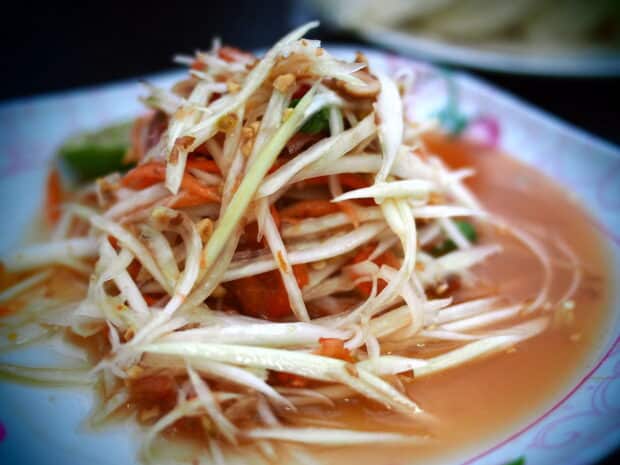
- Som tam (ส้มตำ) is the Thai version of shredded green papaya salad, made with lime, fish sauce, chili, and palm sugar, and generally topped with crushed peanuts, though regional variations exist. Some may contain dried shrimp, others brined crab, and some are sweeter than others. As with other dishes, it’s important to confirm no soy sauce or RosDee (รสดี) was used — and be aware that vendors at busy stalls don’t always clean the mortar between batches, which can be a cross-contact risk.
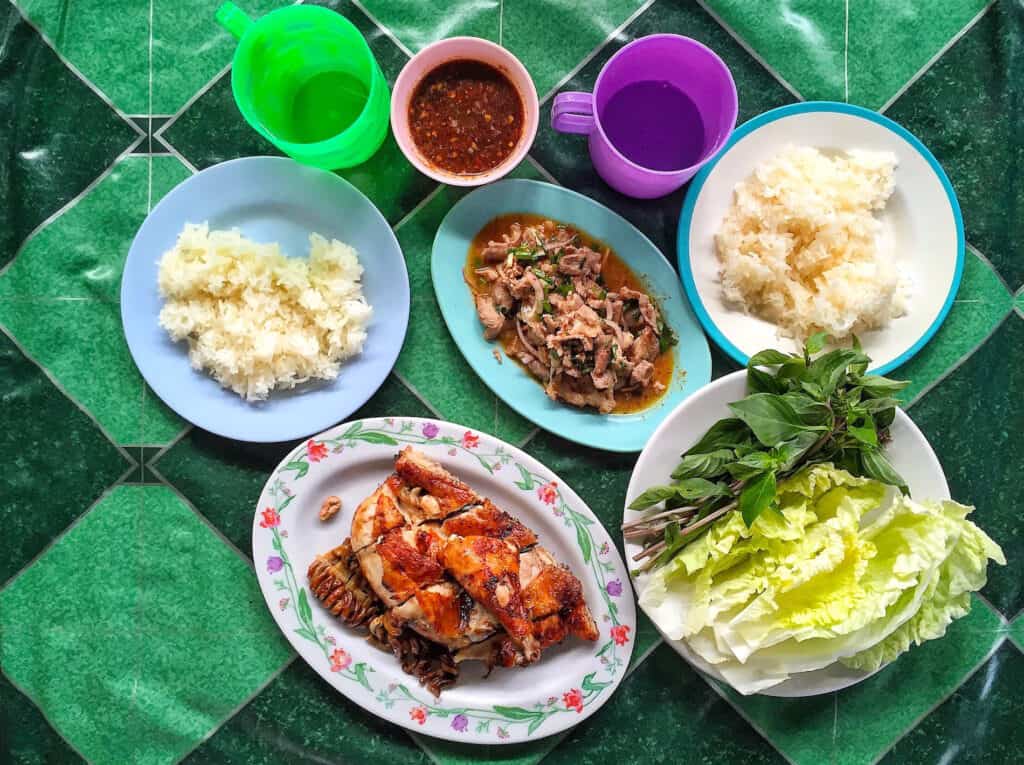
- Lap (ลาบ — also written laab or larb) is a Lao salad popular in the Isaan region of Thailand. The salad is made with minced meat, fish, or mushrooms seasoned with fish sauce and lime juice, mixed with chili and mint. Served at room temperature with sticky rice, it’s a lighter meal and incredibly flavourful. Larb is also typically seasoned with toasted rice powder (khao khua, ข้าวคั่ว), which is naturally gluten free, though, as always, it’s worth confirming no additional seasoning sauces are mixed in.
- Pad thai (ผัดไทย) is one of Thailand’s most popular exports — a stir-fry of rice noodles, eggs, tofu, and peanuts, traditionally flavoured with tamarind, sugar, chili, garlic, fish sauce, and dried shrimp. While the traditional recipe does not use soy sauce, many restaurants and street food stalls have started adding it for flavour, and a gluten free pad thai is less common than it used to be. The best bets are vendors that serve pad thai exclusively or restaurants willing to prepare it from scratch without soy or other powders that may contain wheat.
The word curry (kaeng, แกง) covers a wide range of dishes in Thailand, some thin and broth-like, others thick with coconut milk, nuts, and spices. Curry pastes commonly include chili, garlic, lemongrass, kaffir lime, shrimp paste, galangal, coriander, and onions. The curries themselves feature meat, seafood, and vegetables of all varieties, and occasionally contain nuts and fruit.
- Curry pastes themselves, including red curry paste (prik kaeng phet, พริกแกงเผ็ด) and green curry paste (prik kaeng khiao wan, พริกแกงเขียวหวาน), are traditionally made from chilies, herbs, and shrimp paste, and are naturally gluten free. However, in practice, prepared curries may still be unsafe if soy sauce, seasoning sauce, or other wheat-containing flavourings are added during cooking. So it is always important to check and not assume a curry is gluten free.
- Kaeng som (แกงส้ม) is a sour, tamarind-and-fish curry from central Thailand, prepared without coconut milk.
- Kaeng khiao wan (แกงเขียวหวาน) is what’s known in the West as green curry — the colour comes from green chilies, the creaminess from coconut milk.
- Similarly, red curry (kaeng phet, แกงเผ็ด) is based on red chilies and coconut milk, with proteins and vegetables varying by chef.
- Massaman curry (มัสมั่น) is a milder coconut-based curry usually made with meat (beef, chicken, etc.), potatoes, and peanuts or cashews, spiced with cardamom, cinnamon, star anise, clove, bay leaves, chili, tamarind, and fish sauce. Massaman’s spice blend reflects centuries of trade and Muslim culinary influence in southern Thailand and the Malay Peninsula.
- Panang curry (พะแนง — also spelled phanang) is a sweet and nutty red curry that owes much of its flavour to peanuts. Like many Thai curries, it’s important to make sure no soy sauce or wheat-containing flavourings are included.
- Nam phrik (น้ำพริก) are chili-based hot sauces. Translating to ‘chili water’, they are made with chilies, garlic, lime, fish sauce, or shrimp paste. Often served as a condiment or dip, nam phrik should be safe for celiacs, but it’s always important to confirm.
And for something sweet!
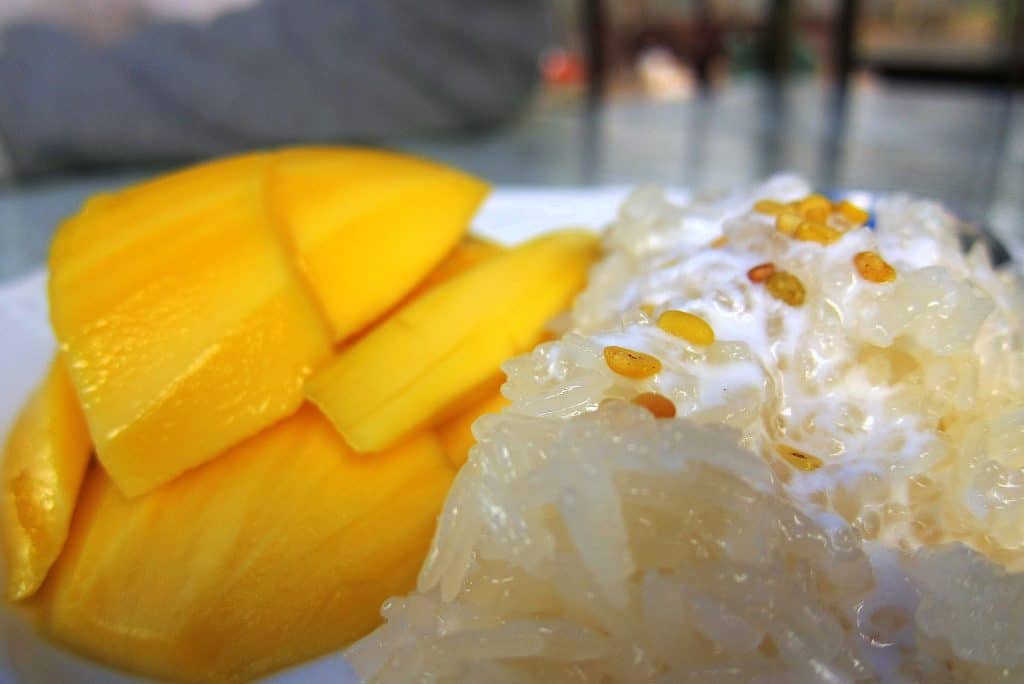
- Khao neow mamuang (ข้าวเหนียวมะม่วง) is sweet sticky rice served with ripe mango and coconut cream. Naturally gluten free and found throughout Thailand, it is one of the safest and most satisfying desserts for us, and while always wise to confirm ingredients, the traditional preparation contains no wheat. It’s so, so good.
- Not to be confused with khao tom, khao tom mat (ข้าวต้มมัด) is a dessert of steamed sticky rice wrapped in banana leaves. There are savoury variations that may be stuffed with pork or beans, but I gorged on the sweeter versions like coconut and banana.
- There is also khanom krok (ขนมครก — Thai coconut rice pancakes), which are traditionally made from rice flour and coconut milk, and are naturally gluten free. That said, the same caveat applies here as with som tam: at busy street stalls, the cast iron pan moulds are rarely cleaned between batches, some stalls may use wheat flour in addition to rice flour, and shared cooking surfaces can be a cross-contact risk. (I’ve added this note to the ‘unsafe’ section too, as a reminder)
- Tub tim grob (ทับทิมกรอบ) are water chestnut pieces in a tapioca-starch coating, served in sweet coconut milk over ice. Naturally GF, though it is worth confirming the coating is tapioca or arrowroot rather than wheat flour.
- Lod chong (ลอดช่อง), green pandan “worm” noodles in coconut milk and palm sugar, essentially Thailand’s version of cendol from Malaysia. Traditionally made with rice or mung bean flour, though always it is worth confirming that no wheat flour is blended in.
- Sangkhaya fak thong (สังขยาฟักทอง), a steamed pumpkin filled with coconut and egg custard. Confirm no wheat flour used to thicken.
- Bua loy (บัวลอย), soft glutinous rice flour balls in warm coconut milk, often with pandan, taro, or pumpkin. Made from sticky rice flour traditionally.
- Kluay buat chi (กล้วยบวชชี) are bananas poached in coconut milk, and very sweet and satisfying.
- Khanom chan (ขนมชั้น) is a layered pandan-coconut dessert made primarily from tapioca and rice flours that I gorged on frequently in Chiang Mai.
- Khanom tom (ขนมต้ม) are coconut-coated rice flour dumplings with palm sugar-coconut filling.
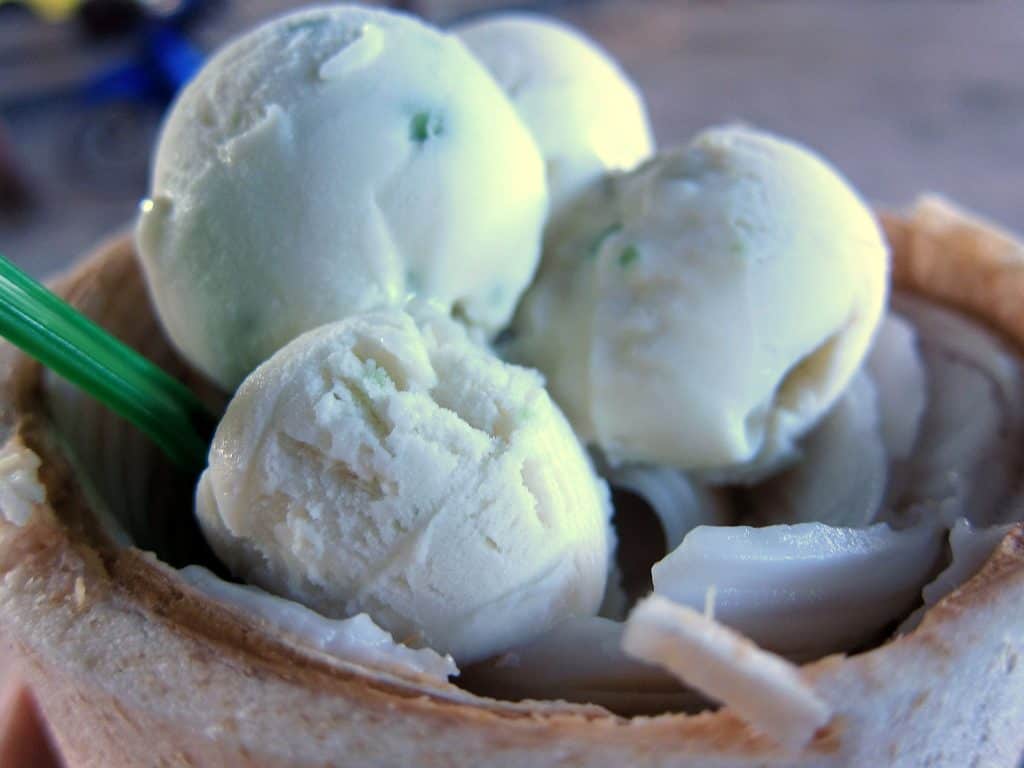
- And finally, coconut ice cream (i-tim kati, ไอติมกะทิ) is naturally gluten free, and a lovely cooling break from the heat just like coconut water itself. It’s often served with bread, as I note in the ‘unsafe’ section below — but, some vendors will serve it in the coconut shell or a cup instead. Be sure that you’re asking for a new scoop if you do this, since otherwise they are scooping directly into bread for everyone else and you will have cross-contact issues. Here was my fave snack:
Gluten free restaurants, hotels, and shops in Thailand
GF Grocery stores and shops
- Lemon Farm is an Organic grocer with multiple locations in Bangkok that supports local growers and stocks some gluten free products. Shop in person or online.
- There are many Lotus stores (big and small) throughout Thailand, and they carry gluten free products, but also Megachef soy sauce and oyster sauce, both gluten free. Lotus was formerly known as Tesco Lotus.
- Villa Market is a grocery chain that carries international products, including many gluten free items. There are 30+ locations across the country, including in Pattaya and Phuket.
- Tops is one of the larger supermarket chain in Thailand, and their bigger shops carry some gluten free items, including soy sauce, oats, pasta, cookies, crackers, and more.
- Rimping is a high-end grocer with nine outlets in Chiang Mai. Gluten free items in their range are clearly marked.
- If you’re in Bangkok for longer than a few days and are just dying for a beer, Wishbeer is an online alcohol delivery store that offers a range of gluten free beers to your doorstep. They offer wine and spirits, too.
- Gourmet Market at EMSphere Shopping Mall has a selection of non-perishable and ready-to-eat foods which are gluten free.
- Also in Bangkok is alt.Eatery, a grocery shop and restaurant. They carry a few gluten free products, and the staff are very helpful. Some dishes on the menu can be made gluten free on request.
- Sunshine Market in Chiang Mai is a health food store catering to vegan, vegetarian, and gluten free dietary needs. They have a small cafe with a few gluten free dishes.
- Chiang Mai Cosmetics has a small food section and often carries gluten free soy sauce – including baby ones for travelling!
Gluten free restaurants in Bangkok
- Gluten Free Bakery Tama is, as the name suggests, 100% gluten free. Located inside the AREA81 HIDEOUT Hostel Khaosan, there are quite a few GF options to choose from, including pizza, bread, cookies, croissants, cakes, and many more baked goods. While it can be a little tricky to find, it’s absolutely worth a visit for gluten free items in Bangkok.
- Bangkok Bold Kitchen is not a dedicated GF restaurant, but there is a GF menu available with quite a few tasty options. Known for its Thai comfort food, feast on dishes such as pad Thai, fried rice, curries, and noodles.
- Sunrise Tacos is perfect if you’re after a bit of Mexican fare in Bangkok. While not a fully gluten free establishment, many of the dishes are naturally gluten free (e.g. with corn tortillas), there is a separate gluten free menu, and the staff is reportedly knowledgeable about the dangers of cross-contact. Dine on classic Mexican and Tex-Mex cuisine such as tacos, fajitas, enchiladas, and nachos.
- Nopparat Cuisine and Gallery is a little spot in the heart of the city that’s known for its cheap and tasty meals. Most of the menu, which includes traditional Thai food, can be made gluten free, and the staff is well-informed on celiac disease. Enjoy pad thai, noodles, fried rice, and curry dishes; they also have GF soy sauce.
- Thip Samai is the place to go if you’re after one of Thailand’s most popular dishes, pad thai; the restaurant has been making it since the WWII era. This dish should be safe, but be clear when ordering and show a translation card to reduce the risk of cross-contact.
- Peppery Thai Bistro has a few restaurants in Bangkok. There are some gluten free options to choose from – think curries, pad thai, and papaya salad – and GF dishes are marked on the menu. The staff is quite knowledgeable about celiac disease, but be clear about your concerns and ensure the sauces do not contain gluten.
- Nara Thai is a women-owned restaurant known for its boat noodles, which are sadly not gluten free as they are cooked with a dark soy sauce. They do, however, provide a GF menu on request. It’s small, but it offers some delicious Thai dishes, like pork belly papaya salad and spring rolls. They have a few locations in Bangkok and one in Chiang Mai.
- Ginger Farm Kitchen has a few Michelin-recommended restaurants in Bangkok. They serve Northern Thai cuisine, and gluten free dishes are clearly marked on the menu. The ingredients are locally sourced and organic when possible, with a strong focus on a “farm to city” approach. They have multiple locations across Thailand, including in Pattaya, Phuket, Chiang Mai, and many in Bangkok (including one in the airport). Reservations are recommended.
- Theera Healthy Bake isn’t a dedicated gluten free establishment, but there are plenty of GF options, and the staff is extremely well-informed about celiac disease. The menu is marked with allergens (gluten, egg, nut, soy, and dairy), making it easy to choose the right option for you. Gluten free dishes include the vegan pancake stack, chicken stew with brown rice, roasted pork with black pepper sauce, and many more. There’s also a gluten free bread option for an additional 50 baht.
- Sweet Poppy clearly marks gluten free dishes on its menu, and gluten free bread is available. They have a small selection of traditional Thai foods, as well as Western-style dishes, although the gluten free options are limited. Try dishes like hummus with quinoa crackers, roasted cauliflower, and pavlova.
- Mango Vegetarian & Vegan is a cozy restaurant near Khao San Road that clearly marks gluten free dishes on the menu. The menu is health-forward, and GF dishes include tempeh with ginger fried rice and Singapore rice noodle curry. The Nutella waffles are dangerously delicious.
- Suananda Vegetarian Garden & Ayurveda is tucked away on a quiet street, offering a few GF options on their mostly Indian menu. The menu is clearly marked with allergens (including gluten and nuts), and also labels which dishes have gluten free options. Enjoy a wide variety of small bites, salads, rice dishes, curries, and more.
- Govinda is a vegetarian Italian restaurant and pizzeria. They have a small gluten free menu, which is available on request. They’ve been creating authentic Italian cuisine with fresh ingredients since 1997.
- SO Samsen is a good choice if you’re craving authentic Thai food (without the gluten). While not a fully gluten free establishment, there are lots of options available on their GF menu, including fried rice, pad thai, noodles, and curries. The staff are very accommodating and are well-informed about celiac disease.
- It’s a short walk from Khao San Road to Lotash Seed restaurant. The restaurant does not have a gluten free menu, but they are happy to make accommodations. It’s a good spot for Thai food, including rice dishes and curries. They have gluten free soy sauce, too!
- Taste of India on Khao San Road does not have a gluten free menu, but there are quite a few dishes that are safe to eat. It’s a very popular restaurant, and the staff are knowledgeable about the dangers of cross-contact. The chicken biryani and chicken korma are particularly good — be sure to confirm, however, that they do not use hing, a spice common in Indian food that is often cut with wheat.
- If you’re craving a really good burger, 25 Degrees at the Pullman Hotel serves up tasty ones on GF buns. The staff here are well-versed on celiac needs, and happy to point out safe dishes. The fries are gluten free, too, as they have a dedicated GF fryer.
Gluten free restaurants in Chiang Mai
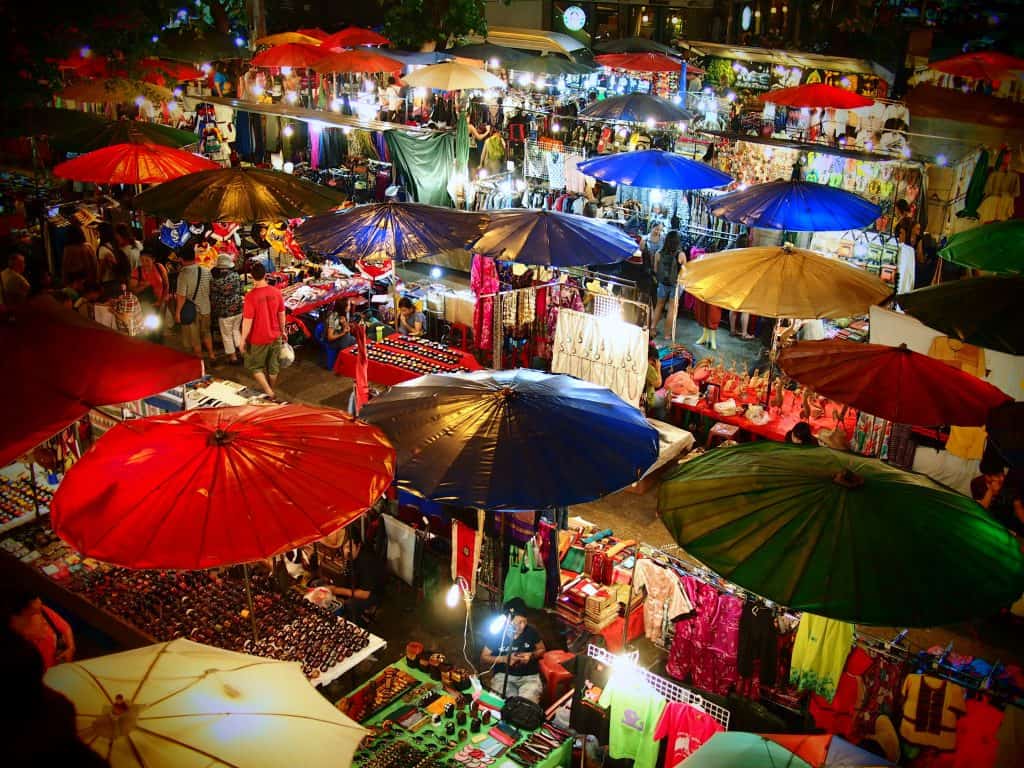
- Happy Allergy Bakery is a wonderful place for anyone with food allergies and dietary restrictions, and it is 100% gluten free. The menu is extensive, featuring quiche, Thai street-food snacks, tortilla wraps, tacos, sandwiches, burgers, and more. They have delicious fancy desserts, too, including a tasty array of cookies and cakes. A must-visit for celiacs in Chiang Mai!
- Chiang Mai Gate, the south gate of the fortified old city, is lined with food vendors, making it a great place for a delicious people watching experience. Mrs Pa Smoothie stall has smoothies made to order with fresh local ingredients, and is a personal favourite over the years. Before ordering from a food stall, show a translation card to ensure dishes are made safely.
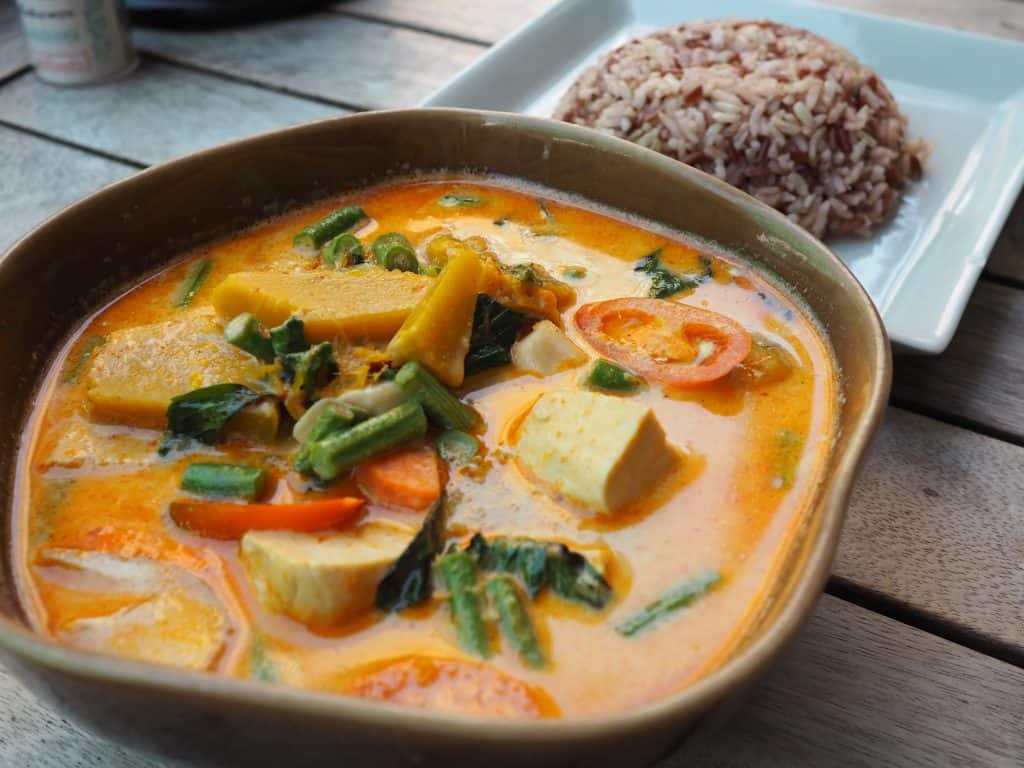
- I’m a little obsessed with the pumpkin curry at Anchan Vegetarian Restaurant. It’s filled with fresh organic veggies, the curry is delicious, and it’s served with red rice. The portions here are generous, and the menu clearly indicates which dishes contain gluten.
- Cherng Doi Roast Chicken on Soi Suk Kasem has the best crispy roast chicken I’ve ever had. They do not indicate GF foods on the menu, but the staff are helpful and a translation card can help with any confusion. At the time of writing, and during my many visits, their chicken was not marinated in soy or oyster sauce, but instead uses a blend of spices that we confirmed was gluten free. I lived nearby and ate there often, but as always please confirm that this remains the case. If so, the chicken is fantastic and I highly recommend it. However: the dipping sauce was not safe. So please confirm or skip it if you go.
- My pick for best tasting bowl goes to Khao Soi Mae Sai, again with their pork version – it’s so very good. With my translation card, they were also willing to sub out the wheat noodles for rice noodles, and omit the wheat crunchy noodles on top. It is important to confirm the rice noodles can be boiled separately, however, so as not to use the wheat noodle water, and that the khao soi base itself has no wheat. (They did not when I was there.)
- T Station Bar & Restaurant at Eastin Tan Hotel does not identify gluten free dishes on the menu, but readers report that staff are knowledgeable and helpful. Show a GF translation card before ordering, and the staff will provide gluten free bread and safe dining options.
- Chef Tao’s is a charming Thai restaurant near Wat Chiang Man. Gluten free dishes are not marked on the menu, but Chef Tao is well-versed on which ingredients are safe and happy to adjust dishes accordingly. Show a GF translation card on arrival to ensure you receive a safe and delicious meal.
- It’s Good Kitchen doesn’t have a gluten free menu, but there are a few dishes that are safe to eat, like green curry and Tom Yum Gai. The staff are helpful and will recommend safe dishes.
- The Duke’s has been serving Western foods in Chiang Mai since 2005. Gluten free dishes are clearly marked on the menu; however, it is best to show a translation card before ordering to minimize the risk of cross-contact. There are a couple of locations in Chiang Mai.
- One Nimman by Ginger Farm Kitchen is a Michelin-recommended restaurant serving Northern Thai cuisine. Gluten free dishes are clearly marked on the menu. The ingredients are locally sourced and organic when possible.
- Sababa Hummus clearly marks gluten free dishes on the menu, which includes hummus and falafel sets, sautéed chicken, and pita bread.
- Garden to Table by Hotpot Panda is recommended by celiacs for its special care in accommodating those with gluten free needs. Serving garden-to-table Thai food, there’s a separate GF menu and many items can easily be made gluten free, often swapping wheat noodles with sweet potato noodles. The khao soi soup comes with high praise, and there are plenty of other soups, noodle dishes, rice dishes, and stir-fries to choose from.
Gluten free restaurants in Chiang Rai
- Accha Authentic Indian serves Indian and Pakistani cuisine. They do not have a gluten free menu, but biryani (rice) dishes with meat are a delicious, filling option.
- Gluten free dishes are marked on the menu at Barrab, which serves traditional Northern Thai food. Many readers have shared that staff take great care with food allergies and that there is no worry of cross-contact.
- Hungry Wolf’s Steak & Ale House has good gluten free pizzas and grilled steaks, and they usually have gluten free buns for the burgers. The staff are knowledgeable about celiac disease.
Gluten free restaurants in Phuket
- Kopitiam by Wilai does not indicate which dishes are gluten free but many of the staff are knowledgeable and happy to make adjustments. The menu has dishes such as chicken Massaman curry, chicken or beef green curry, and other Thai dishes. They usually have GF soy sauce available.
- Little Phuket is a charming corner restaurant serving burgers and a variety of Asian cuisines. Gluten free dishes are not marked on the menu, but the servers and cooks are familiar and can guide you on which ones are safe or can be easily adapted.
- A short walk from the beach is The Sweet Restaurant, which serves popular Thai dishes and a handful of Western ones. Gluten free dishes are not marked on the menu; however, the staff are familiar with GF needs and can point out which dishes are safe.
- Honeymoon Thai Restaurant doesn’t have a gluten free menu, but the staff are well-versed and very helpful. The curry dishes are really good, and they usually have GF soy, fish, and oyster sauces available on request.
- Molly’s Tavern Irish Bar clearly indicates which dishes are GF on the menu, as well as dishes that can be made gluten free on request. They serve typical Irish pub fare, such as Irish beef stew and homemade cottage pie.
- Eightfold does not have a gluten free menu, but most of the Thai dishes (except the chicken wings) are safe to eat. The chef here is familiar with GF and can adapt some non-Thai dishes. The mango sticky rice is really good here.
- Tandoori Flames is a popular Indian restaurant in Phuket. They do not have a gluten free menu, but several of the dishes are safe to eat. Staff are familiar with celiac disease and offer great recommendations.
Gluten free restaurants in Krabi
- Cafe 8.98 in Ao Nang has several gluten free dishes marked on the menu, as well as dishes that can be made GF on request. Safe dishes include omelettes, smoothie bowls, salad, steak, and pasta dishes (there’s an option to switch to gluten free pasta on the menu)
- All of the Thai dishes and sauces at Diver’s Inn Steakhouse can be made gluten free on request, and the dessert menu has a couple of GF desserts as well. The staff are amazing here, and very knowledgeable about gluten free needs.
- The Brightside Bistro has a handful of gluten free dishes marked on the menu. They serve all-day breakfast and a variety of cuisines for lunch and dinner. The shish taouk is quite good, as is the Mediterranean veggie pasta.
- Shatterbox Coffee clearly marks gluten free options on the menu. Most Thai dishes can be made gluten free, and there are a couple of burgers. They have a dedicated fryer, and some readers report that the poutine gravy is made with coconut milk instead of flour.
- Taj Palace does not identify gluten free foods on their Indian and Thai menus, but there is a big sign stating they have gluten free food, and the staff are superb. The South Asian menu has mostly safe dishes, and some dishes on the other menus can be made GF on request.
- Red Chilli Thai Cuisine can make almost all of their dishes gluten free. Enjoy plenty of traditional Thai dishes including curries, fried rice, salads, stir fries, and more, including a good selection of desserts. The staff are very knowledgeable and accommodating.
Gluten free restaurants on Koh Lanta
- Joe’s Texas BBQ doesn’t have a gluten free menu, but the owner is happy to make recommendations and adjustments (showing a translation card helps the process). The grilled meats are juicy, and the fries are cooked in a dedicated fryer. Confirm no wheat-based sauces like Worcestershire or soy in the marinade.
- Spring Rolls is a vegetarian restaurant serving traditional Thai foods. Most of the curries are safe to eat, and the staff are very helpful. Using a translation card is suggested as GF foods are not indicated on the menu.
- While they do not have a gluten free menu, Tamarind Restaurant serves several Thai dishes that are safe. Be clear about gluten restrictions and cross-contact risks before ordering. A delicious and friendly spot for dinner.
- Rice noodle dishes and curries fill the menu at Malina’s Kitchen, many of which are naturally gluten free. The Massaman curry here is exceptional. The menu does not indicate which foods are gluten free, so be clear about your needs when ordering.
- Nang Sabai is a German-Thai restaurant with fantastic beach views. The majority of the menu is naturally gluten free, and the owners and staff are very understanding of the dangers of cross-contact. There’s also GF bread, pancakes, and dessert available. Enjoy schnitzel, pad thai, or… both! The restaurant gets very busy in the evenings for the beach sunset, so reservations are recommended.
Gluten free restaurants on Koh Tao
- Gluten free foods are highlighted on the menu at VegetaBowl, which includes falafel, salad and rice-based bowls. They also have several GF sauces!
- Living Juices does not have a GF menu, but there are a couple of options available. The hummus is quite good, and they have a GF banana bread from time to time. Smoothie bowls come with granola, so remember to ask them to omit it when ordering.
- Dig into gluten free avocado toast and other delights at The Factory Cafe. GF foods are marked on the menu here, including chocolate chip pancakes. Double-check that the homemade granola is made with GF oats before ordering.
- Cantina does not mark GF dishes on the main menu, but they have a small GF menu card. Tacos can be ordered with corn tortillas, and the nachos and burrito bowls are quite good.
- The Hacienda Bar & Grill has several of gluten free dishes, mostly pizza and pasta. The staff are great, and they are careful in terms of cross-contact. The selection of ciders is wonderful, too.
- Summer Cafe comes highly recommended by celiacs, especially for a safe and delicious breakfast or lunch. While gluten free items aren’t marked on the menu, it does state that GF options are available and to speak to the staff. There are often GF sandwiches, pancakes, burgers, and a multitude of desserts available daily.
Gluten free restaurants on Koh Samui
- Malee Kitchen Chaweng is an upscale restaurant serving authentic Thai cuisine. GF foods are not marked on the menu, but the staff are happy to make suggestions. Curries are always a safe choice, and the Tom Yum Gai is excellent.
- Chef Marco Boscaini hails from Italy and opened Prego Samui in 2003. It’s the best place on the island for authentic Italian cuisine, and a gluten free menu is available on request. A delicious, stress-free dining experience.
- 99 Bar Sushi is perfect when a craving for fresh sushi hits. The staff are lovely and happy to provide GF soy sauce on request. The trick to eating here is to resist the urge to order all the delicious rolls!
- Greenlight Cafe has a few gluten free dishes highlighted on the menu, such as salmon steak and Thai fusion salad. They also have build-your-own nourish bowls. The owner is familiar with gluten free needs and can give guidance if needed.
- Annie Sweetery & Eatery is a vegan restaurant with GF pancakes, salad bowls, and açai bowls. The granola is made with GF oats, which is delightful. Desserts include GF brownies and cheesecakes.
What ISN’T Gluten Free in Thailand?
- Soy sauce (see-ew, ซีอิ๊ว) is almost always made with wheat and should be avoided, unless you are dining at a restaurant that understands celiac disease and is substituting tamari or a certified gluten free soy sauce instead. Practice saying “mai ow see ew” (ไม่เอาซีอิ๊ว; I do not want soy sauce).
- Seasoning sauce (sot prung rot, ซอสปรุงรส), such as Golden Mountain, is a very common all-purpose cooking sauce in Thailand. It is distinct from soy sauce but typically also contains wheat, and should be avoided.
- Maggi sauce is a dark, concentrated liquid seasoning that is both very common in Thailand and definitely not safe for celiacs. It contains a triple whammy of wheat gluten, wheat grain, and wheat bran.
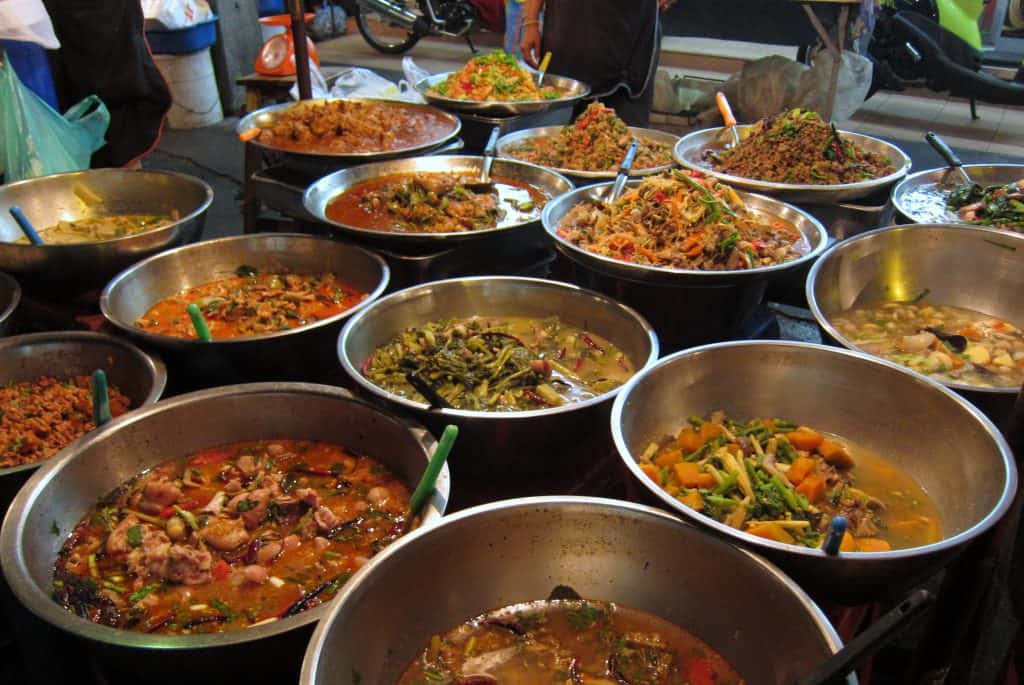
- RosDee (รสดี) is an Ajinomoto product, the same company that introduced MSG to the world. Like MSG, it exists to provide umami flavour, but comes in several varieties: beef (รสวัว), chicken (รสไก่), pork (รสหมู), and a newer, lower-sodium pork version. Unlike Maggi, which is a liquid, RosDee is a powder sprinkled directly into woks and soups, making it easy to miss. Many formulations contain wheat or wheat-derived ingredients and should be treated as unsafe for celiacs.
- Knorr stock cubes still contain wheat in Southeast Asia. It’s best to check before ordering that they aren’t used as a base for soups or other dishes. (Note: Knorr has reformulated its cubes to be gluten free in the UK and EU, but the Thai-market formulation still lists wheat via soy sauce in its ingredients.)
- Oyster sauce (nam mun hôy, น้ำมันหอย / ซอสหอยนางรม) is a common seasoning sauce thickened with wheat. Standard oyster sauce should always be avoided. Megachef produces a certified gluten free oyster sauce, available at Lotus and Villa Market, which is a useful reference to show vendors if you are cooking or eating somewhere willing to accommodate you.
- Hoisin sauce is a thick, sweet, and salty sauce sometimes often used as a glaze for meats in Chinese cuisine and as a condiment in Vietnamese cuisine. It isn’t as common in Thai cooking but can certainly be found. It almost always contains wheat as a thickening agent and should be avoided unless expressly gluten free.
- The same goes for black bean sauce and black soy sauce (see ew dam, ซีอิ๊วดำ), a common ingredient in dishes like pad see ew (ผัดซีอิ๊ว).
- Also on the avoid list: ba–mee (บะหมี่, also written bamii), egg-and-wheat-flour noodles used in several dishes, including khao soi and some noodle soups. Always confirm which noodle is being used before ordering.
- Kiao (เกี๊ยว) is the Thai word for wonton, a wheat-based dumpling of Chinese origin. Kiao nam (เกี๊ยวน้ำ) is the Thai wonton soup; both are off limits.
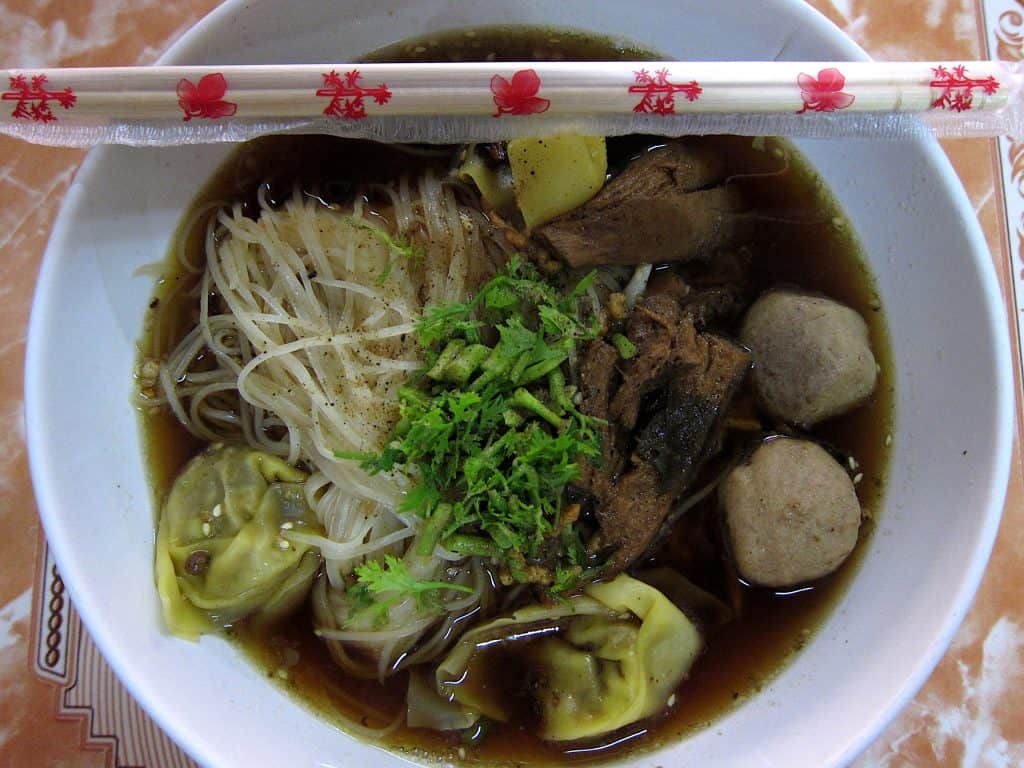
- Thai fried rice (khao pad, ข้าวผัด) comes in many varieties like khao pad gai (ข้าวผัดไก่, chicken fried rice), but none are safe if made with soy sauce or seasoning sauces like Golden Mountain. That said, most street stalls will make it without soy sauce if you ask. Show them your translation card, make sure the wok is clean, and I’ve found this works best during non-peak hours, when washing out the wok won’t disrupt their service. Most variations include a protein, eggs, onions, and garlic, as well as fish sauce (nam pla, น้ำปลา), stir-fried with jasmine rice and accompanied by fresh cucumber, tomato, and lime. Again, ensure the fish sauce is pure fish and not made with additives that may be unsafe.
- Pad see ew (ผัดซีอิ๊ว) is worth calling out separately here, as it’s a very popular dish that is rarely safe for celiacs: it’s stir-fried wide rice noodles (sen yai, เส้นใหญ่) cooked directly in black soy sauce (see ew dam, ซีอิ๊วดำ) and oyster sauce, both of which contain wheat.
- Pad kra pao (ผัดกะเพรา, stir-fried holy basil with meat) is another popular street food staple that is nearly always made with oyster sauce, soy sauce, or seasoning sauce, making it unsafe unless you can confirm gluten free substitutes are being used.
- Seitan: If you are seeking vegan or vegetarian fare in Thailand, beware of seitan, a meat substitute made entirely of wheat gluten. On my first trip, a restaurant told me repeatedly that vegan “meatballs” were made from mushrooms. I got very sick, asked to see the packaging with a Thai friend, and it turned out they were made almost entirely from wheat. It was a careless risk I took while hungry, and no one should follow in my footsteps. This is part of why my translation cards are as detailed as they are.
- Khao soi (ข้าวซอย) is a coconut milk soup commonly eaten in the North of Thailand. Similar to many Thai curries but thinner, it is traditionally served with egg and wheat flour noodles (ba mee, บะหมี่). That said, many restaurants and stalls will substitute rice noodles in the same broth if you ask, and in the eastern half of Northern Thailand, it’s easier to find variations already served with rice noodles. As with other soups, make sure wheat and egg noodles are not warmed in the broth itself, and that they are softened in a separate hot water area from the rice noodle option.
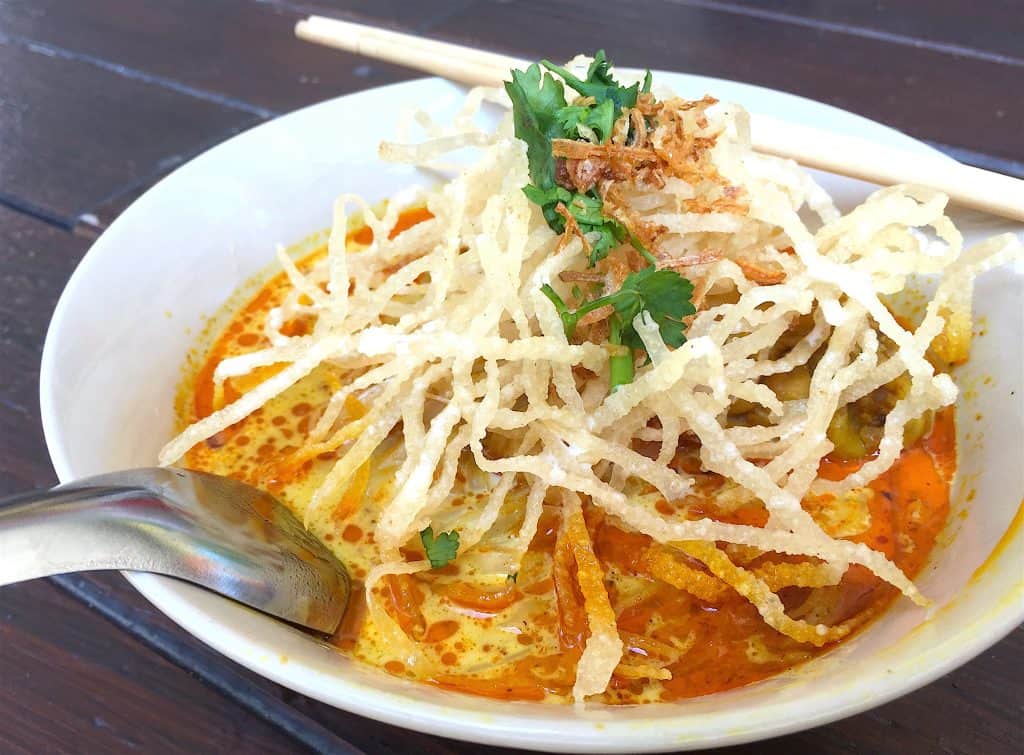
- Crab sticks — if ordering crab (pu, ปู), make sure it isn’t imitation crab (pu at, ปูอัด) you’ll receive instead. Crab sticks are generally reconstituted white fish bound with wheat starch, and are unsafe for celiacs.
- Chinese-style red-glazed pork and chicken: the lacquered meats that hang from vendors’ stalls should be avoided, as the glazes contain soy sauce and other wheat-based sauces. This includes char siu (หมูแดง, moo daeng).
- Thong ek (ทองเอก) are wheat and egg yolk-based confections carved into flower shapes, decorated with gold leaf, and served on special occasions. They are off limits.
- Khanom buang (ขนมเบื้อง, Thai crispy crepes) are a popular street snack worth flagging: the thin, crispy shell is often made from rice flour but many mixes also add wheat; fillings also can include ingredients that may not be safe, and cross-contact at busy stalls is a real concern.
- Boat noodles (kuay teow ruea, ก๋วยเตี๋ยวเรือ), a popular noodle dish with a rich, dark broth, traditionally contain pig’s blood and five-spice, but the broth is almost always seasoned with soy sauce or seasoning sauce, and sometimes Knorr cubes, making it unsafe.
- A less obvious ingredient to watch for is tao jiew (เต้าเจี้ยว), a fermented soybean paste that in commercial versions contains wheat. It can turn up in dishes that otherwise seem safe. A good example is khao man gai (ข้าวมันไก่), a delicious poached chicken rice. The rice and chicken themselves are typically fine (though soy sauce or seasoning sauce can be added, so as always — and I know I sound like a broken record here — it’s important to check). The accompanying dipping sauce, however, almost always contains tao jiew and soy sauce, making it unsafe. When in doubt, ask for the sauce on the side and check before eating.
- Meat skewers (moo ping, หมูปิ้ง) – grilled pork skewers being the most common – that are grilled on the street or in a restaurant are almost always marinated in soy sauce. They are sadly off limits for celiacs unless the vendor is using Megachef, which is rare.
- Meats like chicken (gai, ไก่), pork (moo, หมู), or beef (nuea, เนื้อ or เนื้อวัว) will be safe if grilled, but not so if pre-marinated in one of the seasonings mentioned above. Unfortunately many are marinated before cooking. The same applies to beans and vegetables of all types, which are often featured in Thai cuisine.
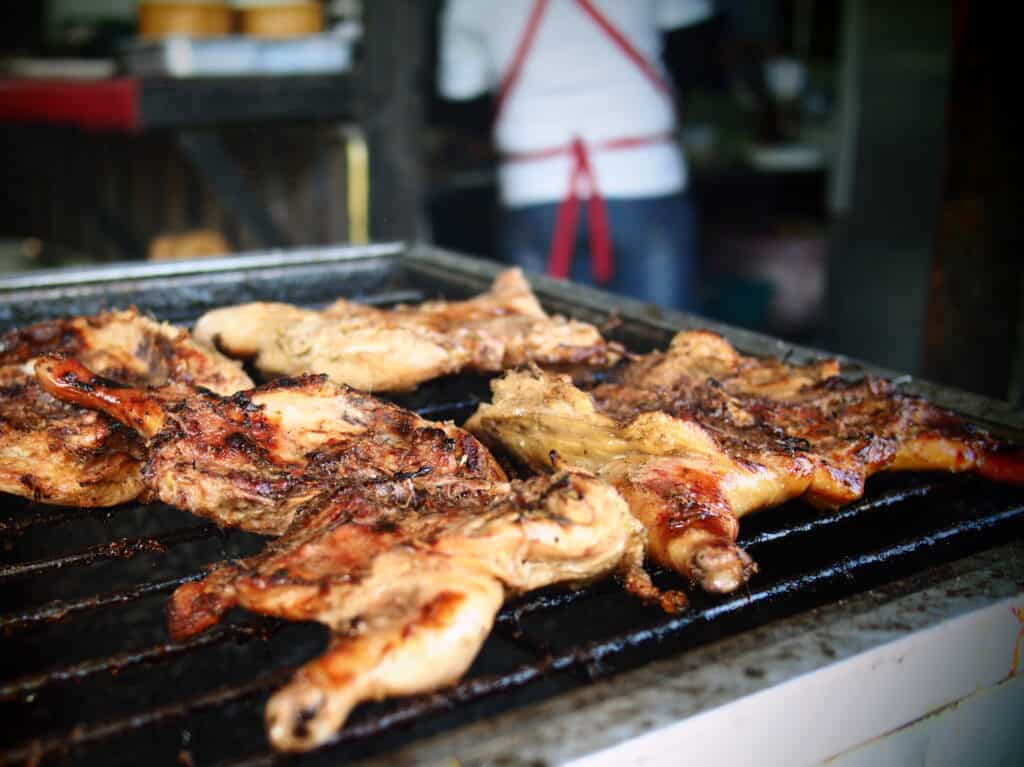
- For desserts, coconut ice cream (i-tim kati, ไอติมกะทิ) is usually GF on its own, but it is often served in a split bun or with wheat-based wafers. If you can get the ice cream alone, great, but sadly the scoop is usually going to have had contact with those wheat-based buns. Also kluay tod (กล้วยทอด), fried banana, which looks safe at first glance but is frequently battered with wheat flour and cooked in oil that may have had contact with wheat, so it goes on the ‘do not consume’ list.
Best books to read about Thailand
For those of you looking to visit Thailand, there are some wonderful books about food to help inform your visit.
- Featuring landscape photography meant to transport the reader from beach to jungle and back again, Panurat Poladitmontri’s Thailand: The Beautiful Cookbook is just that—beautiful. The recipes are authentic, the glossary extensive, and the cultural history insightful.
- For those interested in eating like the locals but lacking in the know-how, Simple Thai Food: Classic Recipes from the Thai Home Kitchen is an essential tool for recreating some Thai favourites at home. These recipes are meant to be simple and economical, without sacrificing flavour or authenticity.
- From the same author as Simple Thai Food, Leela Punyaratabandhu, comes a beauty of a cookbook: Bangkok: Recipes and Stories from the Heart of Thailand. This is an ode to the food of Thailand’s pulsing center, with stunning photography presented alongside recipes for dishes that run the gamut from home cooking to haute cuisine.
- Thai Street Food: Authentic Recipes, Vibrant Traditions by David Thompson is as much a coffee table book as it is a cookbook, with colourful photography that captures the vivacity and diversity of Thailand’s street eats.
- The Food of Northern Thailand: A Cookbook, by Austin Bush. I spent the bulk of my time in the North of Thailand, and loved eating my way through Mae Hong Son and Nan and Phrae provinces. This wonderful cookbook by someone passionate about Thai food who has lived there for years is worth a purchase if you want to recreate some of the recipes at home. Easy to substitute soy sauce for tamari when you’re making it yourself! He also has a The Food of Southern Thailand version out as well. Austin Bush has since moved to Lisbon, so I’m excited for his next projects.
- The Pepper Thai Cookbook: Family Recipes from Everyone’s Favorite Thai Mom. An IACP finalist for best cookbook for 2021, this book of 80 recipes is a great option for people looking for Thai-inspired meals that are based off traditional recipes. (She calls her recipes “Thai-ish”). Originally from Thailand, Pepper’s recipes are modified for her years in the States, from fried chicken larb, to pad Thai Brussels sprouts.
And some food blogs to learn more about the local food, and to guide non-celiacs in your midst:
