
Croatia sits between Central Europe and the Adriatic, and while its coastline draws most international attention, the country’s history and food culture are equally significant. For people with celiac disease or those eating gluten-free, there are a number of naturally gluten-free foods to rely on, though awareness of celiac disease is still more limited than in some neighbouring countries.
First settled in prehistoric times, the region became a vital part of the Roman Empire, within the provinces of Pannonia and Dalmatia. After the fall of Rome, the Duchy of Croatia was established around the 7th century, and around 925 AD, under King Tomislav, the Kingdom of Croatia was formally established. It lasted until 1102, when Croatia entered into a personal union with Hungary. For the next several centuries, the country was in the middle of some seriously powerful empires, such as the Venetians on the Adriatic coast and the Ottomans and Habsburgs, who influenced its inland territories. After years of Ottoman attempts to take them over, Croatia instead joined the Habsburgs, eventually becoming part of what was then the Austro-Hungarian Empire.
In 1918, after the end of World War I and the fall of the Austro-Hungarian Empire, Croatia was yet again in flux. It was eventually incorporated into Yugoslavia under the leadership of Tito, a communist revolutionary and politician. Yugoslavia (which included Bosnia and Herzegovina, Croatia, Macedonia, Montenegro, Slovenia and Serbia) devolved after Tito’s death in 1980. While Croatia declared independence in 1991, the brutal Bosnian War (from 1992 to 1995) was a territorial battle among Serbs, Croats and Bosnians that led to over 100,000 deaths, with rampant ethnic cleansing.
The Dayton Peace Accords were signed in December 1995, officially ending that war. Croatia became a member of the European Union in 2013, and today is known as one of the top tourist destinations in Europe, a place where you can sail along the Adriatic coastline, explore Roman ruins, and take in the beauty of Plitvice Lakes National Park, a UNESCO World Heritage Site. Cities such as Dubrovnik and Split draw tourists with their delightful charm, while islands such as Hvar are known for their beaches and nightlife. In Zagreb, enjoy numerous museums, fascinating architecture, and a cool café culture that rivals many other major European cities.
And of course, the country is also gaining recognition for its cuisine, which is where this guide to eating gluten free in Croatia comes in! New readers may question why I have a history crash course in this food guide, but I try to share both in my celiac guides; it’s an important part of any country, and does influence its food.
Detailed gluten free restaurant card for Croatia
This detailed Croatian gluten free restaurant card will help communicate your eating restrictions, and allow you to understand what is safe and unsafe from the menu.
Note: The card is available for purchase via Gumroad, a trustworthy 3rd party site that uses Stripe, so you know your information is safe.
Why is this gluten free card for Croatia different?
I used several different translation cards on my travels, and I still got sick. I may be more sensitive than some celiacs, but even a small amount of oil for frying that had contact with gluten, or wheat-thickened sauce in the food, is enough to make me ill for days. Let alone the joint pain later that week, and the fatigue. And regardless of whether we feel it or not, ingesting any amount of gluten is a problem if we are celiac.
Why choose a Legal Nomads detailed gluten free restaurant card?
✅ Each card is carefully crafted by someone with celiac disease, and then goes through 2 sets of translations to ensure accuracy.
✅ Unlike shorter, less-detailed cards, each card lists out local ingredients and dishes that have hidden (and not hidden!) gluten in them. Saying “I can’t have gluten” just isn’t usually enough to keep celiacs safe — many people preparing your food don’t know what ingredients have gluten in them.
✅ It expressly mentions that we cannot eat food from pans, shared fryers, or cooking surfaces that have had contact with gluten or gluten residue.
✅ To ensure the card is taken seriously, it adds an apology for the inconvenience, and emphasizes that avoiding gluten is a medical obligation, not a choice.
✅ It is instantly downloadable in both PNG and printable PDF file formats, to help you eat safely as you travel.
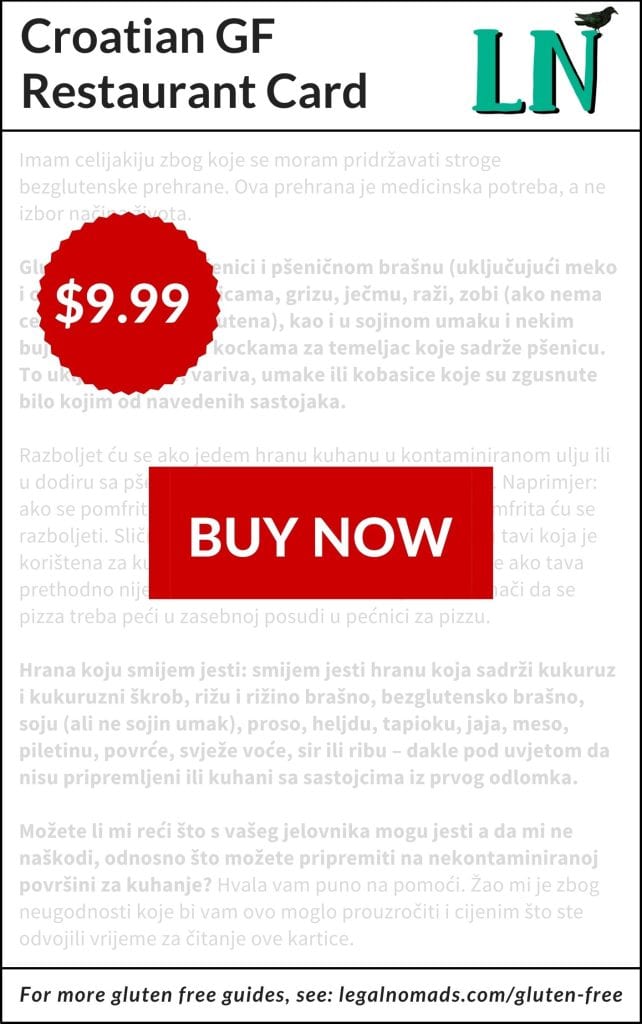
A big thanks to Tena for her diligent review of the second round of this restaurant card!
Tips for eating gluten free in Croatia
The Association of European Celiac Disease Societies estimates that one or two out of a hundred people in Europe suffer from celiac disease, leading to more than 7 million people across the region. They further note that only about 25% of patients in Europe receive a formal diagnosis, leaving the vast majority undiagnosed. This was also noted in at least one study relating to children in Croatia.
Croatian citizens are able to obtain gluten free flour through their health insurance for free, which I wish we had here! There is also a Croatian Celiac Disease Society.
Some tips for eating gluten free in Croatia:
- The European Union’s crossed-grain symbol is a reliable signal that an item is strictly gluten free, so look for it in products as you shop, as well as items that are listed as bez glutena. Stock up on non-perishable gluten free snacks at grocery stores, especially when travelling to rural areas or islands where options may be limited. Larger supermarkets like Konzum, Plodine, and Spar often have gluten free sections. See below for more details on these and other shops.
- While the phrase “bez glutena” (gluten free) is increasingly recognized, it is not always understood in a strict medical sense. Staff may interpret it as “no bread” rather than no gluten, especially when cross-contact is involved. Use a celiac translation card (I’m biased, but I think mine is great!) to adequately communicate your needs when you eat.
- Many Croatian protein dishes, like fried calamari, schnitzels, or breaded fish, are coated in flour or breadcrumbs. Be sure to ask if there is any breading and how the item is fried.
- Similarly, ensure a dedicated fryer is available if you’re having french fries (pomfrit), given all that breadcrumb use for fried dishes.
- Grilled meat and seafood are a great option — seriously, though, you need to make sure there are no breadcrumbs — with some suggestions below about how to look for the safer ones. Grills may have cross-contact as well.
- Many soups (juhe) and sauces (umaci) may use flour as a thickener. Ask if they are gluten free before ordering.
- Some Croatian bars and stores carry gluten free beer brands. You can ask for bezglutensko pivo to see what’s on hand (but as we know, gluten-removed is not the same as gluten free!)
Some additional notes to keep in mind
While many Croatian dishes are naturally gluten free, there are a number of common ingredients and preparation methods that can introduce gluten unexpectedly:
- Ajvar (commercially prepared) – This roasted red pepper and eggplant spread is typically gluten free, but some store-bought versions may include additives or thickeners. Check labels.
- Senf (mustard) – Most mustard is gluten free, as I discovered when living in Portugal, but some brands in Europe may include wheat-based additives. Check labels.
- Temeljac (stock) and stock cubes – Frequently used as a base in soups, stews, and sauces. Commercial stock cubes and concentrates can contain gluten.
What is gluten free in Croatia?
The country has many a pasta and pastry and bread, but it’s also got hearty stews traditionally made without gluten, and lots of soups and roasted meat and grilled fish or seafood to enjoy. You can find naturally gluten free meals even in restaurants that aren’t dedicated to celiacs; it is just a matter of knowing what’s safe or unsafe and being able to communicate your needs. And being on guard for breadcrumbs!
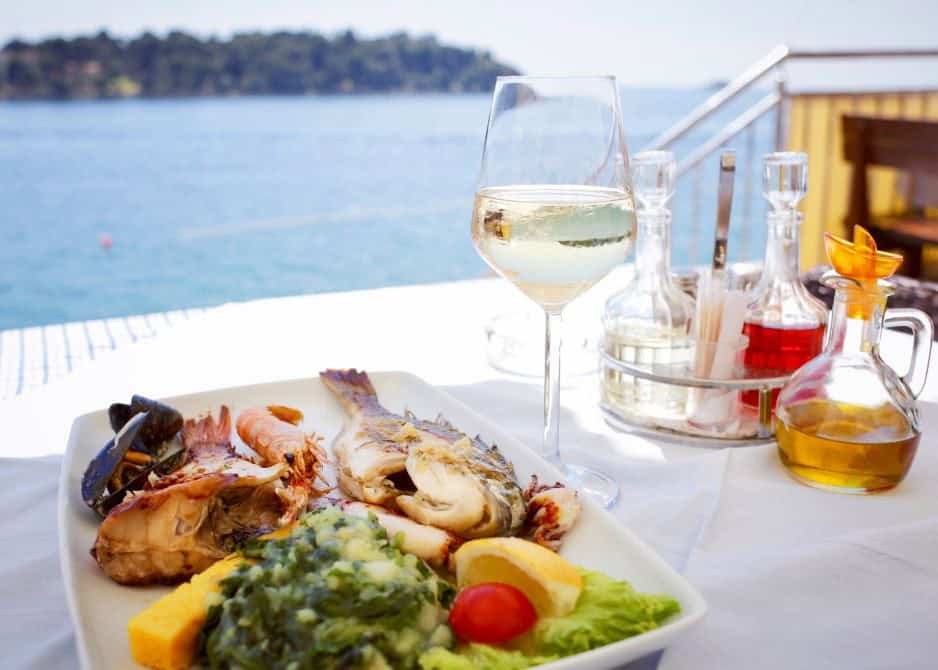
Gluten free dishes or ingredients in Croatia that are often gluten free
Many Croatian dishes are naturally gluten free, such as grilled fish (riba na gradele) or roasted lamb (janjetina). Always double-check preparation methods, of course, but as with many of my other gluten free guides, I want to arm you with a list of foods to use as a starting point that can help make your travels less stressful.
In the case of Croatia, going by basic preparation methods (grilling/roasting) is a good start. For meat, specialties from the grill are called s roštilja, and those roasted on the spit s ražnja. Pečeno means roasted, prženo means fried, pod pekom means that the dish has been put into a stone oven under a metal cover and cooked that way, and na lešo means boiled in broth or water (lamb, beef, fish).
Cheeses and charcuterie
- Pag cheese – Paški sir is a hard, salty sheep’s milk cheese from the island of Pag. It’s often sliced and drizzled with olive oil, a common addition to cheese boards or crumbled into salads.
- Basa is a Croatian cheese produced from the buša cow breed in the region of Lika. It can contain sheep’s milk as well. It’s made with varenika, sour milk, and salt. It’s a soft cheese, perfect for spreading. Basa is a common side with charcuterie boards, and delicious on baked potatoes.
- Škripavac is a soft cheese made from buša cows’ milk, mild and a little sweet. The cheese is named after the Croatian word for squeaky, because like Quebec cheese curds, it goes squik squik.
- Pršut, Croatian prosciutto, is produced in three regions. Dalmatinski pršut is dry-salted, pressed and seasoned, then smoked and air-dried for at least 12 months. It’s smoky, salty, and soft. Drniški pršut is a tradition dating back to the 14th century — salted, pressed, cold-smoked, and wind-dried for at least 12 months. The result is a melt-in-your-mouth prosciutto. Istarski pršut is salted and pressed with ground black pepper, garlic, and herbs, wind-dried for a few months, then left to ferment for 6 to 8 months. It’s a little sweet and melts like butter.
- Kulen is a spicy sausage made with minced pork, paprika, garlic, and other spices. It is smoked and dried for several months. Kulen is typically sliced thin and served on charcuterie boards.
- Kulenova seka – A spicy pork sausage, the same as Kulen, except that the pork casing is thinner, allowing it to dry faster. It’s tasty with mild cheeses.
- Šunka: A Croatian ham that is either wet or dry cured, and sometimes smoked. It’s a popular deli meat and is used in traditional dishes. Note: some preparations are not gluten free, like Šunka u kruhu (ham encased in bread, similar to beef wellington) — always confirm preparation.
Meats
When ordering meats, it is important to ensure that the grill is not shared with breaded items, and that Čevapi or other minced meats do not contain added breadcrumbs as it varies by location.
- Hladetina (Dželadija) – This Croatian head cheese is made with pork parts (ears, tail, feet, head) that have been slow-boiled over a low fire. It’s then cooled until a jelly-like consistency forms and served cold with baked potatoes or thick slices of bread. Forego the bread and it’s gluten free.
- Punjena paprika – Bell peppers are stuffed with a mixture of ground veal or pork (or both), rice, onion, garlic and spices. The peppers are cooked in a tomato sauce that can be thickened with flour, though, so it’s important to confirm.
- Odojak na ražnju – A roasted suckling pig seasoned with salt and spit-roasted until crispy and golden brown. A popular dish for special occasions, served with potatoes and bread (skip the bread!).
- Buncek – Smoked pork hock. It’s added to street food sandwiches and bean stew. Boiled buncek is often served with Ličke potatoes and sauerkraut.
- Brački vitalac – A traditional dish from Brač island, typically made from a mixture of meat and offal; recipes can vary between households and towns, so always check how it is prepared to avoid hidden gluten. Chunks of offal (liver, spleen, lungs) are threaded onto a skewer, seasoned with salt, wrapped in lamb caul fat, and grilled over low heat. It is then wrapped in unwashed lamb intestines and cooked again.
- Miješano meso or Ražnjići – Chunks of marinated meat (pork, chicken, beef, or lamb) skewered and grilled. The marinade is generally a blend of herbs and spices with lemon juice, garlic, and sometimes vinegar. A popular street food.
- Janjetina – Lamb spit-roasted over an open fire, marinated with oil and herbs, seasoned with salt. Roasted until crispy and golden, served with sliced onions.
- Peka – A rustic Dalmatian dish where veal, lamb, or octopus (Hobotnica ispod peke) are cooked with potatoes, peppers, and herbs under a domed cast iron lid, also called peka. It’s slow-cooked in a wood-fired oven; restaurants often require advance notice.
- Ispod peke – Very similar to peka (above), typically made with veal or lamb along with potatoes, bell peppers, onion, carrots, herbs, and white wine. Everything is tossed into a round pan, placed in a wood-fired oven, then covered with a terracotta domed lid topped with hot embers.
- Đuveč – A stew similar to a ratatouille, packed with summer vegetables, chicken thighs, smoked sausage, lots of garlic, and rice. Delicious and hearty. The recipe is traditionally made without gluten/flour to thicken, but double-check before ordering.
- Kotlovina – A stew of meat, sausages, and vegetables cooked in a large shallow pan over an open fire. Typically cooked outside and served with roasted potatoes and a side salad. Always confirm that there was no flour added, but traditionally it is omitted.
- Guskanaturopoljski – A Turopolje-style goose dish popular during festive occasions. Whole goose is seasoned with salt and placed in a deep baking pan, covered with melted pork fat, and roasted. As the goose cooks, its liver and gizzard are cooked with paprika, cornmeal, and a handful of spices. When the goose is done, it is served atop the palenta dish.
- Purica na Lovranski način – Also known as Purgerica turkey, it’s a whole turkey stuffed with a mixture of chestnuts, ground veal, bacon, heavy cream, butter, cognac, prošek (sweet wine), bay leaves, and rosemary. A popular Christmas dish.
- Čevapi – This dish is minced meat (typically beef or lamb) seasoned with spices like garlic, black pepper, and sometimes paprika, hand-rolled into little logs and grilled. It’s a Bosnian dish that has gained popularity in Croatia and Serbia. It’s served with lepinja or somun flatbread, onions, and ajvar (an eggplant relish). Čevapi is normally served as a sandwich, so order as a platter instead. Confirm no breadcrumbs as always.
Seafood
- Salata od hobotnice – This octopus salad originates from Dalmatia. Cooked octopus is cut into pieces and accompanied by potato, tomato, capers, olives, garlic, and dressed with olive oil, lemon juice, and herbs.
- Gradele – From the coast, gradele refers to a traditional way of grilling fresh fish over an open fire, referring to the name for the grate itself. A great way to get fresh gluten free protein — just confirm the grill isn’t used for breaded products first.
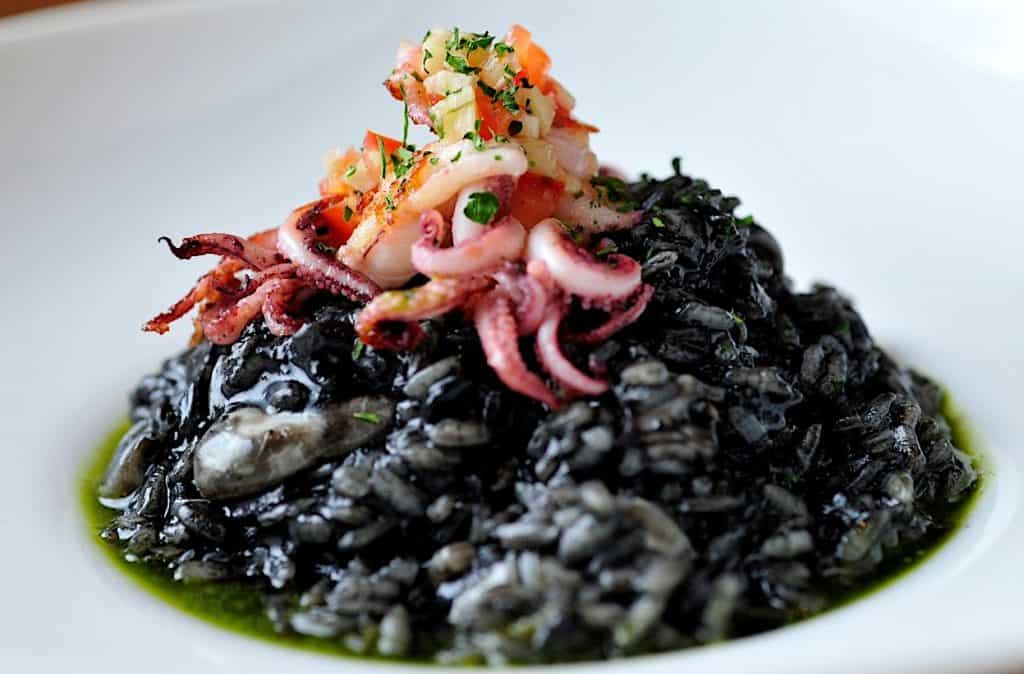
- Crni rižot – A black risotto made with cuttlefish or squid; when the ink is incorporated, it gives the dish an eye-catching black colour. A popular lunch dish found on many tavern menus. Sometimes mussels and clams are added as well. As always, confirm no thickeners were added to the rice; the general recipe is gluten free, however.
- Riba na gradele – Freshly caught fish bathed with lemon juice, fresh garlic, olive oil, and rosemary, then grilled over a fire. Often served with roasted vegetables.
- Srdele na žaru – Sardines, freshly caught, marinated in olive oil, lemon juice, salt and pepper, and grilled over a charcoal fire. Simple and delicious, and a favourite of the late Anthony Bourdain. A popular street food.
- Lignje na žaru – Grilled squid or calamari, often served with garlic and parsley. Also used in stews or served with palenta.
Stews and Soups
- Brodet – A fish stew made with several types of fish, garlic, onions, parsley, and tomatoes. The variety of fish gives the stew a rich depth of flavour. Traditionally made without gluten/flour to thicken, but double-check before ordering.
- Brudet – A one-fish stew made with white fish, tomato, onion, garlic, hot peppers, bay leaves, and rosemary. A popular dish; most households have their own version. Traditionally made without gluten/flour to thicken, but double-check before ordering.
- Fiš paprikaš – The thin spicy broth sets this fish stew apart. Made with carp, catfish, and Northern pike, and seasoned with paprika, hot peppers, garlic, onion, and bay leaves. Usually served with a dish of ground paprika on the side.
- Gregada – A traditional saltwater fish dish. Potatoes and onions are thinly sliced and placed in the bottom of a pan, drizzled with olive oil, then topped with saltwater fish (cod, anglerfish, scorpionfish, monkfish, hake, or sea bass). Water and white wine are added to just cover the fish and it’s baked. Sometimes parsley and garlic are added as well.
- Maneštra – An Istrian vegetable stew similar to minestrone. The base is usually beans, sour cabbage, and potatoes. Wild fennel, corn, chickpeas, carrots, and other vegetables are added. Pork bones, smoked or cured, provide added flavour. Traditionally made without gluten/flour, but double-check before ordering.
- Bakalar – Made with dried salted cod, prepared three days in advance. The cod, once soft, is beaten and boiled with potatoes. Bones and skin are removed, and the fish is cut into pieces and mixed with potatoes, garlic, olive oil, and parsley. A popular Christmas dish.
- Čobanac – A traditional meat stew from the Baranja region of Croatia. Hearty (typically veal, pork, and lamb), cooked in a pot hanging over a fire with onion, carrot, tomato paste, garlic, and lard. Traditionally made without gluten/flour to thicken, but double-check before ordering.
- Istarska Jota – Once considered a peasant meal, this stew is made with beans, sauerkraut or sour turnips, potatoes, onion, garlic, smoked bacon, and smoked spare ribs. Thickened by blending bacon, garlic, and parsley into a paste.
- Zelena menestra – This green stew dates back to the 15th century in the Dubrovnik area. Dried smoked meat (ribs, shank, pig’s head, dried mutton, pancetta) is added to a pot to soak, then washed off the following day, and to the pot is added green cabbage, head cabbage, potatoes, and kale.
- Sarma – Typically made with cabbage leaves, but can also be made with grape leaves. The leaves are stuffed with a mixture of ground beef, pork, and bacon, long-grain rice, and spices. Simmered, steamed, or baked, and served with mashed potatoes.
- Grah – A Croatian bean soup or stew, usually made with cranberry or borlotti beans, carrots, potatoes, garlic, and smoked meat, which gives the soup a smoky flavour. The soup is usually thickened using tomato paste or purée. Variations include Grah iz ćupa (Hungarian-influenced, cooked in an earthenware pot), Grah s kiselom repom (made with pickled turnip), and Grah s kiselim zeljem (made with sauerkraut).
Sweets
- Rožata – A delicious custard, somewhere between a flan and crème brûlée, made with caramel and enhanced with lemon or rose water. Typically gluten free unless modified with gluten-containing ingredients. Confirm when ordering.
- Šnenokli, paradižot – Meringue poached in custard cream, creating a “floating” meringue dessert. Typically thickened with cornstarch, not flour. Confirm when ordering.
- Sladoled – Ice cream! For flavours that are gluten free, as with any country, we must confirm no cross-contact between scoops or any wheat-based cones.
Sides & Other
- Croatian honey – Often made from mixed flowers, chestnut blossom, acacia, and on the coast, lavender and rosemary. The most popular is acacia honey. In Istria, white truffle is sometimes added, creating a decadent, elevated flavour.
- Fritaja – A Croatian omelette made with eggs and various fillings like cheese, ham, or vegetables. In spring, fresh wild asparagus and spring onions are a favourite addition.
- Žganci – A cornmeal dish found in Slovenian and Northern Croatian cuisine, also known as palenta or pura in Istria and Dalmatia. Served with sweet milk, sauerkraut, or pork rinds. Some regions may use wheat flour as well as corn, so it’s important to confirm.
- Sataraš – A vegetable dish where vegetables are fried and seasoned, then stewed until most of the liquid cooks off. Served hot or cold, often as a side with fried fish or meat dishes.
Gluten free products at grocery stores and shops
GF products like Schär and other European GF brands can be found in many shops below, as well as DM, a German pharmacy that has many stores throughout Croatia. Big supermarkets like Konzum will also carry a limited selection of gluten free products.
- Garden is a healthy food store with natural and organic foods. They have two shops in Zagreb, and orders can be placed through the website for pick-up or delivery. They have a wide selection of gluten free products, including beer, cereals and ready-to-eat meals, gluten free sauce, juice, and supplements.
- Pharma & Bio is a pharmacy and health food shop in Karlovac, Croatia. They sell gluten free flours, pasta, burgers, and sauces like gluten free tamari. Shop in person or order online and pick up.
- Konzum is a general store chain in Zagreb with a large selection of low-cost gluten free items, including Schär bread products, beer, gluten free soy sauce, cereal and nut butters.
- Tommy Maximarket is another low-cost general store in Samobor, Croatia. They have quite a few gluten free products, including Dr. Oetker gluten free puddings and muffin mixes, Barilla pastas, hummus chips, and dried meats.
- Bio Bio Organic Market sells high-quality certified organic and natural foods. They have stores in Zagreb, Split, and throughout Croatia, and orders can also be placed online. They sell domestic eco products, and carry an impressive selection of gluten free products. Here you’ll find Daš Pops, Clearspring gluten free soba noodles and tamari sauce, energy bars, sweets, baby food, and more.
- Studenac is a popular, budget-friendly market for students; there are hundreds of them in Croatia. They don’t have a lot of gluten free products, but they do carry Schär breads and pastas, and Nestlé gluten free cereal.
- Tvornica Zdrave Hrane is a health food store chain in Zagreb, Split, and throughout Croatia. It’s a great place if you need some health-focused advice. The gluten free food selections include pasta, crackers, and gomashio.
- Moje Malo Zlato is a small family-run bakery that produces gluten free (and lactose-free) muffins, breads, and more, distributing them throughout Croatia. Their map shows where to buy their products.
Dining out while gluten free in Croatia
As with my other guides, the following are restaurants, bakeries, and other spots where celiacs can grab a bite when visiting Croatia.
Gluten free restaurants in Zagreb
- Glutenbio in Zagreb is dedicated to gluten free products. You can visit the shop in person or order online. Products include flours, baking ingredients, pasta, sauces, and cookies. The website has a delicious array of gluten free recipes as well.
- InTolerant is a gluten free food shop and bakery in the Trešnjevka-sjever neighbourhood. They have a 100% gluten free kitchen where they bake breads, cakes, cookies, pastries, and pasta. They also sell gluten free products from other companies. They’re known for making authentic Croatian foods, so the spot is definitely worth a visit when in Zagreb.

- Melt – Gelato & Brunch Bar is a cute, dedicated gluten free café a short walk from the Museum of Broken Relationships. The owner is gluten free and focuses on creating dishes that are healthy and packed with flavour. The menu has healthy bowls, toasts, desserts, and gelato. The GF pumpkin chicken bagel is a popular item, and the drinks menu includes smoothies, cocktails, and coffee.
- Kata is a 100% gluten free brunch spot near Park Zrinjevac. The menu includes sandwiches, avocado toast, pizza, and a delicious breakfast sandwich. There is a wide variety of breads and baked goods available as well. Note: there used to be two Kata locations close to one another, but one is temporarily closed. Make sure you’re going to the Martićeva 15 location.
- Bistro Fetiš is a small, trendy restaurant with a 100% gluten free menu. It’s a popular spot for breakfast or lunch, and looks like a chill bistro-cafe. The menu has snacks and light meals, and every one of them is beautiful and packed with flavour. There are many delicious choices, so plan to return more than once.
- Figa Garden by Henrik is a 100% gluten free café near Mažuranić Square. It’s a bustling café with a lovely outdoor patio space. The menu features sandwiches, quiche, and sweet treats like Jaffa cake and cookies. The coffee here is good, as are the cocktails.
- Vis à Vis by Vincek is a 100% gluten free café under the Zagreb funicular. The menu is packed with delicious cakes, cookies, pies, and savoury eats. They serve a delicious gluten free breakfast.
- Arepera Maracay is not considered 100% gluten free, but the majority of items on the menu are naturally gluten free. Arepas are a Venezuelan food made with corn flour and stuffed with a variety of delicious ingredients, and they’re obviously a highlight of the menu here. Some sauces are not gluten free, so ask when you order to ensure you’ve got ones that you can tolerate.
- Papavero Pizza & Food Lab is a wonderful Italian restaurant with a dedicated gluten free menu featuring pizzas and burgers. They have a dedicated kitchen space for preparing gluten free foods, which makes this spot an excellent option for celiacs.
Gluten free restaurants in Gorski Kotar / Rijeka
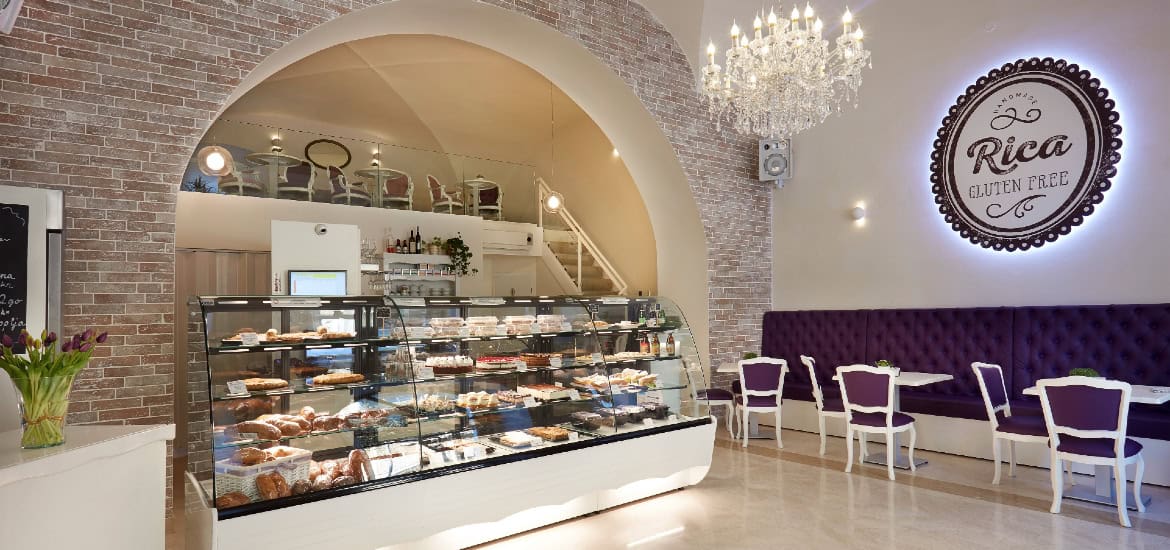
- Rica is a 100% gluten free resto-café in Rijeka. It’s a cute spot with seating spread over two floors. The menu features pizza, buckwheat or hemp noodles, brownies, cookies, and other sweets.
- Bistro Bukarica is an Italian restaurant in Malinska. They do not have a dedicated gluten free menu, but some dishes can be made gluten free . There is a dedicated space and equipment for the preparation of gluten free dishes.
- Fukuro Sushi & Sashimi Bar in Rijeka has a few gluten free options on the menu, and the menu is clearly labelled for those with allergies and intolerances. Sashimi is the safest option; note that dishes like karaage, ebi tempura, and gyoza typically contain gluten and should be verified or avoided.
Gluten free restaurants in Rovinj
- Restaurant Dream is regarded as one of the best restaurants in Croatia, and is located in a 19th-century building. The restaurant is known for its Istrain and traditional dishes, and, while not a gluten free establishment, the owner assures that 90% of dishes are either gluten free or can be made gluten free. Enjoy GF pasta, bruschetta, steak, burgers, and more.
- Restaurant Maslina has a large menu, and there is reportedly a gluten free menu. It’s a charming Mediterranean restaurant, and there are a few fish and meat dishes to choose from as well as GF pizza and pasta.
- Kantinon Tavern has a large menu with a handful of gluten free dishes. The back of the menu has a guide for those with food allergies, making it easy to identify which dishes are safe, but you should still check with the staff about cross-contact. A beautiful waterfront restaurant with an elevated menu.
Gluten free restaurants in Dubrovnik
- Pizzeria Mamma Mia has a dedicated gluten free menu with pizza, risotto, pasta and fish dishes. It’s a popular spot in Dubrovnik with a large covered patio. It’s women-owned and great for family dining, as the gluten free menu has a kids section.
- Peppers Eatery & Cocktails does not have a dedicated gluten free menu, but dishes that are gluten free are clearly marked. They serve burgers, tacos, and mouthwatering options like grilled chicken satay and BBQ pork belly strips.
- Proto Fish, established in 1886, has several dishes that can be made gluten free on request. The restaurant is one of the best in the city, with a pretty view and crisp white linens. It is a Michelin guide recommendation, so if you’re on the search for delicious seafood dishes while in Dubrovnik, you’re in the right place.
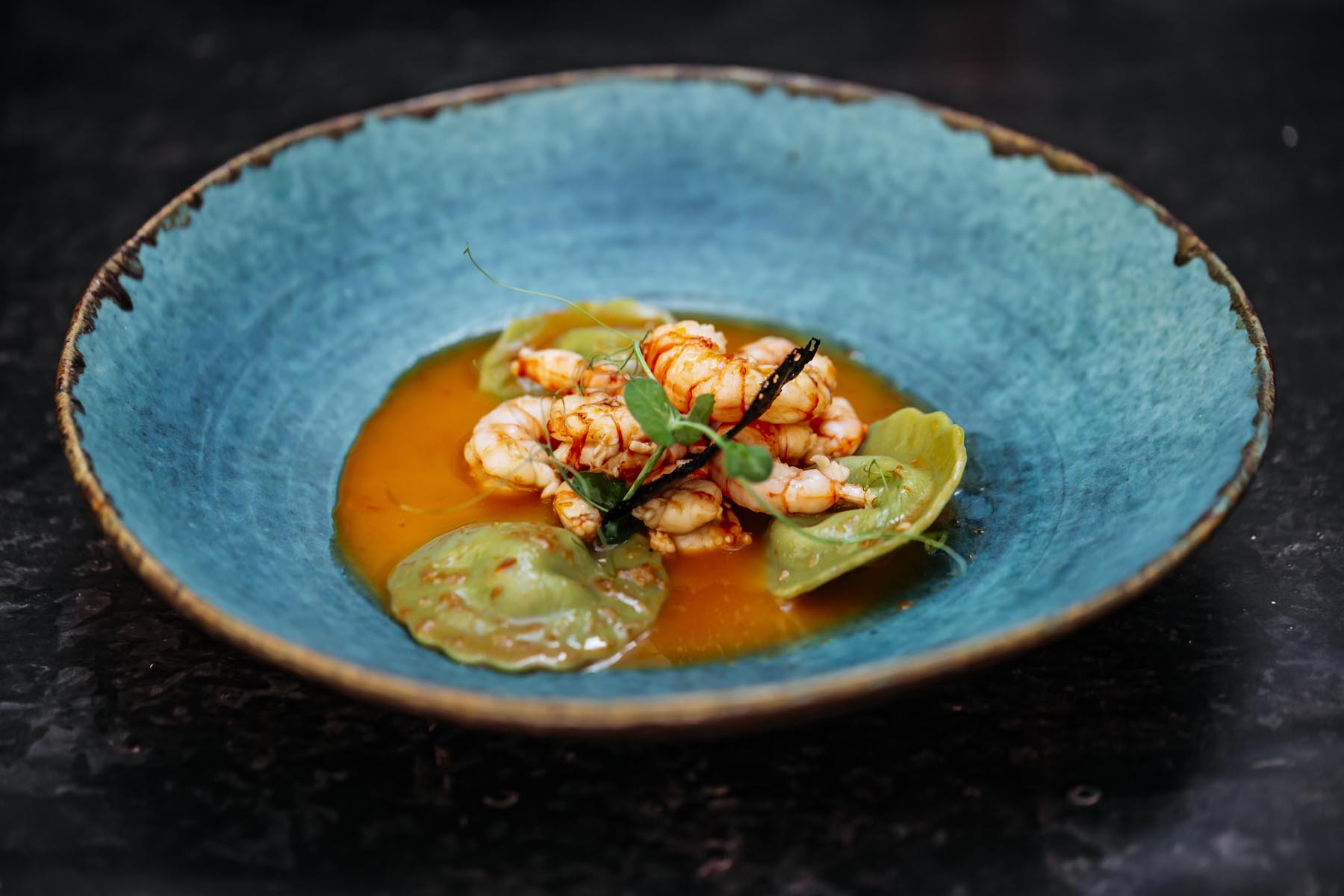
- Dundo Maroje has a couple of gluten free dishes on the menu, mostly pasta dishes. The food is beautiful and flavourful, and they have a good cocktail menu. It’s a charming restaurant in the old city, with a small alley patio.
- Spaghetteria Toni is not 100% gluten free, but the gluten free pasta is available for an added fee. The restaurant has been open for 20 years, and is known for serving Italian dishes with a Dalmatian influence.
- Mex Cantina Bona Fide has a good variety of gluten free dishes on the menu, which are clearly indicated. It’s a Mexican restaurant serving tacos, burritos, quesadillas, and enchiladas. It’s located in the Old Town, and easy to miss, so keep your eyes peeled!
- Castello Mediterranean Restaurant is found in the Old Town and, while not fully GF, has a fantastic gluten free menu. Enjoy pizza, pasta, risotto, and mains such as tuna steak or grilled calamari. The staff is also very knowledgeable about celiac disease.
Gluten free restaurants in Poreč
- Central Cafe has a large menu, and most pizza and pasta dishes have gluten free options; just ask your server for the dishes that can be made gluten free. The restaurant is located in a lively square, and on a warm day, the outdoor patio is best. It’s a favourite among celiacs.
- Cotton Club does not have a dedicated gluten free menu, but they have a couple of rice-based dishes, and gluten free pizzas can be made on request. There is a risk of cross-contact, so keep that in mind. It’s located next door to Central Cafe in Poreč Old Town.
- OX Steaks & Grill does not have a specific gluten free menu, but beside each dish is an indication of which allergens it contains. Refer to the menu’s allergen guide to find the number for gluten. It’s a great place for steak, especially tomahawks.
- Tavern Ćakula also does not have a dedicated gluten free menu; however, there are several dishes that are safe to eat. Tuna carpaccio, scallops, Istrian-style cuttlefish black risotto, and more. It’s a beautiful upscale restaurant in the Old Town, but make sure to ask about cross-contact.
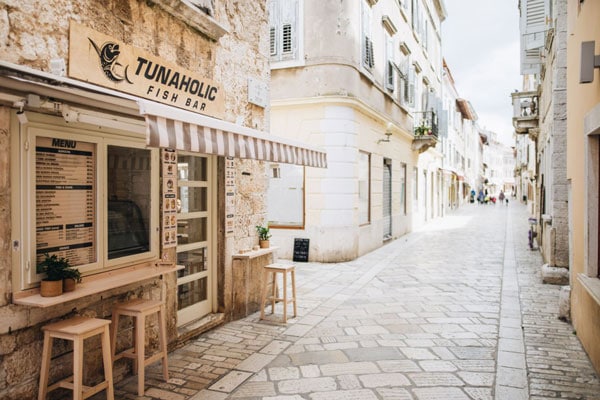
- TUNAHOLIC Fish Bar is known for its fish dishes, but they also have a few naturally gluten free rice bowls. They have a couple of locations in Croatia, including Zagreb and Rovinj. Love the name!
Gluten free restaurants in Zadar
- AT BANGKOK Thai Restaurant is a good option if you’re craving Thai food, as many Thai dishes can easily be made gluten free. The staff is knowledgeable about the dangers of cross-contact, but your translation card will still come in handy here. Dine on pad thai, curry, fried rice, and many other Thai favourites.
- Pizzara does not have a dedicated gluten free menu, per se, but their pizzas can be made with gluten free dough. The kitchen also does not have a dedicated space for preparing gluten free meals, so be sure to ask about cross-contact. That being said, many rave about the delicious gluten free pizzas here.
- 2Ribara does not have a gluten free menu, nor are dishes labelled. However, there are some dishes that are safe for celiacs; the shrimp risotto is a popular choice. Many of the staff are knowledgeable about gluten restrictions, but your translation card will come in handy here.
- Proto Food & More has several dishes that are gluten free. The menu is not marked, but servers are knowledgeable and will verify with the chef. At the time of writing, the grills were used only for meat and fish, and not any breaded products.
- Bob Rock’s Ice Cream Shop has gluten free and vegan ice cream on the menu. They use natural ingredients in their ice cream, and you can choose from a variety of flavours. The shop can be found in the Old Town, a short walk from the waterfront.
- The Botanist has gluten free and optional gluten free dishes clearly marked on the menu. It’s a vegan restaurant with dishes like plant-based filet mignon and spaghetti bolognese. It’s located in the Old Town, and the outdoor patio overlooks the water, making it a great place for a picturesque meal.
- Pet Bunara’s gluten free options are minimal at first glance, but many dishes can be made gluten free, so ask your server for the current gluten free options before ordering. The restaurant has been serving delicious, seasonal organic dishes for over 40 years, creating meals out of sustainable meat, game, fish, poultry, and vegetables.
Gluten free restaurants in Split
- SALT Gluten-Free House is a dedicated gluten free restaurant near Muzej iluzija. They serve breakfast until noon, and the lunch and dinner menu includes burgers, grilled sausages, sandwiches, and pizza. They have yummy desserts, too, including homemade donuts and cake.
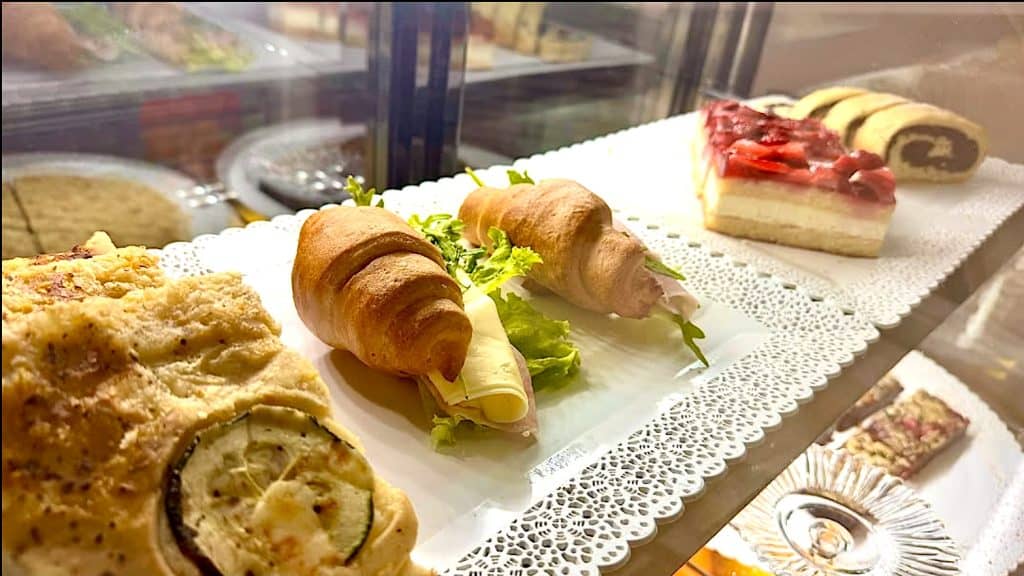
- Fig does not have a dedicated gluten free menu, but gluten free dishes are clearly marked. Try dishes like Mexican pulled pork, chicken korma, and chimichurri potatoes. On a sunny day, ask to sit in the courtyard patio.
- Corto Maltese Freestyle Food has a nice selection of gluten free dishes, all of which are clearly marked on the menu. It’s a funky restaurant serving both Croatian and Italian dishes, and has outdoor seating. A must-eat spot in Split.
- Gelateria aMare offers a few gluten free items on their menu. The gelato here is flavourful, and the best way to see the current gluten free flavours is to visit their Instagram stories. They are a short walk from Radić Brothers Square.
- Marvie Hotel & Health is the home of Da’Mar Restaurant, a 100% gluten free spot known for its vibrant, health-forward cuisine. Chef Martin Grubisa is celiac, and uses his knowledge of local, seasonal ingredients to prepare mouth-watering dishes that make the restaurant absolutely worth a visit when in Split. Choose from breakfast, lunch, and dinner menus that serve the perfect blend of modern and traditional Mediterranean cuisine; think homemade gnocchi with sundried tomatoes, shrimp risotto, crispy sea bass, or a Mediterranean quinoa salad. Delicious and gluten free, what could be better?
- Adriatic Sushi & Oyster Bar has several gluten free dishes on the menu. Choices include shrimp and mussel risotto, octopus, sea bass fillet, and burrata. When you’re done, you can check out the location of the rebellion of Meereen slaves from Game of Thrones on Papalićeva ul.
- Ma:Toni does not have a gluten free menu, but there are many gluten free dishes available. Dine on dry-aged ribeye, veal chop, wild mushroom risotto, shrimp soup, and more. It’s a beautiful cave-like restaurant specializing in Mediterranean cuisine.
Gluten free restaurants in Šibenik
- Bistro More (also sometimes called Sibenik More online) has quite a few gluten free dishes marked on the menu, including grilled fish, chicken with smoked ham, and a variety of pasta dishes. On a nice day, sitting on the patio overlooking the water is highly recommended.
- Bronzin doesn’t have a gluten free menu, but they are happy to make adjustments for food allergies. Before ordering, ask about which dishes are gluten free, as many of the staff are well-versed on celiac disease.
- O.DA is a charming vegan cafe. They don’t have a gluten free menu, but they do serve dishes which are safe for celiacs. If you’re unsure, the staff are happy to help. They serve coffee, sandwiches, raw desserts, and juices.
Gluten free restaurants in Osijek
- Pizzeria Loresa No2 is a fully gluten free restaurant in the city of Osijek, which is found near the Serbian border. There’s a fantastic range of dishes here for breakfast, lunch, and dinner, making it an excellent find for celiacs in Croatia. Enjoy GF pizza, burgers, sandwiches, and even GF beer. A real gem.
Gluten free restaurants in Hvar
- Dalmatino is a steak-and-fish house located right in the heart of Hvar. While not a fully gluten free establishment, the chef is celiac, so they understand the dangers of cross-contact very well. Expect more than just the basics here – the food is excellent, and there are numerous gluten free options, including pasta, gnocchi, steak, bread, and dessert. A must-visit for celiacs when in Hvar.
- Black Pepper is an upscale restaurant with many gluten free and vegan options; gluten free items are marked on the menu. While you should still inquire about cross-contact, travellers report that the staff is very attentive and well-informed about celiac disease. There’s an emphasis on creative, local dishes here, so expect lots of fun flavours and innovative meals.
What ISN’T gluten free in Croatia?
During your visit to Croatia, these are foods that you should avoid, and are not safe for celiacs. There are a lot of breaded dishes, pastas, and desserts that are off-limits. But hopefully you can find grilled fish or meat and delicious stews from the prior sections to satisfy your taste buds.
One vegetable dish to watch out for: Abšmalcane mahune, a traditional Croatian dish of green beans tossed with garlic and breadcrumbs sautéed in butter.
Meats
- Puran s mlincima – A roast turkey served with mlinci, a traditional dish for festive occasions. The turkey is served on a bed of mlinci, which soaks up the meat’s juices.
- Zagrebački odrezak – This dish originates from Zagreb. Veal cutlets are pounded, then filled with ham and cheese. Then they are folded or rolled, breaded and fried. Some restaurants will make this with pork, chicken or turkey instead of veal.
- Dinstane teleće šnicle s rižom – This dish is similar to schnitzel. Sautéed onions and rice are slathered over thinly sliced veal, which is then rolled and tied with a string. The roll is then floured and fried. It’s served in its own juices, which are mixed with heavy cream.
- Meso z tiblice – This is a specialty from Međimurje County. Top-quality pork cuts are salted and baked, then submerged in a mixture of lard, bay leaves and peppercorns. By itself, it is gluten free, however, most places serve it as a cold appetizer atop a slice of sourdough bread.
- Krvavice, or čurke – A blood sausage made of pork offal, pig blood, onion, paprika, hot peppers, and buckwheat, corn flour or barley. They are fine, unless they’re made with barley, so ask before ordering.
- Pašticada – This traditional Dalmatian dish is beef round cooked with red wine or prošek (or both), figs, and root vegetables. It’s beef stew adjacent, and the sauce is often sweet and sour. Note: it is traditionally served with gnocchi, and many recipes include flour for braising and/or breadcrumbs to thicken. (Pašticada s njokima is the version with gnocchi.)
Seafood
- Škampi na buzaru – This scampi (a species of langoustine in Croatia) dish is made with olive oil, white wine, parsley, rosemary, and thyme — and often breadcrumbs. Mussels or prawns can also be used. If you can find a spot to make them without the breadcrumbs, they are delicious!
- Dagnje na buzaru – Fresh mussels are scrubbed and cooked, then mixed with sautéed olive oil, garlic, parsley and lemon wedges. White wine is added for a quick simmer, and the mussels are sprinkled with bread crumbs before serving. This dish is also made with prstaci (date mussels).
- Buzara – A preparation for seafood involving it being sautéed in garlic, olive oil, parsley, and white wine. Unfortunately, breadcrumbs are usually added to thicken. If you can get buzara without breadcrumbs, you might be able to enjoy — but as always, confirm they were not added at any step of the way.
- Any breaded and fried seafood, like mussels, scampi, or squid.
Stews and soups
- Gulaš – A goulash/stew of fried cubed meat (pork or veal), onions, garlic, caraway seeds, tomatoes, green peppers and potatoes. Some places thicken the stew with flour, and it is often served with gnocchi or wide pasta noodles.
- Ćoravi gulaš – This vegetarian goulash is made with potatoes, peas, carrots, onions, and garlic. It’s seasoned with paprika, parsley and bay leaves. It’s typically served with a dollop of sour cream. The stew is often thickened with flour.
- Varivo od mahuna – This green bean stew has puréed tomatoes, potatoes, onion, celery and garlic, and seasoned with dill and bay leaves. It is sometimes served with fritters, which contain gluten.
- Ričet, also known as Ješprenj – This vegetable soup/stew is made with barley, onion, garlic, leeks, tomato, beans, pork, and herbs. The meat is used as a thickener, but that doesn’t matter since the main ingredient is barley.
- Pašta fažol – In Italy, it’s known as pasta e fagioli, a soup made with kidney beans, smoked meats, potatoes, tomato, onion and small pasta noodles.
- Špek Fileki – A tripe stew made with potatoes, carrots, onions, tomato purée, pancetta, garlic, and lemon. Paprika gives it a little kick, and flour is used to thicken. It was once considered a peasant’s dish, but today many top restaurants have it on their menus.
Pastas
- Gnocchi, or njoki, often served with pašticada or goulash (part wheat; part potato)
- Fuži – A traditional Istrian pasta made with durum wheat, eggs, oil, and salt.
- Krpice sa zeljem – pasta with stewed cabbage
- Šporki makaruli – Also known as “dirty macaroni”, this dish is made with makaruli pasta noodles, beef and pork fat. The sauce has cloves, bay leaves, red wine and tomato purée.
- Pljukanci – A hand-rolled pasta from Istria made with wheat flour. It is typically served with meat sauces.
- Soups
- Soup is an integral part of a meal in Croatia, and most are broth-based with added pastas or dumplings. These are off-limits due to the add-ons, and the heavier stews and soups are also an issue because they often use a roux as a base. I’ve included a bunch of soups and stews above in the ‘safe’ section that are traditionally made gluten free, but ones to watch out for include:
- Zagorska juha – A traditional soup from the Zagorje county of Croatia. It’s made with boletus mushrooms, cured meat, potatoes, onion, tomato purée and garlic. It’s seasoned with paprika and bay leaves, and flour is often used to thicken.
- Prežgana juha – A flour soup originating in Slovenia. It’s made with flour browned in oil, caraway seeds, paprika, salt and pepper.
- Knedle – Dumplings made with flour and potatoes, and the finished dumplings are rolled in bread crumbs before cooking.
Pastry
- Pita – we know it well
- Prigorska Pogača – A farmer’s bread from around Zagreb, usually served warm.
- Pinca – A sweet yeasted bread with lemon zest and raisins, typically served during Easter.
- Bučnica – This is a rolled pastry similar to a strudel, filled with grated squash, fresh cheese, butter, and sour cream. It’s baked until crispy.
- Viška pogača – It’s a savoury pie that is more like a focaccia. It’s filled with salted sardines, onions and spice. It originates from the island of Vis.
- Mlinci – Thin, dried flatbread often served with roasted meats and gravy. They are sometimes broken into small pieces, soaked in the juices of roasted turkey, pork, or duck, and served as “noodles”.
- Soparnik – Also known as Zeljanik or uljenjek, is a Croatian pie stuffed with chard, onion and garlic. It’s traditionally served during Lent.
- Duvanjska pita – Thin phyllo is filled with potato, meat, and spices. It is then rolled, coiled into a round pan and baked.
- Varaždinski klipići – A small rolled bread that is a popular snack food. It’s a specialty in Varaždin, and dates back to the 18th century.
- Burek sa sirom – A savoury pastry dish made with phyllo pastry stuffed with a mixture of cheese and eggs. It’s rolled, coiled into a round pan and baked until crispy.
Sweets
- Palačinke – These thin pancakes are similar to crêpes (a tad thicker). They are filled with jam and sprinkled with powdered sugar. They can also be savoury.
- Zlevanka – Called a pie but looking more like a cake. Can be prepared two ways: corn and wheat flour, eggs, and sour cream; or yeast, milk, and cottage cheese. There are a variety of fillings (e.g. cheese, sour cream, cherries, plum jam, walnuts, nettle). This can be made gluten free, but wheat flour is usually mixed with the cornmeal, so it’s unfortunately mostly off limits. Sad face.
- Povitica – A sweet rolled cake with a walnut paste filling. It’s popular during Christmas and Easter.
- Kroštule – Crispy fried dough strips flavoured with lemon, orange, and rum, tied in knots and dusted with powdered sugar.
- Baklava – This traditional Turkish dessert is found throughout Croatia.
- Kremšnita, also known as Šaumšnita – It’s a dessert with a vanilla-flavoured pastry cream between layers of delicate puff pastry. It traces back to Austria, and may in fact originate from mille-feuille in France.
- Zagorski Štrukli – This is a traditional Croatian afternoon snack. The pastry dough is made from wheat flour and filled with cheese, eggs, and sour cream. After baking, it is basted with butter or sour cream. There is a sweet version too, as well as a boiled version called kuhani štrukli, which is filled with cottage cheese and eggs. Like the baked version, the dough is made from wheat flour.
- Fritule, also known as Uštipci – Croatian fritters enjoyed during the holiday season. They are made with a yeasted dough (sometimes the yeast is replaced with yogurt and baking powder) flavoured with lemon and rum, deep-fried, and rolled in powdered sugar or granulated sugar.
- Knedle sa Šljivama – Plum-filled dumplings popular in Croatia and Serbia. The dough is made with flour and potatoes, and the finished dumplings are rolled in bread crumbs before cooking.
- Orehnjača – A traditional Croatian cake (some call them rolls) with walnuts and poppy seeds. The dough has lemon zest for a little kick, and the finished cakes are dusted with powdered sugar.
- Makovnjača – This is a sweet bread roll stuffed with ground poppy seeds mixed with milk and sugar. The dough is rolled thin, basted with butter, rolled into a log and baked in a clay pot.
- Pita od jabuka – This is a Croatian dessert made with phyllo and stuffed with a cinnamon-apple filling. It looks like baklava rolls and tastes like apple pie.
- Krafne – The dough for this Croatian donut is very similar to fritule, right down to the lemon and rum flavouring. They are rolled in sugar and filled with jam, custard, pastry cream or Nutella. It’s sometimes known as Krofne.
- Rafioli – Shortbread cookies filled with an almond paste (chocolate or cream). They are shaped into half-moons, coated with sugar and baked. Typically served at baptisms, weddings, and funerals.
- Čupavci – A traditional sponge cake cut into squares, dipped in chocolate, and coated with desiccated coconut.
Happy and safe eating in Croatia! For the rest of my gluten free guides, see here.
