
I loved my time in Turkey prior to quitting my job in law and starting this website, and I returned repeatedly during my years of living and eating abroad. I spent the most time in Istanbul, delighting in learning city’s streets (and cats!) and visiting the many sights I had read about my entire life.
As a celiac, though, the country is a challenging place to visit. The earliest known cultivation of wheat is believed to have taken place in Southeast Turkey more than 10,000 years ago. It was first domesticated on the slopes of the Karacadağ mountains in Anatolia. It remains prominent today in Turkish cuisine, not only in breads or dessert pastries, but also a filler or stabilizer in dips like acuka, a roux (meyane) for soups, and as hidden orzo or thin pasta (şehriye) mixed into rice pilav. While Turkish cuisine relies heavily on naturally gluten free ingredients, it was the hidden gluten that posed the greatest problem to me during my many visits. I learned this the hard way, and got “glutened” as I navigated the country’s many delicious offerings.
This was the guide I wish I’d had when I visited the country.
Below, I’ll highlight what to look for, what to avoid, and some classic dishes you can enjoy while (as always) being mindful to avoid cross-contact and fillers, as well as a small number of dedicated gluten free spots to enjoy with less stress.
I hope this guide is helpful for you!

What should celiacs know when traveling to Turkey?
- Be aware of cross-contact risks: As with dining elsewhere in the region, shared cooking surfaces are common. We all know that the grill, flat-top, or fryer can pose risks for people with celiac disease where they are shared with wheat-based dishes, even if the ingredients they are cooking for us are traditionally are gluten free. In Turkey, is especially relevant for grills that alternate between breaded items and plain kebap, or fryers with oil that is used for both potatoes and wheat-based items like börek, or breaded squid.
- Beware of the ‘roux’ of Turkey, meyane. Turkish dishes may be thickened either with meyane (a wheat-flour roux, not safe for celiacs) or with terbiye, an egg-and-lemon sauce that is traditionally gluten free, but may still be mixed with flour to thicken.
- Bring a detailed gluten free card in Turkish. I wish that I had a detailed GF translation card in hand when I visited the country, one that not only explained celiac disease, but also cross-contact and common hidden sources of wheat in the country. I ultimately made my own after repeatedly getting sick in the country while trying to communicate, even with a list of phrases provided to me by a Turkish friend. Despite those best efforts, I still became ill several times, mostly because wheat-based thickeners were used in ways I did not anticipate, and the terminology I relied on did not convey the risk clearly enough.
- Rice dishes often have wheat in them. Turkish rice dishes often include wheat vermicelli or orzo (şehriye). Classic Turkish pilav is therefore not safe for celiacs, and plain steamed white rice is not always available. Always ask specifically whether şehriye has been added.
- Bulgar is prevalent in Turkish food. Bulgur is a popular ingredient in Turkey, and often served as a side, such as with bulgur pilavı (pilaf made with bulgar). It looks a lot like brown rice, or quinoa, so please make sure that you’re not getting it with your meat or veggies. Bulgar is also sometimes added to soups, and as noted below, to some salads (like kısır, or as a topping for other salads), as well as with in some köfte. My translation card notes bulgur specifically because of how prevalent it is in Turkish food.
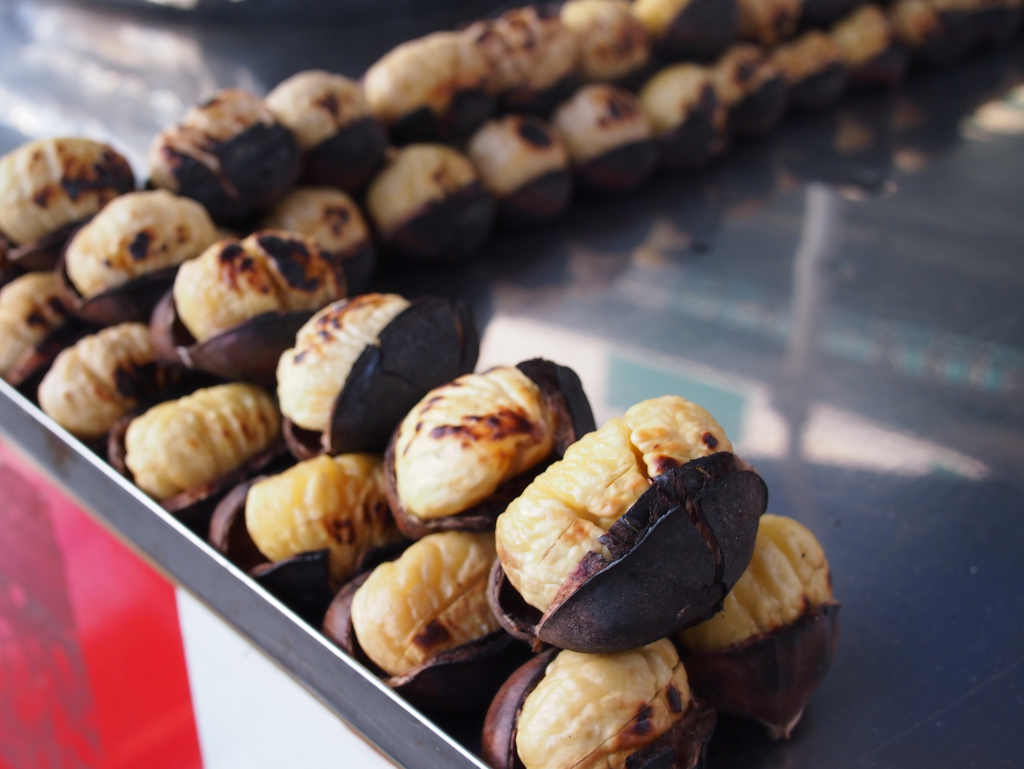
- Fresh fruit juice carts were a treat. Street juice stands are ubiquitous and generally very safe. In addition to exceptionally fresh orange (portakal) and pomegranate (nar) juice, many carts also sell apple, carrot, grapefruit, or mixed juices, depending on the season. In autumn, apple and carrot juices become more common, sometimes offered as blends. In autumn, roasted chestnuts also abound; I enjoyed many a late afternoon snack of roasted chestnuts chased down by pomegranate-apple juice (the combo is fantastic).
- Embrace the grilled meat and fish, for those who eat it. While many köfte are thickened with breadcrumbs, kebap are usually built from just meat and spices pressed directly onto a metal skewer. It is still essential to ask, particularly about marinades and shared grills, but kebap formed the backbone of my diet in Turkey. Note that with kebap, a risk also included “resting” the meat on a piece of lavaş (flatbread) to soak up the juices before it reaches you, so it’s important to ensure there’s no bread in your dish.
- Watch for condiments and accompaniments: Bread is often added to your plate automatically, and sauces may be spooned over meat without asking first as they come ‘with’ the dish. Asking for food “plain” and requesting sauces on the side can reduce risk, but again it’s best to communicate clearly with a translation card — which I didn’t have during my visit, and wish I did!
- Awareness of celiac disease in Turkey is not high: Public awareness and understanding of celiac disease is fairly low in Turkey. A 2021 survey found that 43.9% of respondents had never heard of celiac disease. While epidemiological data show that the prevalence of diagnosed celiac disease in Turkey is in the range of 0.3% to 1% of the population, as with elsewhere it’s likely that a big percentage of cases remain undiagnosed. Turkey does have advocacy, though! In May of 2025, Ondokuz Mayıs University, in collaboration with the Samsun Celiac and Gluten-Free Nutrition Association, organized a panel for community education, and there is a Turkish Celiac Association (Çölyakla Yaşam Derneği). But these resources are not yet widely reflected in the general public’s awareness.
- Look for gluten free markings on packaging. While Turkey is not in the European Union, it does carry products from the EU, and GF items will have the “crossed grain symbol.” In food products, you can additionally look for a label of “Gluten içermez” (does not contain gluten) or “Glutensiz” (gluten free), which legally requires less than 20 ppm of gluten. You may also see “Çölyak hastaları için uygundur,” which means “suitable for celiacs.” To avoid: Çok düşük gluten” or “düşük glutenli,” which mean “very low gluten” — between 21-100 ppm of gluten, which isn’t safe for celiacs.
A detailed gluten free restaurant card for Turkey
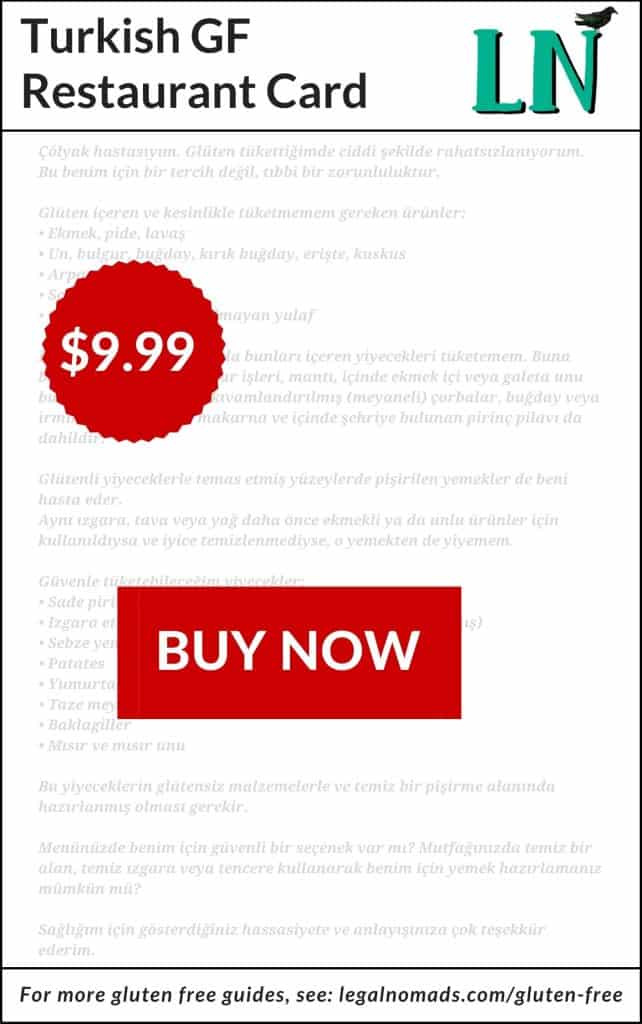
This detailed Turkish gluten free restaurant card will help communicate your eating restrictions, and allow you to understand what is safe and unsafe from the menu.
Note: The card is available for purchase via Gumroad, a trustworthy 3rd party site that uses Stripe, so you know your information is safe.
Why is this gluten free card for Turkey different?
I used several different translation cards on my travels, and I still got sick. I may be more sensitive than some celiacs, but even a small amount of oil for frying that had contact with gluten, or wheat-thickened sauce in the food, is enough to make me ill for days. Let alone the joint pain later that week, and the fatigue. And regardless of whether we feel it or not, ingesting any amount of gluten is a problem if we are celiac.
Why choose a Legal Nomads detailed gluten free restaurant card?
✅ This card was carefully crafted by someone with celiac disease, and then went through 2 sets of translations to ensure accuracy.
✅ Unlike shorter, less-detailed cards, each card it lists out local ingredients and dishes that have hidden (and not hidden!) gluten in them. Saying “I can’t have gluten” just isn’t usually enough to keep celiacs safe — many people preparing your food don’t know what ingredients have gluten in them.
✅ It expressly mentions that we cannot eat food from pans, grills (important for Turkey!) shared fryers, or cooking surfaces that have had cross-contact with gluten.
✅ To ensure the card is taken seriously, it adds an apology for the inconvenience, and emphasizes that avoiding gluten is a medical obligation and not a choice.
✅ It is instantly downloadable in both PNG and printable PDF file formats, to help you eat safely as you travel.
Thank you to Derek and Erinc for their translations and feedback on this Turkish card!
You can purchase your Turkish translation card here.
What to eat in Turkey when you’re dining gluten free
A few phrases to know in Turkey
Some basics to keep in mind when you’re visiting:
- Gluten-Free Glutensiz
- Wheat Buğday
- Flour Un (almost always means wheat flour)
- Barley Arpa
- Rye Çavdar
- Oats Yulaf
- Breadcrumbs Galeta Unu
- Orzo / Vermicelli Şehriye
The following are categories and dishes of what I ate when I was in Turkey. As the culture of food is one deeply intertwined with wheat and breads, there are a lot of caveats to this ‘safe’ section. I’ve tried to note as I go where I found myself getting into trouble during my visit.
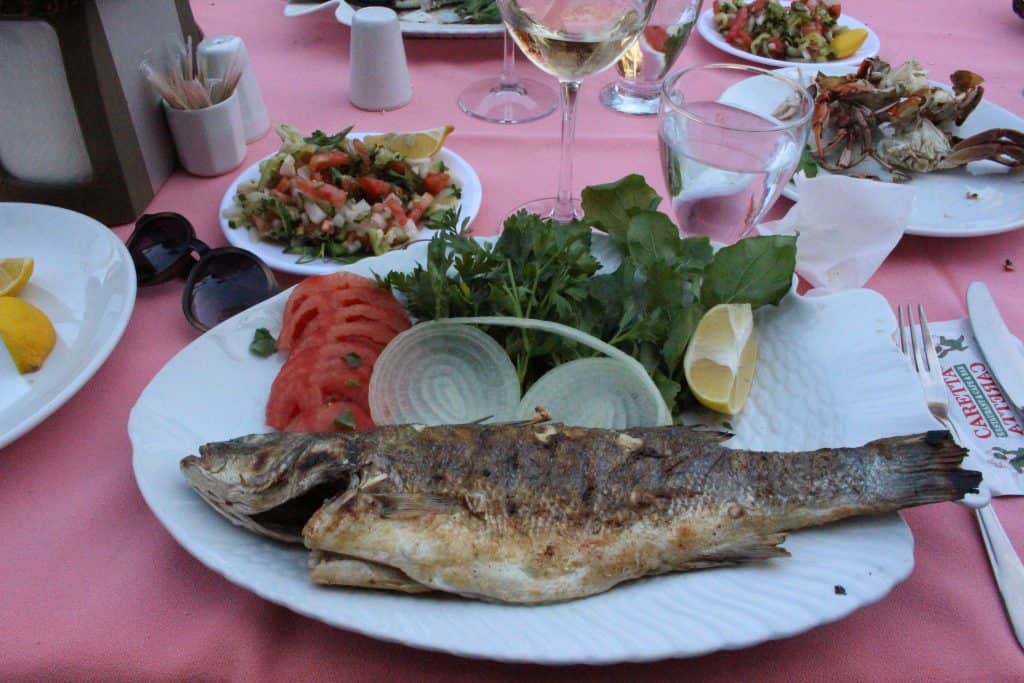
Kebabs and grilled meats or fish: Most whole-cut meat kebabs are naturally gluten free when prepared traditionally. This includes şiş kebap (skewered cubes of lamb or chicken grilled over fire), kuzu pirzola (grilled lamb chops), tavuk ızgara (grilled chicken), and ızgara balık (grilled fish). These are among the safest choices, provided that they are not marinated with soy sauce or dredged in flour, and are grilled on a clean surface. I mention the grilling because they are often grilled on long metal skewers over shared embers, and while the meat is safe sometimes pide or other breads are warmed on the meat itself or on the grill. So we must ensure that the grill use itself is safe. In addition, as noted above it’s crucial to ensure your meat isn’t placed atop a piece of lavaş (flatbread) prior to getting to the table. İskender kebap must be also avoided as it’s a bread-and-meat dish consisting of döner.
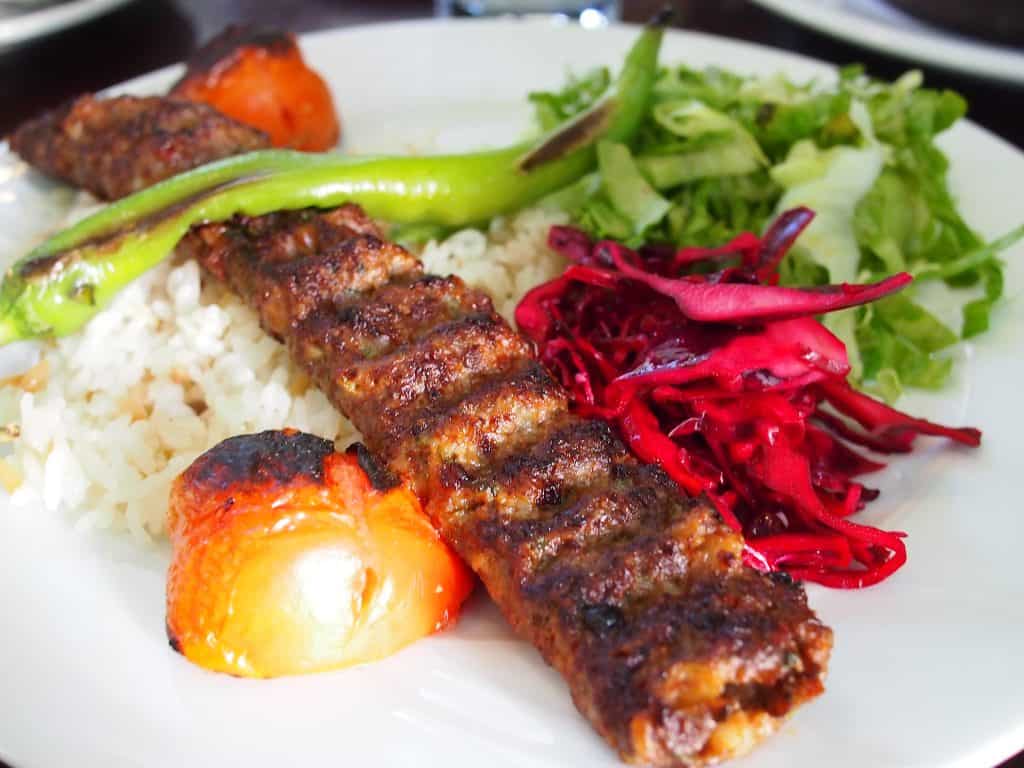
Adana kebab and Urfa kebab: These are minced meat kebabs (usually lamb) shaped onto skewers and grilled, mixed with chili (Adana is spicy; Urfa is milder), spices, and fat. Traditionally, they do not contain flour or breadcrumbs, since the binding comes from the fat content and kneading technique. However, some restaurants may add breadcrumbs or flour, so be sure to confirm no fillers were added. The same note about flatbread, above, applies.
Döner (the meat only): This is vertically roasted, shaved meat cooked on a rotating spit, and is often gluten free, if it is high quality. Note that commercial döner may contain fillers or be basted with sauces that have flour, and “minced”döner logs may use wheat flour or breadcrumbs as a binder to keep the meat from falling off the rotisserie. However, I ate a lot of yaprak döner (made of separate ‘sheets’ of meat), which was just meat and tallow. So if you’re opting for döner, it may be best to make sure it’s the “leaves” of meat yaprak döner — and that you’re not getting bread underneath or atop the platter you order.
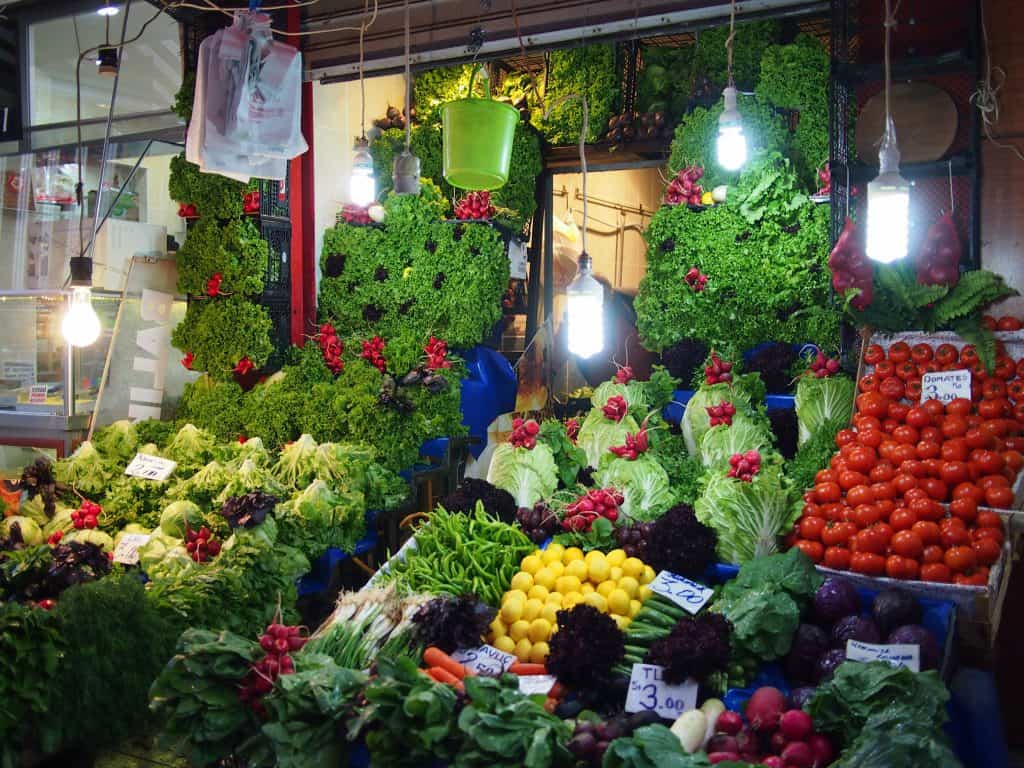
Zeytinyağlılar (olive-oil vegetable dishes): Vegetables cooked in olive oil are mostly safe —with dishes like imam bayıldı (eggplant cooked in olive oil with onion and tomato), zeytinyağlı fasulye (green beans braised in olive oil), zeytinyağlı enginar (artichokes cooked in olive oil), zeytinyağlı pırasa (leeks cooked in olive oil), and zeytinyağlı kereviz (celery root cooked in olive oil) are typically gluten free. Always confirm no flour or bulgur is added, especially in stuffed vegetables. And, this is fairly unexpected but you must also confirm that the veggies were not kept in a bowl of unlu su (flour water) to keep them from oxidizing before cooking.
Dolma and sarma: Dolma (stuffed vegetables such as peppers or zucchini) and sarma (grape leaves stuffed with rice) are safe only when filled with rice, herbs, and pine nuts. Sadly for us, many versions use bulgur as well, so you must ask specifically whether bulgur was included.
Egg dishes: Menemen (scrambled eggs cooked with tomatoes and peppers) is a popular breakfast food that is naturally gluten free when served without bread, and absolutely delicious. It’s similar to shakshuka, except that menemen scrambles the eggs into the mixture, whereas in shakshuka they are poached. It’s a dish that is also available for other meal-times, especially in the warmer months. I ate a lot of this dish in areas where I couldn’t find safe options; restaurants had the ingredients on hand to make it for me no matter the time of day, even if not on the menu. In addition to this dish, and as with elsewhere, omelettes, hard-boiled eggs, and fried eggs are also generally safe.
Legumes and salads: Piyaz (white bean salad, often with onion, sumac, and parsley), lentil salads made with whole green lentils (if not made with bulgur), çoban salatası (a ‘shepherd’s salad’ of tomato, cucumber, onion, and herbs), and simple yogurt dishes like cacık (yogurt with cucumber, garlic, and herbs, a Turkish version of tzatziki) are typically gluten free, as is barbunya pilaki (beans in a tomato, onion, and garlic sauce). Beware of salads that have added bulgar wheat!
Roasted chestnuts, streetside: Maybe these aren’t exciting to European readers, but it’s fairly impossible to find roasted chestnuts reliably here in Canada, and I was so excited to eat as many as I could during my visits. Mostly available during the autumn months.
Rice dishes: Plain rice is safe but I found it a rarity to encounter, as the standard Turkish pilav (rice pilaf) almost always contained şehriye (orzo or vermicelli pasta), which celiacs cannot eat. Ask for plain rice, if it’s available.
Desserts: Sütlü tatlılar (milk puddings) are a dessert ‘class’ of foods that I enjoyed a lot in Turkey. Sütlaç (baked rice pudding) is traditionally thickened with rice flour, not wheat — but beware of ‘fast food’ or on-the-go versions as wheat flour may be a substitute. Tavuk göğsü is a delicious dessert pudding made from chicken that is shredded (I know — but it really is tasty), and is sometimes made with rice flour and sometimes with wheat. Readers report that most versions they’ve found is made with wheat but if you do find a rice flour-thickened option, it’s worth a try as it was one of my most favourite dishes I ate in the country. Lokum (Turkish Delight, a gelled sugar candy known around the world) is usually gluten free, but confirm ingredients, as is akide şekeri (hard candy) as they are generally made with sugar and cornstarch, though you must be wary of “biscuit” flavoured varieties or those dusted with flour instead of powdered sugar.
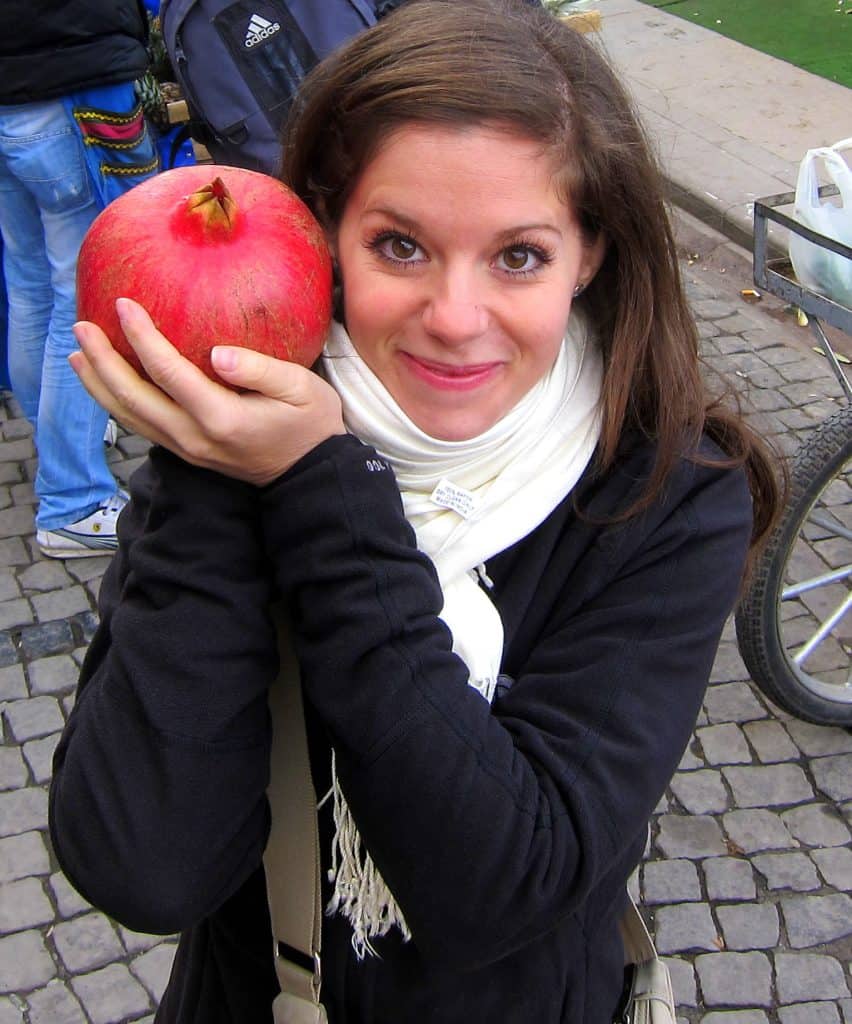
Drinks: Salep is a thick, hot winter drink made from ground orchid tubers, milk, sugar, and served with cinnamon, and is traditionally gluten free and wonderful. However, many modern versions use commercial salep mixes that may contain wheat as a thickener. It is important to confirm that real orchid salep powder was used, or that the vendor can state there are no wheat fillers. This is often difficult with street vendors, as many are unsure what is in the mix they use. Tea (çay) is safe and often served hot in small glasses. Türk kahvesi (Turkish coffee) is safe and delicious, but beware of flavourings that may have wheat, as is the case elsewhere. Ayran is a cold yogurt drink mixed with water and salt, and served alongside meals and is gluten free. I also drank a lot of fresh juices squeezed right in front of me on street juicing carts, mostly orange and pomegranate. And did I mention that the pomegranates were monstrously large?!
On the alcohol side of things, rakı is an anise-flavoured distilled spirit and is naturally gluten free as it’s made from distilled grapes and aniseed, not wheat.
Gluten free restaurants and shops in Turkey
To make your time in the country less stressful, here’s a list of shops and restaurants where you can eat more safely as a celiac — with the caveats noted above.
Gluten free products and shops in Turkey
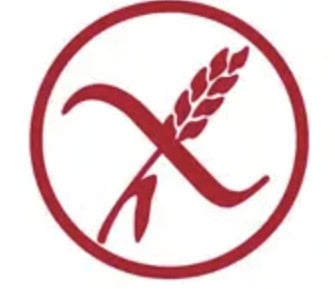
When shopping in Turkish grocery stores, look for the “crossed grain” symbol, or a green circle with the words “Glutensiz”.
Migros is one of the largest supermarket chains in Turkey with over 3,000 shops in all major cities. The larger Migros supermarkets have dedicated gluten free aisles that carry GF products, while some of the smaller stores, including Migrosjet, have limited GF options. Your best bet is to head to one of the bigger stores in town for the largest selection, but even the smaller versions will most likely have something for you.
Macrocenter is an upscale supermarket chain owned by Migros, and you can find them in many of the larger cities (including Istanbul). They offer a few GF products, including bread, lavaş flatbread, and flour.
Carrefour is another supermarket chain in Turkey that carries gluten free products. A French multinational, you’ve likely seen it mentioned in other guides on Legal Nomads. It’s a huge company! With over 1,000 locations in 74 provinces in Turkey alone, it’s fairly ubiquitous. You’ll find the most variety of GF options in the larger locations in Istanbul, Ankara, and other big cities. Stock up on bread, chips, cookies, pasta, flour, soy sauce, and more, especially if you’re headed to a smaller town where gluten free options will be harder to find.
If you’re in İzmir, Glutensiz Nokta is a good spot for gluten free groceries. This dedicated GF supermarket carries everything from breads and pastas to chips and cookies; there’s also lots of packaged snacks such as granola bars, which are perfect for stocking up on if you’re headed to a smaller town with fewer GF options or planning for a road trip. The shop also features a large selection of organic and vegan products.
Under the city headings below, there are also suggestions for great local gluten free shops.
Gluten free restaurants and bakeries in Istanbul
Starting with the one spot I desperately wish I knew about when I visited: Karaköy Güllüoğlu, established in 1843 and famous for baklava. They developed a gluten free version in collaboration with the Turkish Celiac Association, Çölyakla Yaşam Derneği, and it’s made in a separate warehouse with production personnel trained in celiac needs, and served with separate service equipment to their wheat-y versions. They offer two types, pistachio and walnut, and also do same-day Istanbul delivery. You can also find diabetic (low sugar) baklava, a vegan version, and many other pastries and treats — but all are made with wheat. Only the special celiac-tailored baklava is safe for us.
d’Amalfi Senza Glutine is a dedicated gluten free establishment that is beloved by many, and it offers both eat-in and takeaway options. Open daily from 10 am until 10:30 pm, the restaurant serves an assortment of Italian food like pizza, Italian sandwiches, and a delicious tiramisu — all gluten free. It also has a great selection of brunch and lunch items, as well as desserts. If you’re a matcha fan, you’re in luck: it’s known for its matcha bar.
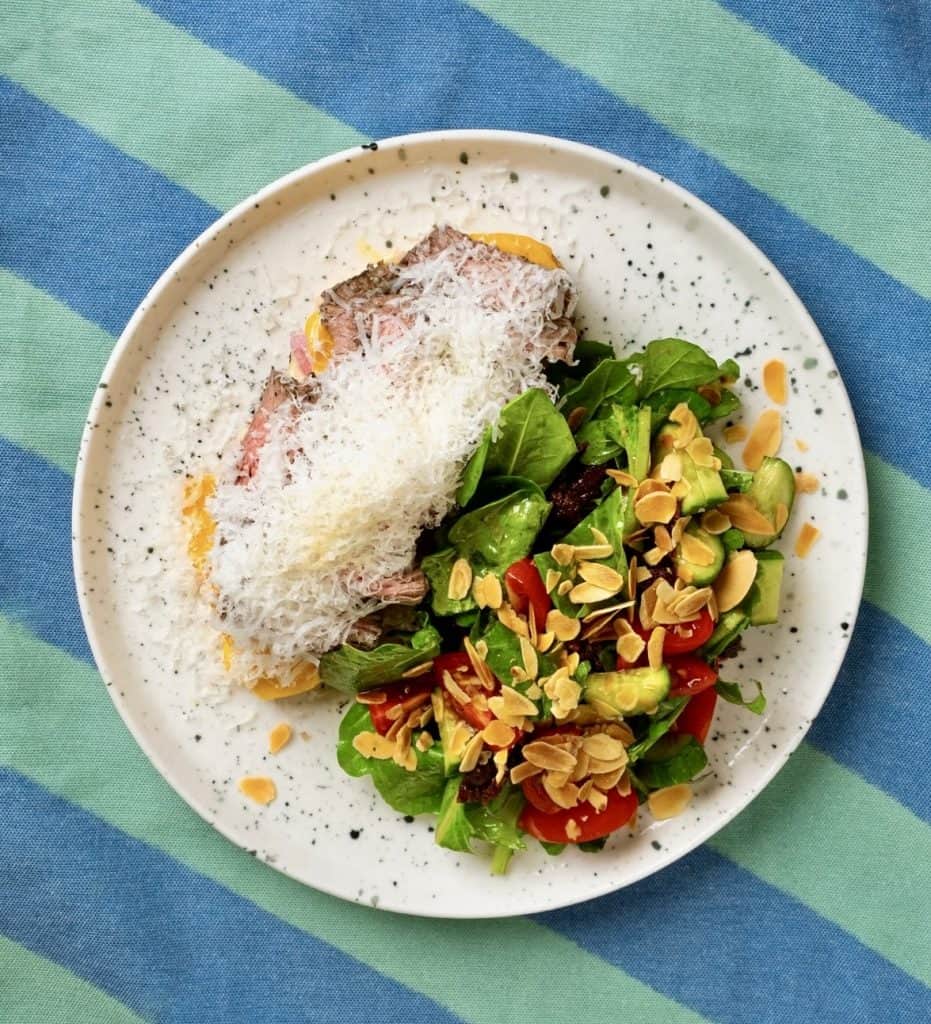
Rolla GlutenFree, as the name suggests, is a 100% gluten free restaurant. Options include some Turkish food and a mix of international dishes (without the worry of cross-contact!). Enjoy burgers, pizzas, and sandwiches, or try one of the Turkish bowls or rolls, often including ingredients such as beef, hummus, vegetables, fresh herbs, tahini, and more. The restaurant is located on the Anatolian Side of Istanbul, but is well worth the ferry ride from the European side if you’re hungry.
Old Ottoman Cafe and Restaurant (Google Maps link) is not a gluten free establishment, but as the owner’s wife is celiac, the staff is very knowledgeable about cross-contact, and there are many gluten free dishes available. Located less than a ten-minute walk from the Aya Sofya, it’s an excellent option for lunch or dinner while out sightseeing, especially as it is open from noon until 11 pm every day. Feast on all the classics of Turkish cuisine, including kebabs, grilled fish, and meze platters — just don’t forget the tea to round out your meal.
The Vegan Regime (also called Vegan Food Cartel) is a cozy restaurant in the heart of the city. While not a dedicated gluten free restaurant, you’ll find some GF options on the menu, including bowls bursting with flavour. Make sure to inquire about cross-contact as vegan restaurants are sometimes not aware of the extent of our concerns.
Tatlı Fırın is a dedicated gluten free bakery and cafe serving a wide variety of sweet and savoury Turkish treats, including items I’ve mentioned above like sütlaç (rice pudding) and baklava, as well as gluten free bread, pizza, cakes, cookies, and a few vegan options like simit (essentially a Turkish bagel), plus coffee and other GF products you can purchase. They serve breakfast, brunch, lunch, and takeaway in multiple locations across Istanbul, including Levent, Kadıköy, and the popular high street Bağdat Caddesi.
Cookie Duckk is a popular gluten free bakery in trendy Suadiye, a neighbourhood in the Kadıköy district. Enjoy GF and vegan sweet and savoury treats, including cakes, bagels, buns, and, of course, cookies. Buckwheat bread is available. There’s a small seating area, but the bakery is mostly known for takeaway or pre-ordered pick ups.
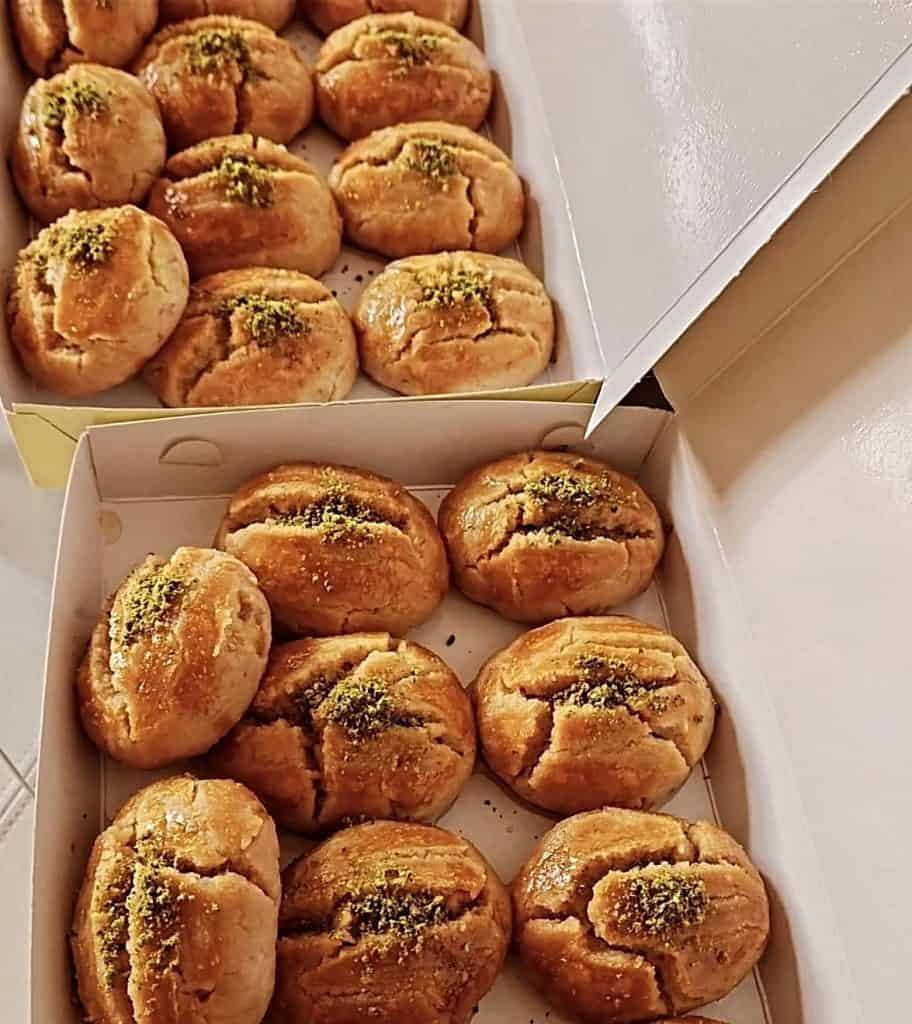
Guru Glutensiz Moda (also sometimes referred to as Guru Café Moda online) is a cute bakery with multiple locations that — as the glutensiz in their name suggests — serves 100% gluten free cakes, cookies, muffins, pastries, and an assortment of other tasty treats. Pop in for a tea or coffee and a sweet pick-me-up. Locations are in Kadıköy, Kuzguncuk, and a brand-new outpost in Nişantaşı.
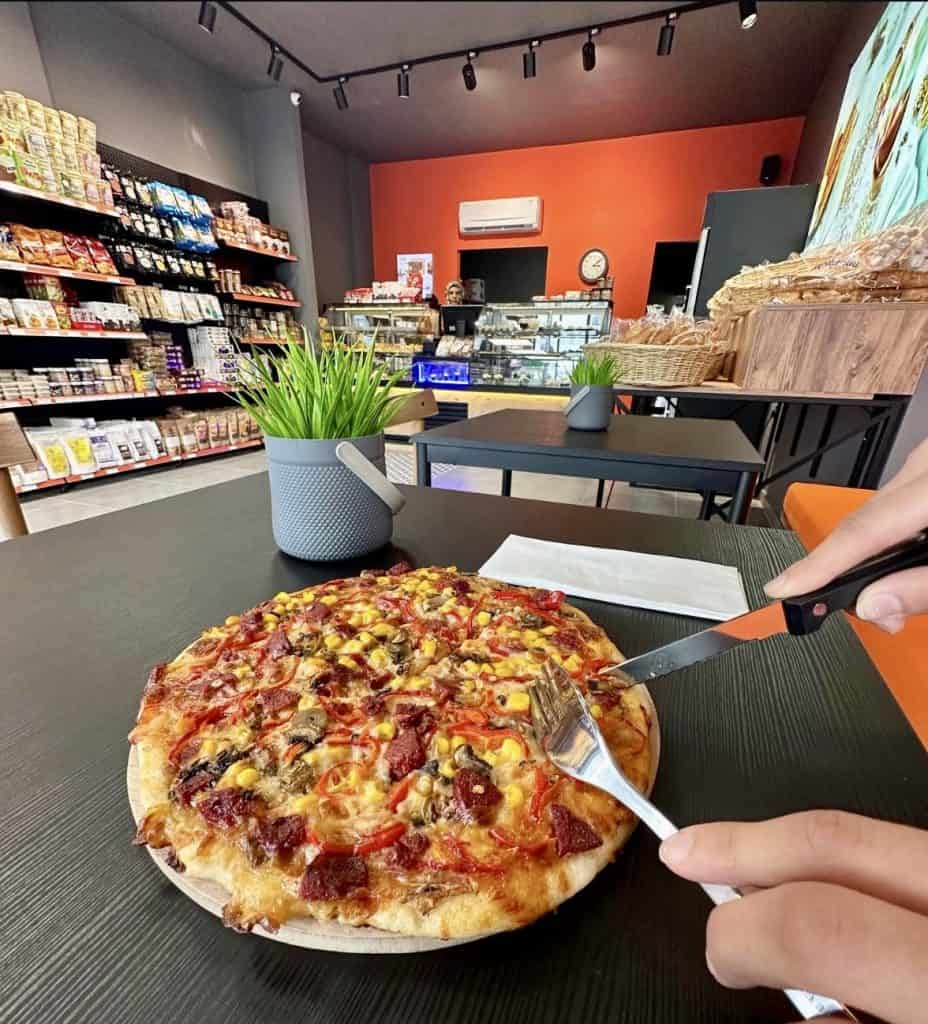
Glutensiz.com Market ve Café Maltepe is both a grocery store and a café/restaurant with two locations, both of which are 100% gluten free. In each, the kitchens use only certified GF ingredients to ensure no cross-contact, and the grocery stores are filled with numerous safe products for you to take with you on your travels. If you’re in the area for more than a few days, they’ll also prepare custom-made sugar free, yeast free, caffeine free, and/or lactose free products that are (of course) also gluten-free. You can find the restaurant in Maltepe, on the Anatolian side of Istanbul. The menu features traditional Turkish dishes (including an excellent and hearty Turkish breakfast). Their café is located in Etiler on the European side of Istanbul, and offers a selection of cookies, cakes, and other desserts.
Bi Nevi Deli is a vegan restaurant on the European side of Istanbul that focuses on seasonal, organic, plant-based dishes. While not entirely gluten free, there are a lot of clearly-marked GF options on the menu, including banana buckwheat pancakes, buckwheat granola, smoothie bowls, quiches, salads, curries, and soups. They also have gluten free flatbreads and gnocchi. As some menu items contain gluten, speak with the staff to ensure there is no cross-contact in the kitchen or in some of the hidden gluten sources discussed in this guide.
Glutensiz Dükkan is found in Kadıköy. This health food store, as the name would suggest, is a dedicated gluten free establishment. Stock up on GF pastas, breakfast items, baking supplies, bread, desserts, soup, you name it. There’s also an online store where you can order your supplies if you’re in town for awhile, although the selection isn’t as robust as the in-person location.
Gluten free restaurants in Ankara
Alles Glutensiz is a gluten free grocery store and bakery for all of your essentials when in Ankara. There’s a huge selection of breads, buns, sandwiches, and pastries, as well as a sizeable frozen section for meatballs, pizzas, and more. Don’t miss out on their GF desserts, especially the baklava and croissants.
Sevgi Fırını Sadece Glutensiz Café is a safe spot for gluten free Western food in Ankara. This 100% GF restaurant is open from 9 a.m. until 8 p.m. (except on Sundays, when it closes at 6:30 p.m.) and serves breakfast, lunch, dinner, and snacks. They offer burgers, pizzas, and waffles, although there are also a few Turkish staples, such as falafel köfte — without the wheat, of course!
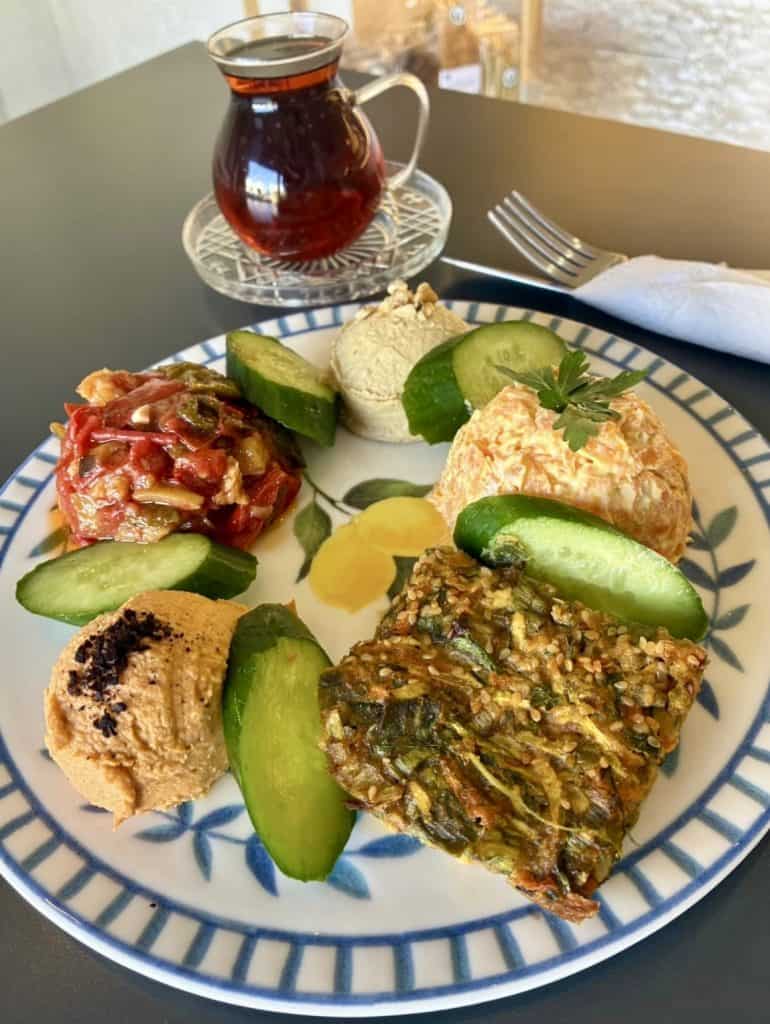
Öz Hanedan İskender is a busy Turkish restaurant in the heart of Ankara. While the kitchen isn’t fully GF, there is a large gluten free menu and the staff is very well-informed about celiac disease. Popular for Turkish staples such as kebabs, wraps, and pita, made with house-made gluten free dough. Readers report that it has a dedicated gluten free fryer, but, as always, it’s best to check about any cross-contact as information can change over time.
Ankara Pastası (Glütensiz Lezzetler) offers delicious gluten free bread, buns, cakes, and sweet treats, including many Turkish desserts such as revani, kadayıf, and baklava. This dedicated gluten free bakery also serves breakfast on Mondays and Tuesdays and has a special gluten free event on the 20th of every month, where you can sample GF burgers, pizzas, lahmacun (spiced flatbreads), pide, and more.
Jamal Cafe Bistro (Google Maps link – sometimes this spot is referred to as Cemali Pasta Cafe Bistro) is a popular restaurant that has a gluten free menu, including dishes like pizza and pasta. With affordable prices and a central location, it’s a great spot for a quick, tasty meal, and as always it’s crucial to ask about cross-contact with cooking, oven trays and serving.
Pizza Il Forno is a pizza chain with multiple locations across Turkey, including many in Ankara. While not a gluten free restaurant, there are gluten free options available, and GF pizzas are baked in a separate oven to avoid cross-contact. The staff are knowledgeable about celiac and items with gluten are marked on the menu with a wheat symbol. One note: sometimes they have to make the gluten free pizza dough from scratch, so be prepared for a longer wait.
Gluten free restaurants in Cappadocia
Hanımeli Turkish Food is a family-run restaurant in the town of Mustafapaşa serving authentic Turkish cuisine. It is not a gluten free restaurant, but the family is knowledgeable about celiac and is very accommodating. Your translation card will be useful here.
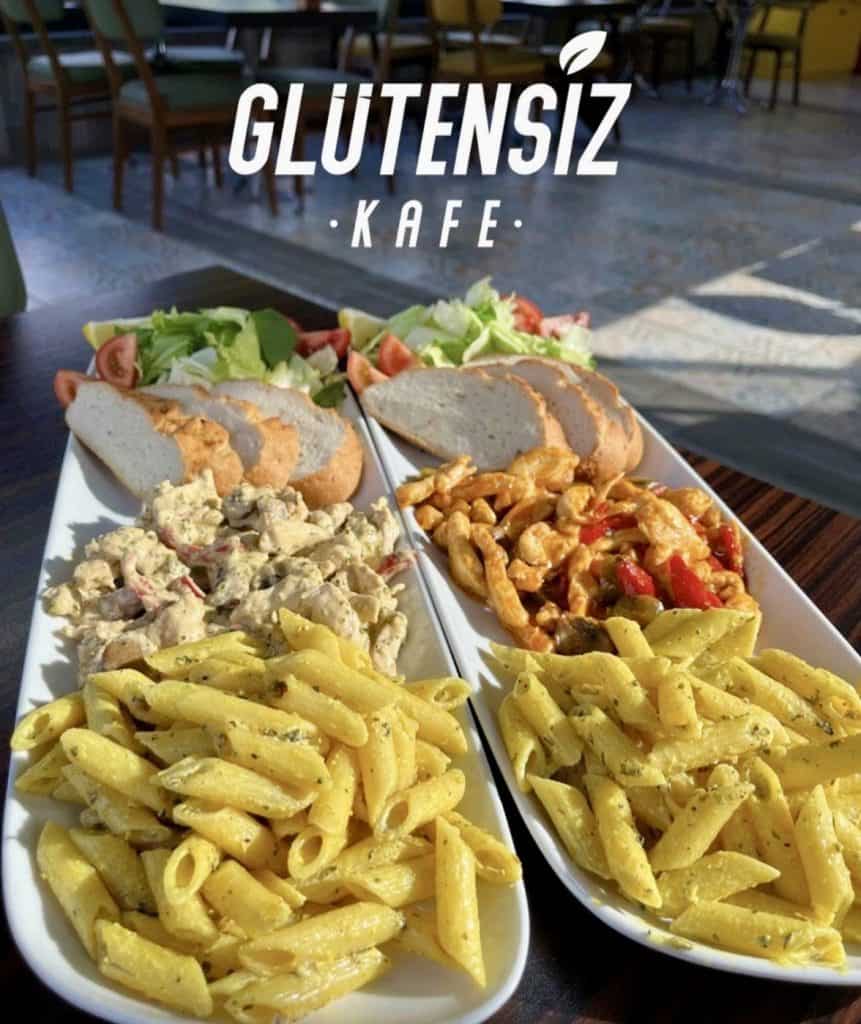
Glütensiz Kaytur is a dedicated gluten free restaurant in Kayseri, the historical capital of Cappadocia. Enjoy flatbreads, pastas, burgers, sandwiches, and so much more, all without the risk of cross-contact. Open every day from 9 a.m. until 8 p.m. (closed Sundays).
Taşkonaklar Cappadocia Cave Hotel is not only a stunning hotel, but it also has gluten free options. With two restaurants, the hotel focuses on fresh dishes made with locally-sourced ingredients. Serving Cappadocian cuisine, which draws from Anatolian, Greek, Armenian, and Ottoman influences, staff are well-informed about celiac disease, although your translation card will still come in handy to communicate the risks of cross-contact. Bonus: you don’t have to be a guest of the hotel to book in their restaurants!
While gluten free options are hard to find in Cappadocia, a few hotels can accommodate celiacs. The Lunar Cappadocia Hotel, for example, offers a GF breakfast option, and Kelebek Cave Hotel also can accommodate celiacs.
Gluten free restaurants in Antalya
Glütensiz Seferoğlu is a dedicated gluten free shop and snack bar/bakery in the resort city of Antalya, perfect for stocking up on all of your GF essentials. Carrying multiple products such as bread, cereal, and pasta, it also has a drool-worthy selection of sweet treats, including gluten free baklava. On a hot day, pop in for some gelato!
Vanilla Restaurant, only a five-minute walk from Hadrian’s Gate, serves a large cross-section of international food. While not 100% gluten free, GF items are clearly marked on the menu, and the staff is educated about the dangers of cross-contact. Enjoy Thai tom yum (a hot and sour soup) or tom kha gai (a chicken and coconut milk soup), mushroom risotto, braised beef short rib, red curry, pad thai, confit duck leg, and more.
Further east of Antalya, in the resort town of Alanya, you’ll find Cook and Cookies Bakery, a 100% dedicated gluten free café. The café sells baked goods and desserts, and serves burgers, pizzas, bowls, and salads. It also has a kids’ menu. Open from 9 a.m. to 8 p.m. daily (except Sundays), it’s a great spot for GF food when on the Turkish Riviera.
Mirage Park Resort is located on the Turkish Riviera in the community of Göynük, approximately half an hour south of Antalya. What makes it so special? It has a 100% gluten free kitchen on-site, the only hotel of its kind in all of Turkey! The GF kitchen is separate from the main kitchen, and its staff are trained in the dangers of cross-contact. The food is served in a specially designated area as an open buffet or served à la carte in the main restaurant for breakfast, lunch, and dinner. Enjoy a wide range of Turkish and international cuisines, including sushi, vegetable dishes, pasta, and a huge selection of sweets. (Note: When you check in to the hotel, you’ll fill out a form that gives you detailed information about the GF options. You’ll also receive a wristband, and only people wearing this wristband can enter the GF section of the restaurant, further preventing cross-contact. You are allowed to bring gluten free food out of the designated section, but no food with gluten can enter (meaning you can eat with the rest of your group in the main restaurant if you are the only one requiring a GF menu). There’s also gluten free beer in every bar on-site, and gluten free beer is available in your mini fridge if requested. In other words… hotel paradise for celiacs!)
Unsafe dishes for celiacs in Turkey
A lot of wheat, my friends. A lot of wheat.
Breads: All pide (flatbread), ekmek (bread), simit (sesame-crusted bagel-like bread ring), lavaş (thin flatbread), lahmacun (thin flatbread topped with spiced meat), gözleme (stuffed flatbread cooked on a griddle), and yufka-based foods (thin pastry sheets similar to phyllo) are unsafe unless explicitly gluten free. It was tough to wander the streets when I visited, because everything looked so good but it wasn’t safe for me!
Köfte (grilled or fried meatballs or patties): Köfte usually contain breadcrumbs, soaked bread, bulgur, or flour and are unsafe unless explicitly gluten free.
Other dishes with bulgur (wheat) included in them: Common and often hidden. These dishes include kısır (bulgur salad with tomato paste and herbs), içli köfte (bulgur-shell croquettes filled with spiced meat), stuffed vegetables, salads, and some soups.
Filled foods or dumplings: Mantı are teeny tiny Turkish dumplings filled with meat and served with yogurt and sauce, and use wheat-based wrappers, sadly! Börek (filled phyllo pastry), su böreği (layered pasta-like börek with cheese) or paçanga böreği (a deep-fried pastry containing pastırma and cheese).
Soups: Many Turkish soups are thickened with flour or contain wheat-based ingredients, such as the meyane referenced above. Tarhana (a fermented wheat and yogurt soup base) is never safe, as wheat is a main ingredient, not a filler. Lentil soup (mercimek çorbası) is the most common starter in Turkey, and most commercial kitchens will use the flour-based roux mentioned above (meyane) to thicken it. There’s also ezogelin, a lentil soup with bulgar in its traditional recipe (red lentils, bulgur, rice, tomato paste, and mint, served with lemon), which sadly needs to be avoided.Yayla çorbasi is a yogurt and rice soup, but unfortunately it is almost always thickened with a mix of egg, lemon, and yogurt, called terbiye that often includes flour.
Some wheat-y dips: As with Greece, some dips are an issue as they are thickened with wheat-based fillers. Muhammara / acuka is a red pepper and walnut dip that almost always is thickened with wheat for texture. Tarator is used for dipping fried vegetables or mussels and is often thickened with soaked bread.
Fried foods: Anything fried is high risk due to shared oil and flour dredging. This includes fried vegetables, fried fish, and street snacks. Confirm that a separate oil is used when eating french fries, as a result.
Pilav with additions: As noted above, rice is mixed with orzo, vermicelli, or wheat noodles on the regular, and is unsafe.
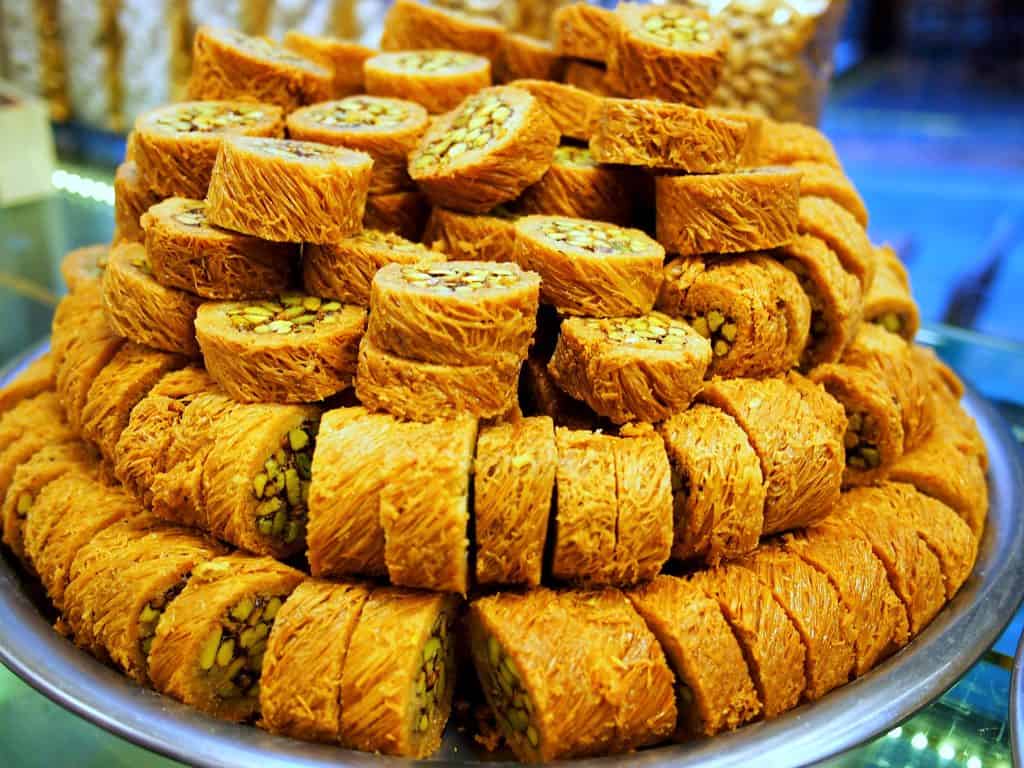
Desserts and sweets: Baklava (layered phyllo pastry with nuts and syrup), kadayıf (shredded phyllo pastry dessert), şöbiyet (cream-filled baklava), revani (semolina cake soaked in syrup), and most syrup-based desserts are (sadly) wheat-based.
Drinks: Beer, of course, as well as malt beverages like Maltizade or imported malt sodas. Commercial salep mixes may have wheat, as noted above. Some thickened or blended coffee drinks may include malt, flour, or thickening agents. Boza is a fermented drink made from maize or wheat, and almost always contains gluten (corn-only versions were not available when I visited the country).
Street food and fast food: Sandwiches, wraps, dürüm (meat wrapped in flatbread), and street döner are likely to be unsafe due to bread used in the meal and/or cross-contact when bread is omitted. Also, in the quick food category, dried fruit and nuts you’d think are safe, but some vendors dust dried items with flour to keep them from sticking together (!) — so always ask if it’s “glutensiz” (gluten free), or only buy packaged items that say as much.
Books to Read about Turkey Before you Go
Most of my celiac guides have a list of books that may inspire or inform your travels. For Turkey, long before I ever visited I read everything I could get my hands on by Turkish novelist and screenwriter Orhan Pamuk, who is also the recipient of the 2006 Nobel Prize in Literature. I first read his work when I was in law school, and it inspired my curiosity and desire to visit the country myself one day. So I couldn’t leave him off this short list, given how impactful his writing was to my own travels.
Istanbul: Memories and the City, by Orhan Pamuk: A poetic memoir exploring Istanbul’s history, culture, and urban identity through the author’s life in the city.
My Name Is Red, by Orhan Pamuk: Internationally-acclaimed historical novel set in the Ottoman Empire, blending art, religion, and cultural conflict. This was the first book I read by Orhan Pamuk, and it stuck with me for many years.
Memed, My Hawk, by Yaşar Kemal: Beautifully-written and moving book published in the 1950s, with the edition I’m linking to being one that includes a new forward from the author himself to mark the 50th anniversary of its publication. It’s a novel set in rural Anatolia in the early 20th century and tell the story of a village boy named Memed, who grows up under the brutal oppression of a local landlord and eventually flees to the mountains to become an outlaw. A lot of literature about Turkey is from Istanbul; this book gives a very different perspective.
Atatürk: The Biography of the Founder of Modern Turkey, Andrew Mango: This is a biography of Mustafa Kemal Atatürk, from his life from his early upbringing through to the collapse of the empire, the War of Independence, and the creation of the Turkish Republic.
The Fall of the Ottomans, by Eugene Rogan: A comprehensive narrative history of the Ottoman Empire’s final years during World War I and its immediate aftermath. I’m including it because it provides important background on why modern Turkey’s borders, politics, and regional relationships look the way they do.
For these cookbooks, I often substitute 1:1 flour when making them, though not all dishes are convertible for gluten free dining. Having been diagnosed as celiac in the early 2000s, I got used to taking ‘regular’ cookbooks and making the recipes gluten free — though I know that’s not everyone’s cup of tea!
The Turkish Cookbook, by Musa Dağdeviren and Toby Glanville: One of the most comprehensive single English‑language reference on Turkish cuisine today, featuring hundreds of recipes from across the country. It includes everything from everyday dishes to festive foods, many of which you can modify to make gluten free when cooking at home.
Ozlem’s Turkish Table: Recipes from My Homeland, by Ozlem Warren (e-book link): A popular, award-winning cookbook that mixes traditional classics with accessible modern recipes and cultural context in an approachable style.
Anatolia: Adventures in Turkish Eating, by Somer Sivrioglu & David Dale: This book combines great recipes with narrative storytelling and beautiful photography, walking the reader through classic Turkish dishes as well as what is eating at street stalls or cafés. Beautiful cover too!
