
As with many countries, South Korea’s food culture is inseparable from its history. This is part of why I traveled for food for so many years; learning about a place as I ate through it was one of the best and most joyful ways to explore. In South Korea’s case, the country was influenced both by surrounding countries and by an evolving diaspora in the modern era. Korean food is abundant around the world, and available in most big cities. I can get kimchi, Korean BBQ, bibimbap, and other dishes in Canada, and elsewhere. But Korean food is far more than just those western best sellers, and meals in South Korea are built around the foundation of rice, soups, and an array of shared side dishes (called banchan), which Korean restaurants abroad do offer but western diners skip more often than not.
For someone with celiac disease, the cuisine presents similar opportunities and challenges as other countries in Asia. There are naturally gluten free staples like rice, seafood, and vegetables that are abundant. But wheat-based condiments and ingredients like soy sauce, gochujang (a red chili paste), and the use of wheat flour in noodles or batter are commonplace, often appearing in ways that aren’t immediately visible. With background knowledge, it is possible to enjoy the beauty and deliciousness of Korean food safely, from sizzling grilled meats wrapped in lettuce to flavourful soups and tangy more.
I started these guides over a decade ago because there was not much online for celiacs who wanted to see the world. I added gluten free translation cards to do so safely after my readers asked for them. While some destinations are easier than others, the message remains: with preparation, research, and the right tools to communicate, the world is still open to us for delicious enjoyment. I hope guide helps you navigate your travels to South Korea cuisine so that you can focus on experiencing the country with support for finding safe food.

A detailed gluten free restaurant card for South Korea
This detailed Korean gluten free restaurant card will help communicate your eating restrictions, and allow you to understand what is safe and unsafe from the menu.
Note: The card is available for purchase via Gumroad, a trustworthy 3rd party site that uses Stripe, so you know your information is safe.
Why is this translation card different?
I used several different translation cards on my travels, and I still got sick. I may be more sensitive than some celiacs, but even a small amount of frying oil that had contact with wheat, or wheat-thickened sauce in the food, is enough to make me ill for days. Let alone the joint pain later that week, and the fatigue. And regardless of whether we feel it or not, ingesting any amount of gluten is a problem if we are celiac.
Why choose a Legal Nomads detailed gluten free restaurant card?
✅ Each card is carefully crafted by someone with celiac disease, and then goes through 2 sets of translations to ensure accuracy.
✅ Unlike shorter, less-detailed cards, each card it lists out local ingredients and dishes that have hidden (and not hidden!) gluten in them. Saying “I can’t have gluten” just isn’t usually enough to keep celiacs safe — many people preparing your food don’t know what ingredients have gluten in them.
✅ It expressly mentions that we cannot eat food from pans, shared fryers, or cooking surfaces that have had cross-contact with gluten.
✅ To ensure the card is taken seriously, it adds an apology for the inconvenience, and emphasizes that avoiding gluten is a medical obligation — not a choice.
✅ It is instantly downloadable in both PNG and printable PDF file formats, to help you eat safely as you travel.
You can buy the translation card in Korean, here.
A big thanks to Army for their help in creating this card.
Ingredients and dishes that are likely gluten free in South Korea — 안전할 가능성이 높은 음식
As with many countries in Southeast Asia and Asia, South Korea does have a lot of rice, grilled or cooked meats and fish. But, also like its neighbours, it uses a lot of soy sauce and there are many products with hidden wheat to look out for, including ones made with wheat-containing staples.
That said, there are still options for GF foods and, though it can be complicated at times, you will still be able to experience many delicious, new dishes and ingredients. In addition to the list below, using Google Translate‘s camera feature for translation of ingredients in supermarkets or shops is very helpful. The list of “likely safe” foods hopefully also helps when you don’t have time to hunt for options.
The following dishes are ones that are commonly gluten free in South Korea, as confirmed by both translators and beta-testers for my celiac translation card. It is important to verify with the restaurant or kitchen that the meat is not marinated, that flour wasn’t added to thicken sauces, and/or that cross-contact has not occurred via deep frying.
Korean descriptions below include notes about cross-contact as well, where applicable and listed in English:
- Dried roasted squid or octopus, unless soy sauce or marinade was used (말리거나 볶은 오징어 또는 낙지 (단, 간장이나 양념이 사용되었으면 안된다): there are both dried versions that can be roasted over a flame or eaten directly, as well as half-dried squid, often grilled on and has a chewier texture.
- Steamed corn (찐 옥수수): often seen at streetside carts or in markets, this is essentially corn on the cob. It can typically be purchased without any wheat containing seasonings.
- As with any country I’ve written about, fresh fruit and vegetables (신선한 과일 및 채소): easily found in grocery stores and street markets. Take your pick and enjoy a variety of common Western fruits and veggies but be sure to include some more local options such as oriental melons, persimmons, hallabong oranges, asian pears, lotus root, Korean radish, mung bean sprouts, and more.
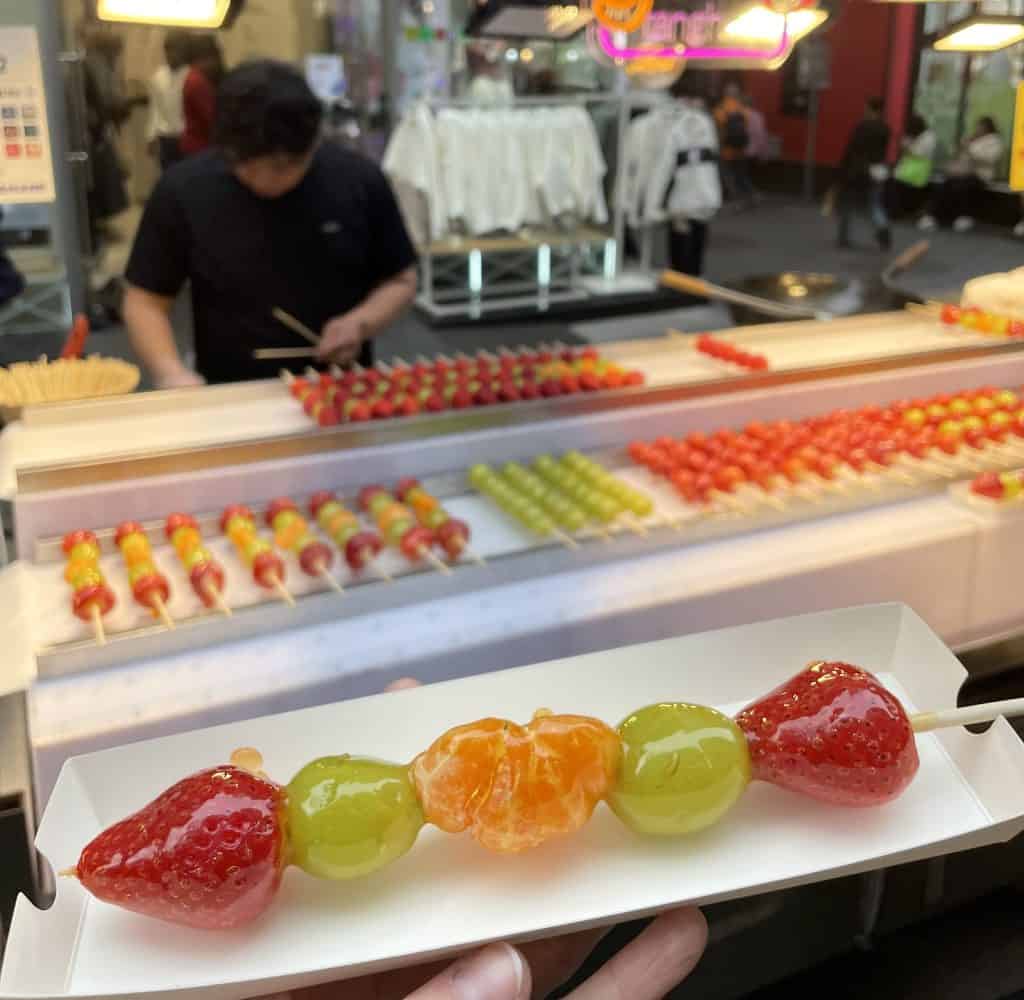
- Tanghulu (탕후루): Sweet treats made from fresh fruits, skewered, and then coated in melted sugar. Originally from China, they have gained popularity and are very easy to find in South Korea. The sweet crunch of the hardened sugar juxtaposed against the tangy juice of fresh fruits offers a vibrant and tasty clash of flavours, colours and textures.
- Raw Mushrooms (생버섯): There are plenty of savoury mushrooms to snack on in South Korea. The variety of sizes, tastes and textures are wonderful. A few options include: Neutari (느타리 버섯) oyster mushrooms, Saesongi (새송이 버섯) king oyster mushrooms, Paengi (팽이 버섯) enoki mushrooms, and Pyogo (표고 버섯) shiitake mushrooms.
- Roasted sweet potato (구운 고구마): These can be found easily and are often sold by vendors on the sidewalks and in convenience stores. They are hot, sweet, and ready to eat. Particularly great for cold or rainy days.
- Roasted chestnuts or ginko nuts (군밤 또는 은행나무 견과류): Most frequently sold by street-side vendors, these large, starchy nuts are mildly sweet and a little chewy with a hint of smokiness. I used to binge on them when I was visiting Istanbul; they’re a great snack and filling too!
- Pork belly or skirt meat — as long as not coated in flour or cooked with gluten-containing sauces (삼겹살 또는 갈매기살 — 단, 밀가루를 입히면 안되고 글루텐이 함유된 양념이 사용되었으면 안된다): Pork meat is often found at traditional BBQs where you cook the meat on a personal grill at your table. Do make sure that the grill is clean and the meats have not been marinated. Restaurants can often provide salt and pepper for seasoning, and some will even allow you to bring your own dipping sauces if the allergy is explained and permission is asked in advance. Side dishes served with these meats often contain red pepper paste or soy sauce so be sure to check.
- Fried or grilled mackerel — as long as it isn’t breaded or marinated (고등어 튀김 (단 — 빵가루나 밀가루를 입히면 안되고 양념되었거나 절였어도 안된다): This salty mackerel side dish is one of the most common fish dishes in South Korea. The fish is simply salted and either grilled over an open flame or pan fried. Some places do add a flour dredge, so it’s important to confirm before consuming.
- Plain rice (흰 쌀밥): As with elsewhere in Southeast Asia, plain white rice can be found in restaurants and in microwaveable containers at convenience stores. Double check the ingredients just to be sure, but it’s almost always gluten free.
- Steamed egg with scallions (부추 달걀찜 ): A savoury egg dish with custard-like texture that some people compare to silken tofu. Naturally gluten free as long as soy sauce isn’t used.
- Mild kimchi in water — only if flour paste wasn’t used (나박 김치 — 단, 밀가루 풀이 들어갔으면 안된다): This less spicy version of the traditional fermented Korean condiment and side dish can be found without gluten, but be sure to double check the ingredients. Often crunchy and tangy it makes a compliment to many a meal.
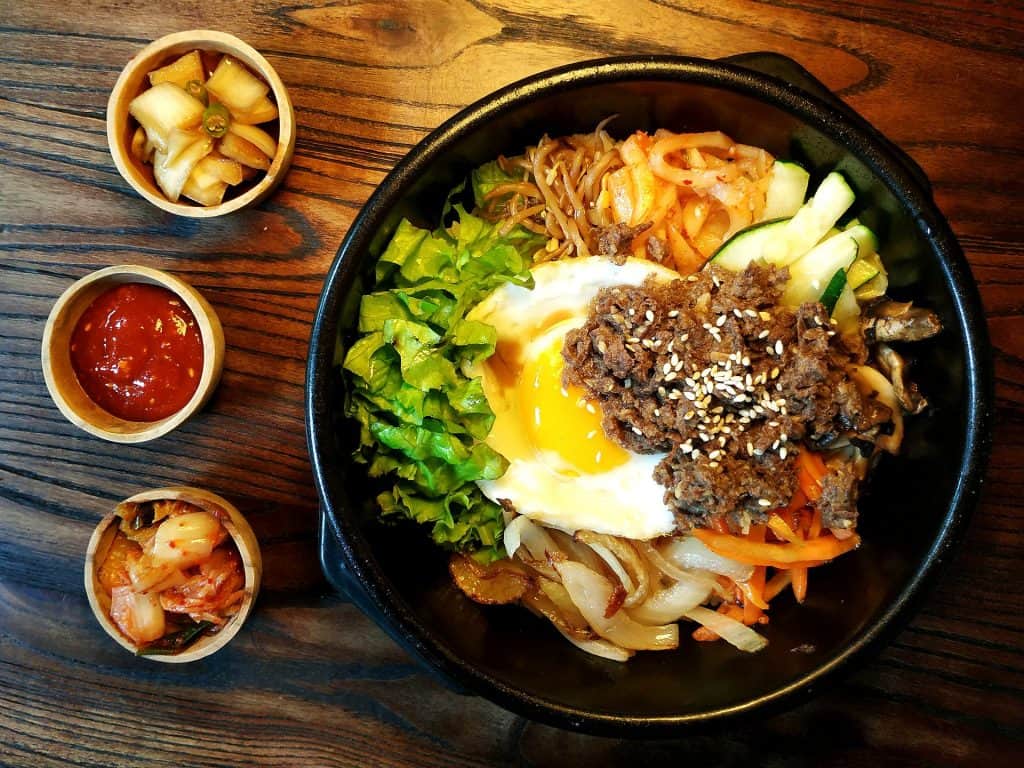
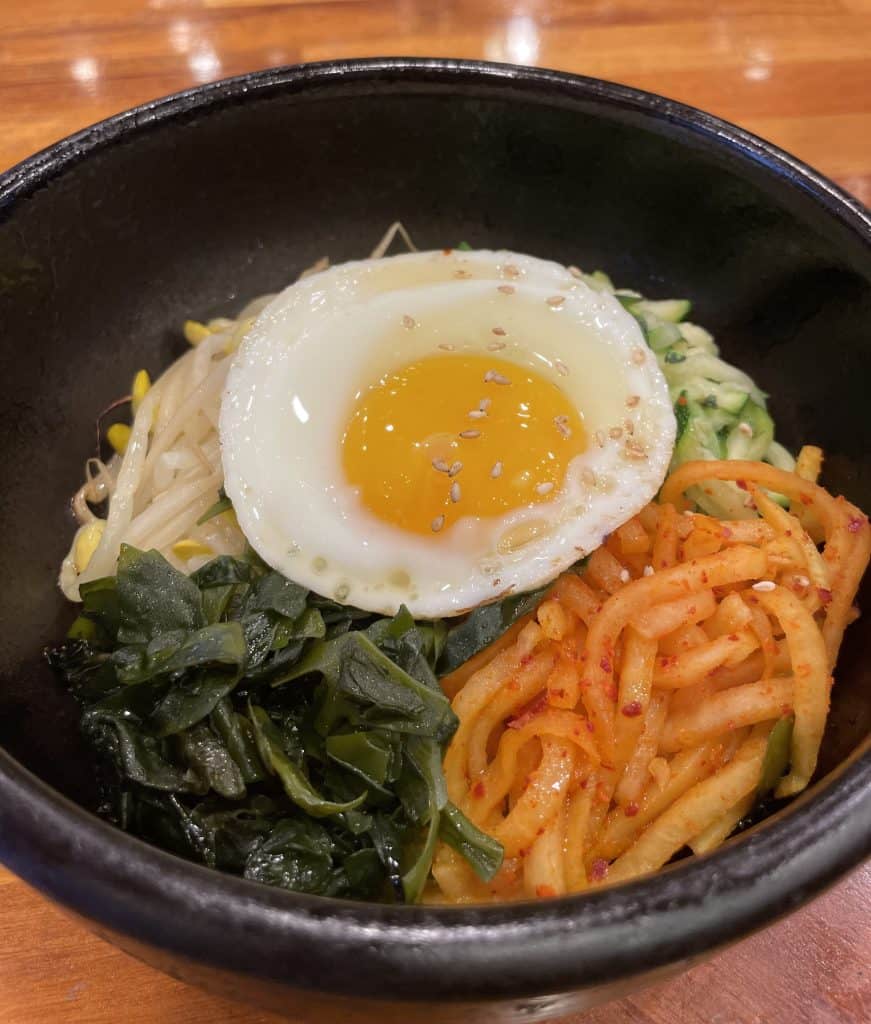
- Bibimbap with white rice — without the red pepper paste and be careful of meat and veggies (namool) to make sure they’re not marinated in soy sauce (고추장을 사용하지 않은 흰 쌀밥으로 만든 비빔밥 —단, 나물이 간장을 사용해 조리되지 않았을 경우): A dish of rice covered by a variety of fresh, marinated, and sautéed vegetables, meats and often a cooked or raw egg. Make sure to order it without the red pepper paste, and check in about the marinades to make sure the meal is safe. It has a savoury and tangy taste with a fun variety of textures and flavours. I’ve eaten a lot of bibimbap in my life, and it’s a warm, comforting, and satisfying dish.
- Dolsot bibimbap made with white rice, if meat is unmarinated (흰 쌀밥으로 만든 돌솥 비빔밥): Bibimbap, like above, but this version is served in a heated stoneware pot, so the rice gets crunchy at the bottom and continues to cook the ingredients when you mix them. Delicious!
- Hwedeopbap made with white rice — only if gochujang or soy sauce wasn’t used (흰 쌀밥으로 만든 회덮밥 — 단, 고추장 또는 간장으로 만든 양념장이 들어가지 않았을 경우): a bibimbap bowl combined with raw fish, sometimes referred to as the Korean version of poké. Often contains salad greens, with julienned carrot, and cucumber. Make sure to leave off the red pepper paste.
- Yachae juk, a vegetarian rice porridge made with white rice (흰 쌀밥으로 만든 야채죽): Typically a savoury and creamy blend of rice and finely chopped vegetables. Can be made gluten free. They sell a variety of microwavable porridges and soups at the convenience stores, just be sure to read the ingredients carefully.
- Seolleongtang soup — ask without noodles: (설렁탕 — 면이 들어가는 않은): Ox bone soup that is made by simmering ox bones for hours (sometimes days), until it creates a milky broth. Can include cuts of meat as well as Korean radish and green onions. Just be sure to avoid any versions containing noodles as they are likely to contain gluten.
- Samgyetang soup (삼계탕): Ginseng chicken soup often involves an entire chicken or quail that is stuffed with glutinous rice, garlic, ginseng, jujube and other ingredients, then simmered to create a rich broth and tender chicken meat. Always check ingredients but this is often traditionally gluten free.
- Dubu (tofu – 두부): Tofu of different varieties is readily available all over Korea. Its light, smooth flavour makes it the perfect vehicle for seasonings. It can be eaten steamed, fried, or braised and is a great source of protein. You must, however, be sure the tofu you get hasn’t been marinated in any gluten-containing sauces.
- Korean Corn Cheese Gratin (콘치즈 그라탕): This dish is creamy, cheesy, slightly sweet and delicious, and microwave versions that were gluten free could be found at different convenience stores. Be sure to read the ingredients to confirm no wheat was used. Most we found were safe but a couple included wheat, likely as a thickener.
- Sesame oil as a dipping sauce ( 참기름): Sesame oil is a great option to add some depth to your dish when the more traditional Korean sauces are off-limits.
- Yeot (엿): This Korean pumpkin taffy is harder than saltwater taffy but softer than toffee or toffee brittle, and can also come with peanuts or other ingredients. Vendors use oversized, square edged scissors to break it into bite sized chunks while using the clanging of the scissors to attract attention.
- Tteok (떡): these traditional pounded rice cakes are similar in texture to mochi. They’re nearly always made of rice without gluten, but do double check. Soft, slightly sticky, and very chewy, they are incorporated into a wide variety of dishes, from spicy to savoury to sweet. Sometimes stir-fried, grilled, or stuffed the potential is nearly endless —and as always, confirm what it’s added to does not have gluten.
- Bingsu (빙수): This Korean shaved ice dessert comes with a variety of toppings. The traditional version involves sweetened condensed milk, sweet red bean paste, and Tteok rice cakes . Alternate versions can include fresh fruits, green tea, and various syrups. It is often gluten free but always check the ingredients before trying. We found a great little Tea House in Seoul with amazing Bingsu. See below for details.
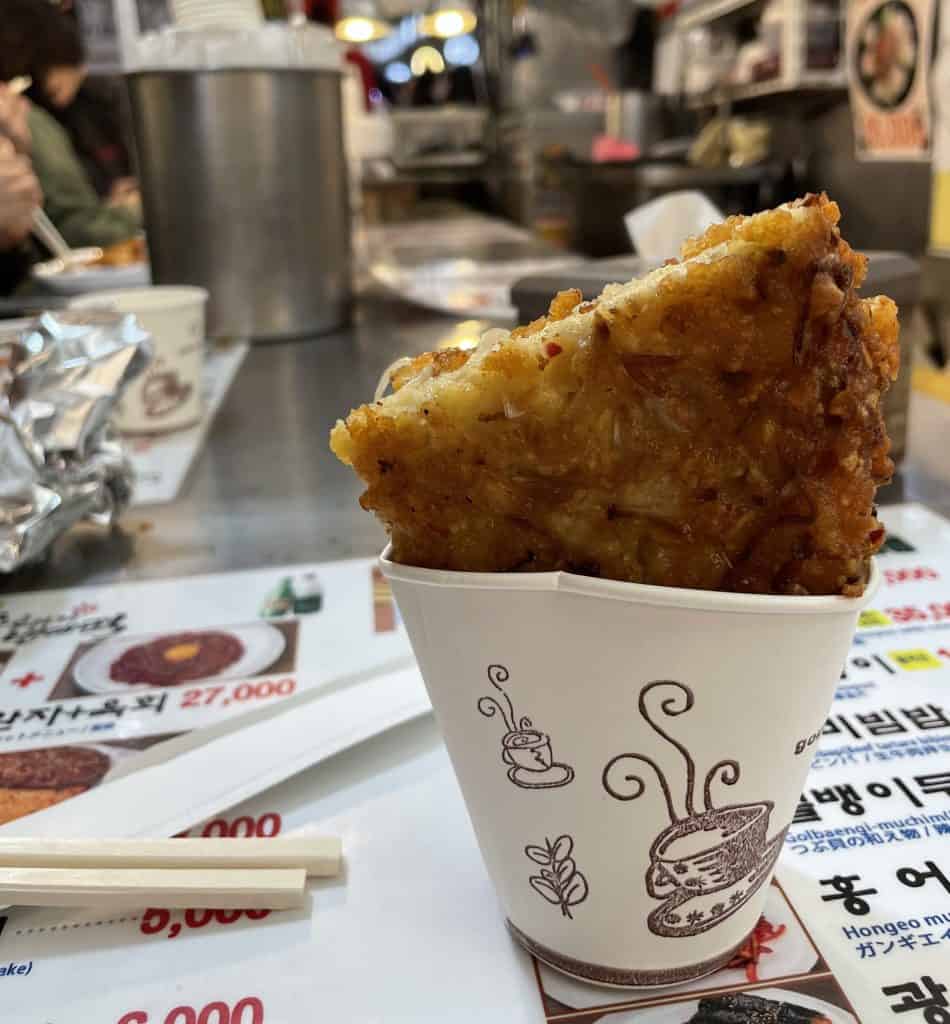
- Mung bean pancakes — only if made with 100% mung bean (녹두빈대떡 — 단, 밀가루가 전혀 사용되지 않고 녹두가루만 사용되었을 경우): These pancakes are mildly salty with a crunchy, fried exterior. They make great snacks, and have an interior that is vaguely reminiscent of egg foo young, an omelette dish found in Chinese cuisine, without the gravy.
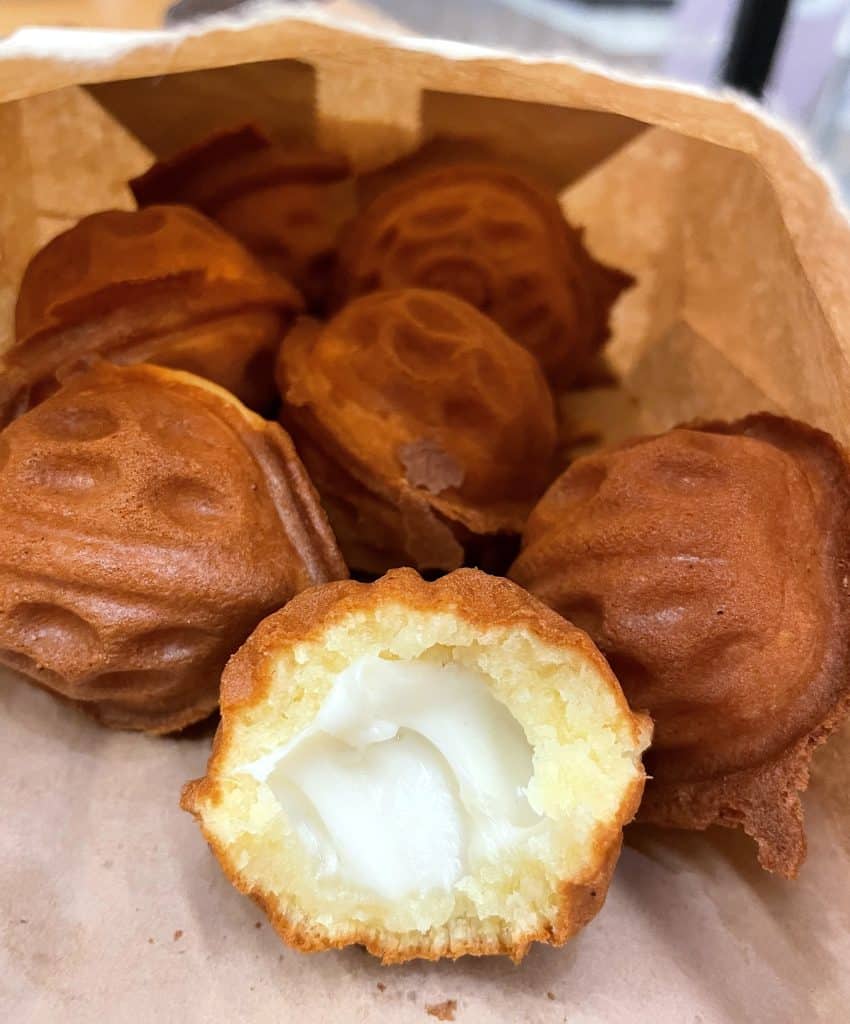
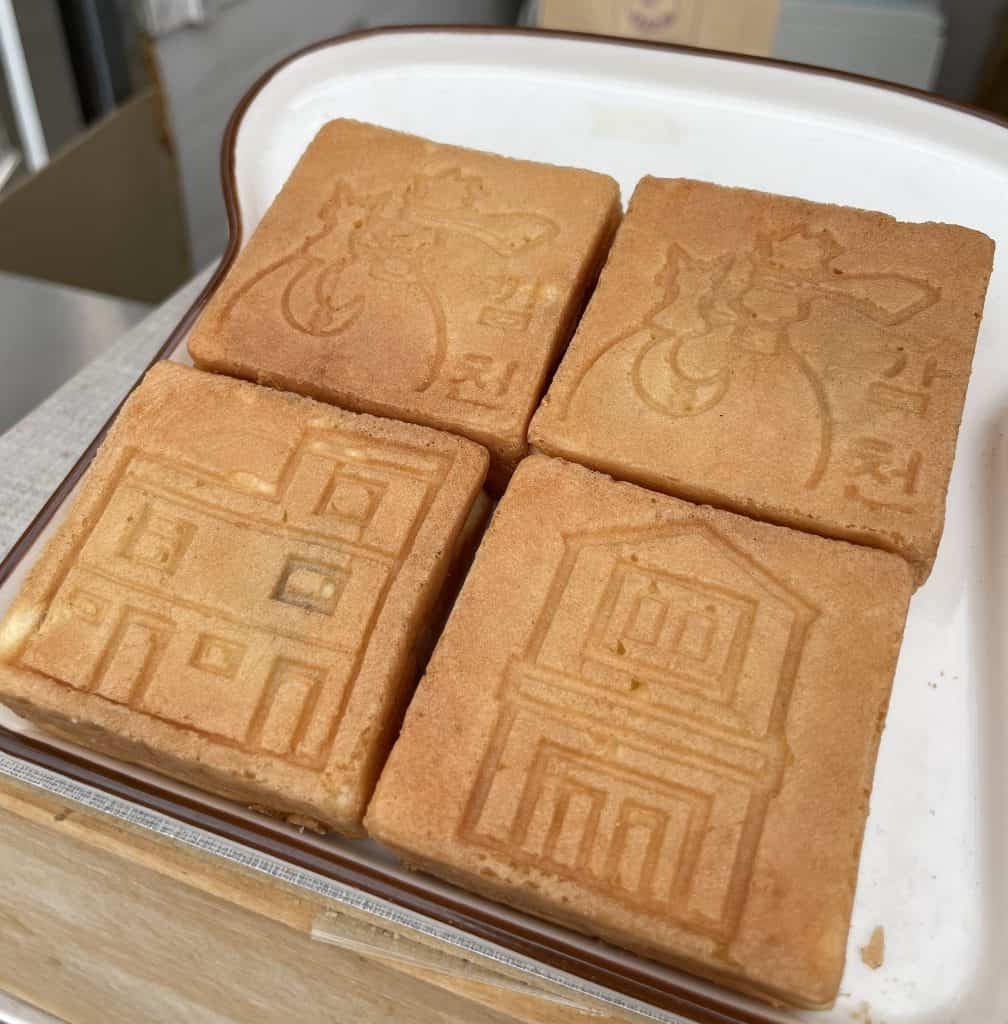
- ONLY IF MADE GLUTEN-FREE — 10 won bread (십원빵): This dish usually contains gluten but there are dedicated, rice flour only stands in Seoul Busan — see recommended restaurants below for details. This mildly sweet batter is cooked in molds like a waffle. It usually has melted cheese inside but other fillings can include sweet red bean paste, corn and cheese, and custard.
- ONLY IF MADE GLUTEN-FREE hodu-gwaja (호두 과자): These sweet walnut shaped pastries are often filled with red bean paste, cheese, custard, chocolate and sometimes sweet mung bean paste. Make sure to ask about the ingredients to ensure that wheat flour isn’t used. JeJuice has 100% gluten free versions in Seoul as do some of the market stalls around the city.
- Soju (소주): South Korea’s national drink, this distilled alcohol is generally made from rice and naturally gluten free. Often compared to a smoother version of vodka, many people note its mildly sweet taste and clean finish. Alway double check though because there are versions of Soju that are based on other grains and may not be GF.
Shopping options and gluten free restaurants and bakeries in South Korea
For many years now, I have been disabled by a spinal CSF leak and mostly bed bound. My life of travel changed overnight from one procedure, a lumbar puncture — one that treatment has not managed to fix. While I can’t travel myself, I’m grateful to have a community of readers who are able to do so. This list of restaurants and shops is compiled primarily by reader Montana, as well as other readers who wrote in to share their favourites.
Montana notes the following about her trip:
My husband, David, and I recently returned from a month-long trip through South Korea and Japan. I’m not going to lie, I was really nervous. My husband was diagnosed with celiac disease in early 2022 and this was only our second, big, international trip since the diagnosis. It was also our first time trying to navigate a gluten free diet without speaking, at least a little, of the local languages (not to mention the lack of a shared alphabet).
For months I’d been scouring the internet for guides, tips and tricks to prepare for the notoriously sneaky, gluten-filled foods of this part of the world. We’d successfully used Jodi’s guides and GF translation cards in Portugal, Spain and Morocco in 2024, so I reached out to ask about South Korean options after purchasing her card for Japan.
Having returned home, I am happy to report that we managed 2 weeks in South Korea with only one instance of noticeable glutening. South Korea was truly a joy to visit and we hope that the following collaboration between Jodi, David and I will help you as you venture into the beautiful and vibrant culture of Seoul, Busan and beyond.
In addition to Montana’s suggestions, tried and true, I’ve also added additional 100% gluten free options. As with all of my guides, this is a living tree that I update as new spots pop up (or closures happen).
Grocery stores and shops selling gluten free products in South Korea
For those who can do cooking from home or staying longer in South Korea, gluten free products are available at bigger chains and some smaller shops.
Bigger grocery chains include:
- E-mart (bigger sibling to the emart24 convenience stores)
- Lotte Mart
- Homeplus
Larger chains will often have international and organic food sections, making it more likely to find GF options. As with all grocery chains, product availability will vary depending on location so you’ll just have to check in each store. Generally, the larger, more metropolitan the area, the higher the chance of finding GF options.
Another option is to order food items from Coupang (the “Amazon of South Korea”) and iHerb. If you are set up for online shopping and have a mailing address this could be an easy and efficient way to get some of your groceries.
Lastly, although a health and beauty shop may not be an intuitive source for GF food products, Olive Young is reported to have GF protein bars and snacks for sale. (Note: the link is for the global store and may vary somewhat from products available at physical stores).
Gluten free restaurants and bakeries in Seoul
Note that references to Naver below are a reference to Naver map, essentially South Korea’s primary listing site for restaurants and cafes and other food and drink, like Yelp and Google Maps had a baby. It offers hyperlocal information, user reviews, menus, prices, and directions.
- Sunnybread (or SunnyHouse):This 100% gluten free cafe serves a wide variety of items including waffles, sandwiches, pizzas, cupcakes, salads, ciabatta and bagels for purchase, freshly baked cookies and delicious matcha latte.
- 앙베어베이크 angbearbake (gluten-free) is, as the name suggests, 100% gluten free. This cozy little café serves Instagram-worthy desserts, including scones, sponge rolls, tiramisu, tarts, cakes, and more. There’s also a good selection of coffee drinks, including a few inventive latte flavours. Bonus: the café is on the second floor, so there’s a nice view of the street below, too!
- 모닐이네하우스 monil2_house Gluten free bread & dessert café: A staple that shows up on nearly all blogs and Facebook recommendations, visited by Montana during her trip This 100% GF bakery offers a wide variety of baked goods including breads, cakes, bagels, and churros, as well as breakfast items and sandwiches.
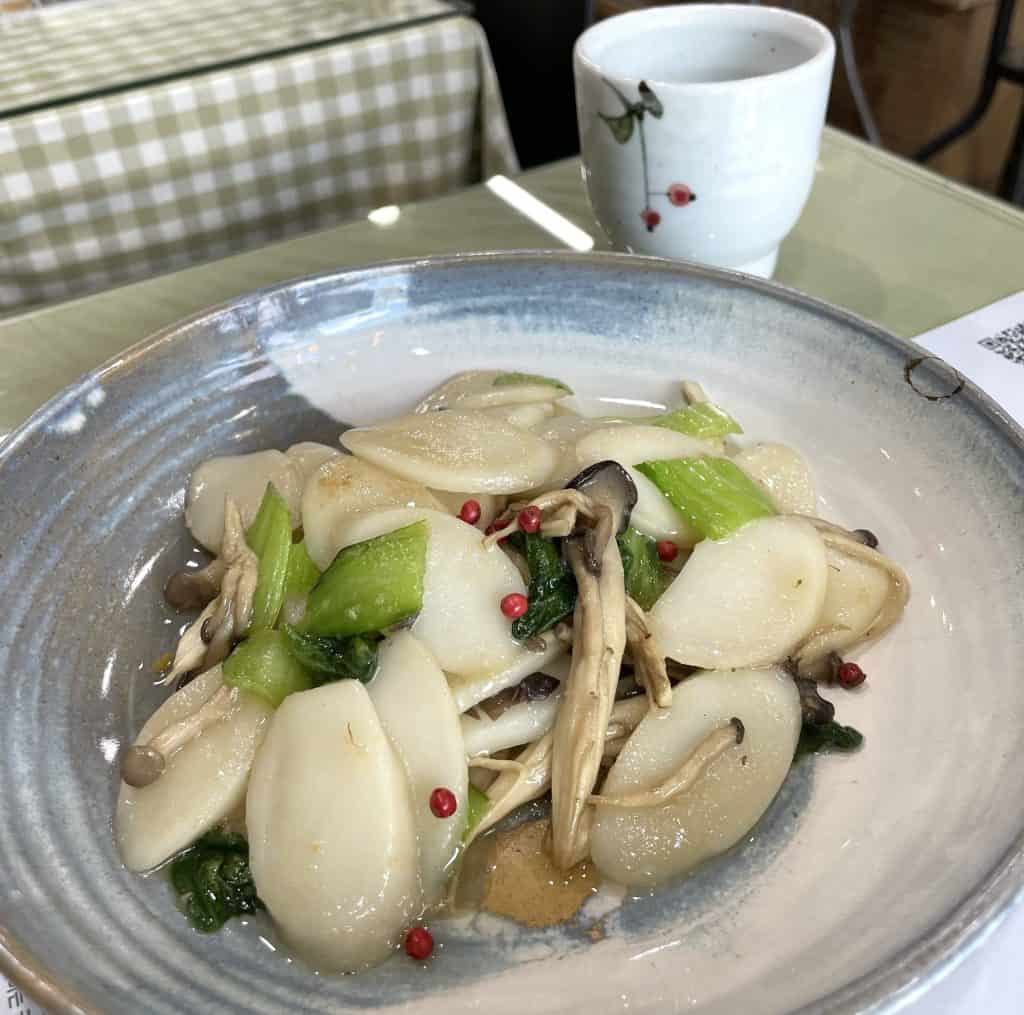
- Gmanim (Google Maps link here); listed as Mananim Recipe on Naver: This restaurant, serving stir fry and soup dishes, has gluten free items marked on its menu and the owner/cook understands gluten restrictions well. This food was among Montana’s absolute favourites. One of their dishes was a non-spicy tteokbokki, which offered a great chance to try traditional Korean rice cakes without the red pepper paste that makes so many versions off limits.
- Hidden Gem:If you have a sweet tooth this GF and vegan chocolate shop might be for you. They also sell cookies, coffees and teas. Confirm flours used are fully gluten free, not cut with wheat.
- Sky Gimbap (Google Maps link): A tiny gimbap (seaweed wraps, much like sushi) shop with about 7 seats and takeout available, Sky Gimbap’s owner and chef understands gluten restrictions and was able to specify which menu options are safe. It was Montana’s favourite gimbap of the trip. There were vegetarian and fish options available when we visited.
- Mont Rice Cake 몽트 쌀케이크 is found in the Gangnam District of Seoul, and is a cute little spot to try some gluten free Korean sweets. Using rice flour in their cakes, the bakery is dedicated gluten free and has a large menu with a lot of variety, including melon cake, Basque cheesecake, choco pie, and much more. That being said, definitely try the signature strawberry cake! There’s also a good selection of teas, coffees, and smoothies to choose from.
- 6DayChicken is a cozy restaurant popular with locals and tourists alike. 100% gluten free, this is the place in Seoul to try Korean fried chicken with confidence. Made without wheat flour, the gluten free establishment even holds a patent for their unique nurungji-coated chicken recipe, a must-try when you visit (nurungji is scorched or crunchy rice). Other items on the menu include sweet & sour chicken, sesame chicken, sweet potato fries, wings, and, of course, gluten free soy sauce.
- nageunae 나그네 (Naver link) is a fully gluten free restaurant that offers an assortment of Korean food, including gomtang, a traditional soup. Other dishes include savoury pancakes, meatballs, fish dishes, and more. An excellent choice for a comforting meal made even more comforting by the fact that it’s gluten free.
JeJuice (Google Maps link): Montana hunted down this coffee shop chain specifically because they have 100% gluten free hodu-gwaja (walnut and red bean pastries) with a variety of filling, and went to the branch near Gwangjang Market. The report: it was absolutely worth it.
- 853: Montana notes that she did not get a chance to visit this Korean BBQ but read multiple reviews, Facebook posts and blogs that describe staff as being knowledgeable about celiac disease and able to provide input on safe menu options, so she wanted to include it.
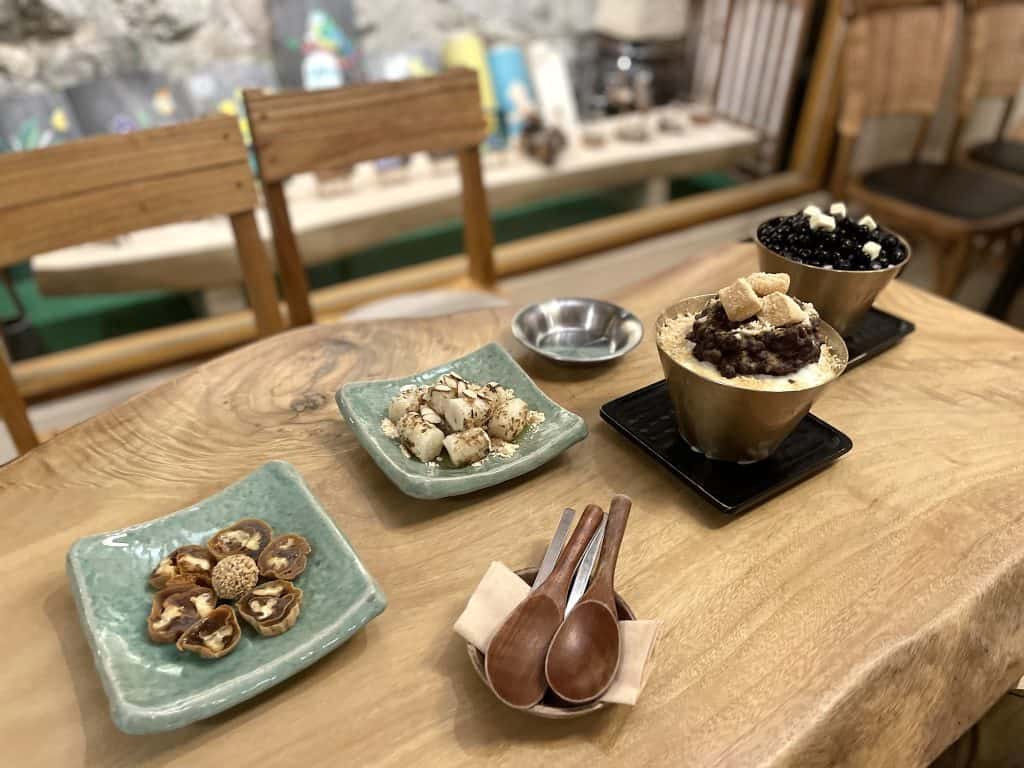
- Namusae Tea House(Google Maps link); listed as Woodbird Teahouse on Naver: While bingsu (a popular Korean shaved ice dessert made of finely shaved ice topped with sweet ingredients like red beans, fresh fruit, condensed milk, and rice cakes) can be found at multiple locations and is often gluten free, this charming tea house near Insadong Culture Street in Seoul is a great spot to try it. Serving a variety of teas and sweets, the staff was happy to read the Korean gluten free card carefully and were able to make recommendations about what menu items were safe. In addition to bingsu they also had GF dried persimmons and tteok (떡) grilled rice cakes served warm with a syrup drizzle.
- Ketobbang: A keto-style bakery that offers sugar free and GF baked goods like pound cakes, cookies, scones and cheesecakes.
- Café interact: Coffee shop and bakery with cookies, cakes and pastries.
- Sweet Provision Keto Bakery: Yet another ketogenic diet targeted coffee shop-bakery combo, with gluten free goods such as cakes and tarts.
- Gwangjang Market: There is more than one place to find mung bean pancakes but these were our favourites. There are multiple vendors and we tried to find a stall that sold only pancakes. Montana used my GF card and noted that vendors did their best to read it carefully, even though the market was extremely busy. There are also plenty of fresh fruits and vegetables and dried seafood available here as well. With markets like these, it is more likely for CC to occur, and caution is warranted.
- A Twosome Place Cafe: A chain with multiple locations in Seoul and around the country. They have a gluten free strawberry chocolate cake that was delicious.
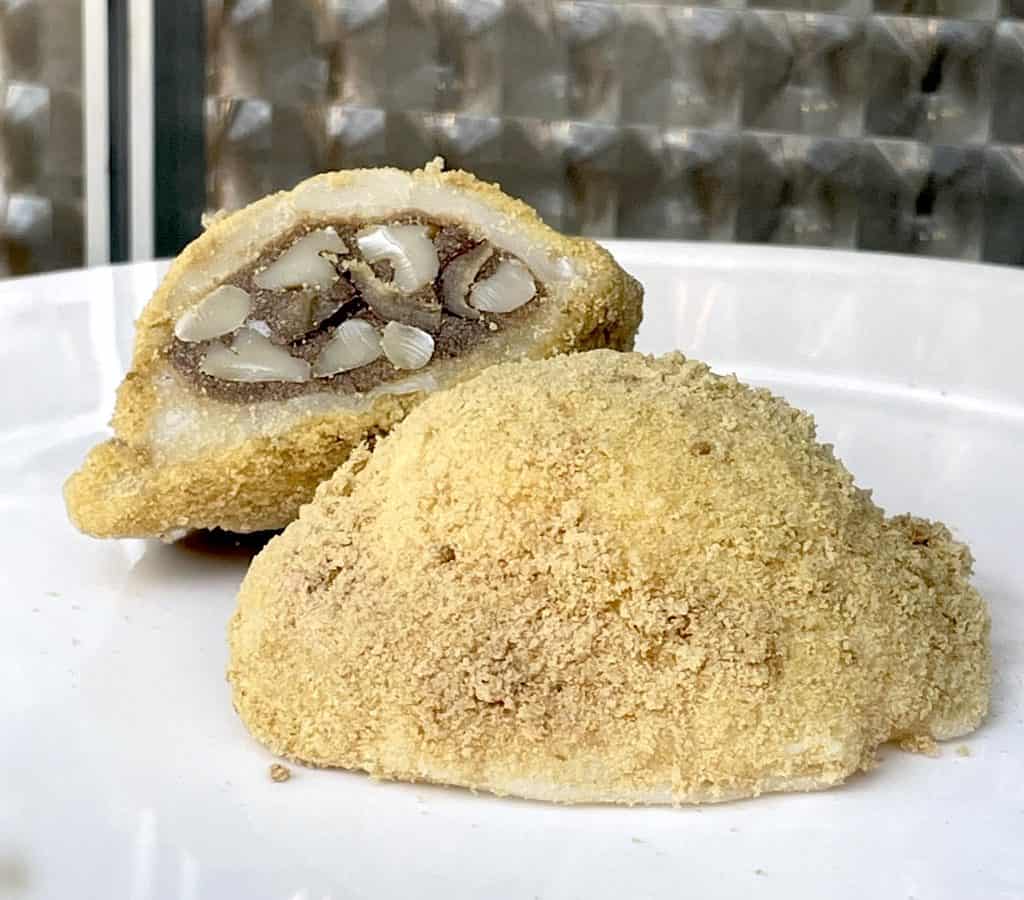
- Biwon Tteokjip: An adorable and historic shop near Buckchon Hanok sells several varieties of Tteok rice cakes in dessert form that Montana was assured were gluten free. Confirm with them when you visit that their rice cakes are made only with rice and other safe flours, and not bolstered with strong flour 강력쌀가루 (made with wheat). Started in 1949 this small, family run, business is reported to have ties to the Palace kitchens. They have a variety of traditional flavors including: Walnut, Chestnut, Pinenut, Jujube, Citron and White Bean.
- The 10-won-shop-that-shall-not-be-named (Naver link): 100% GF 10 won bread at the corner of Namdaemun-ro and Myeongdong 2-gil, just outside a The Plain jewelry shop. For those unfamiliar: 10 Won Bread (sibwonppang) is a popular Korean street food and is shaped like a giant 10 won coin. I cannot find the name of this tiny food stall anywhere; however, if you search for “The Plain” on Naver and go to the 85-6 Myeong-dong location, delicious and rice flour-filled 10 won bread will be just outside the entrance. You can even see its bright yellow signage on the Naver street view.
Gluten free restaurants and bakeries in Busan
- MeanDri is a 100% gluten free bakery in Busan that’s a great spot to pop in for lunch. Enjoy GF sandwiches, muffins, buns, bread, and a fantastic selection of desserts. The restaurant is not only gluten free but also vegetarian, with many vegan options. The tiramisu is popular for a reason!
- Eonni cafe(Naver link): near the centre of Bujeon Market there is a shop called 언니카페 “Coffee and Dessert”. I have not been able to locate it on google maps but you can find it using Naver, linked above. They sell multiple flavours of 10 won bread including red bean, custard, cheese, cheese and corn among others. 100% gluten free batter, and delicious. Great to purchase for snacks on the ferry between Busan and Osaka, too.
- Woojung Dolsot Bibimbap (located in Seomyeon): A bibimbap restaurant with traditional and dolsot versions available. The chefs were knowledgeable about gluten restrictions, and there were several menu options available to choose from. There are several locations around the city that likely have similar menu options, but as Seomyeon was the only location visited, please confirm at any others prior to ordering.
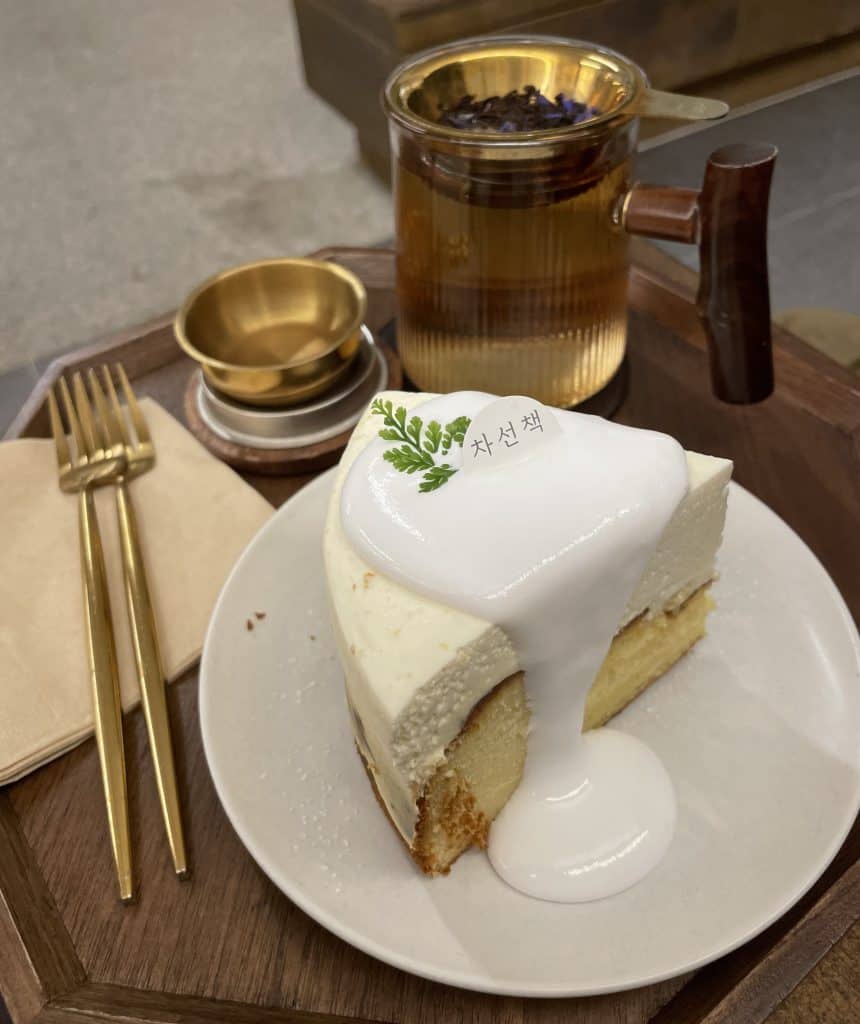
- Chaseonchaeg: A bakery with dedicated GF cakes that are stunning. Choose unique flavours including: milk tea chocolate, pumpkin cheesecake, Yuzu and Mugwort. There are at least 2 locations, one near Busanjin and one in Suyeong-gu. Please note that the bakery near Suyeong-gu is spelled Chaseonchaek on Google Maps.
- 부산광역시송정동 십원빵 10元 (Google Maps link); listed as Gyodong Uri Rice Sibwon Bakery on Naver, this is a another spot for gluten free 10 won bread. It is located down the street from the Haeunde Blueline Park – Songjeong Station.
- 감천어린왕자빵 Gancheong Little Prince Bakery (Naver link): Sells its own version of 10 won bread. They even pulled out the bag of batter so Montana could could translate the ingredients and confirm it was safe.
Gluten free restaurants and bakeries elsewhere in South Korea
- Matheson: In case you’re on the airport side of things in Incheon and need some coffee and GF desserts.
- Kokulu Bagel has an excellent selection of GF bagels and is also a great stop when you’re in Incheon. This 100% gluten free bakery has a tasty selection of bagels and other baked goods, including desserts, and there’s also a solid tea and coffee menu. The rice-flour bagels are the star of the show, however, and are always fluffy and flavourful. Don’t skip the homemade cream cheese, either, which comes in options such as green onion, apple cinnamon, blueberry, and fig.
- 교동십원빵 전주한옥마을본점 (Google Maps link) is an excellent choice when you’re in Jeonju, recognized as a UNESCO Creative City for Gastronomy and the birthplace of bibimbap. Thankfully, the bakery is 100% gluten free! All items, including all of their pancakes and waffles, are made from rice flour. Enjoy sweet and savoury options, perfect for a quick snack.
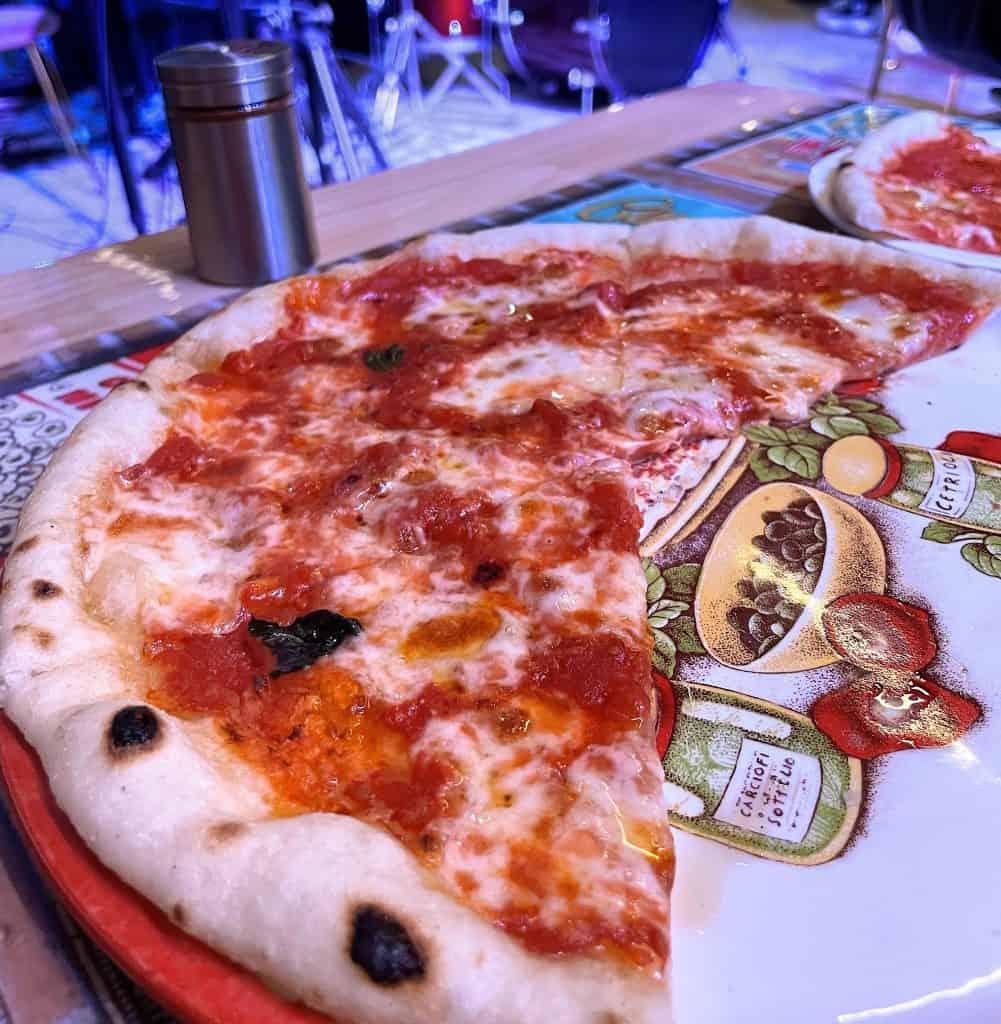
- 237 Pizza: A little out of the way but with fully GF pizza options this is a great place to grab a bite to eat when visiting Seongdong-gu.
Generally, and as with elsewhere on my travels, Indian restaurants are a great option for gluten free dishes if you avoid the naan, and make sure hing is not used in the seasonings (as it is often cut with wheat).
And finally: it’s not a restaurant specifically, but Montana recommends the Facebook group Wheat and Gluten-Free in South Korea for recommendations and tips.
What foods are not gluten free in South Korea? — 안전하지 않을 가능성이 높은 음식
The basics to watch out for, in Hangul script:
- Wheat: 밀
- Bread: 빵
- Rye: 호밀
- Barley: 보리 or Barley Malt: 맥아/엿기름
- Oats: 귀리
- Strong flour: 강력쌀가루 (often added to tteok (rice cakes) and hotteok (pancakes) to provide more elasticity and chewiness than pure rice flour alone. It’s important to make sure rice products don’t have strong flour or other wheat flours blended in.
In particular, watch out for the following, as they are commonly used and have wheat unless expressly stated otherwise. Many jangs have barley malt in them and will be unsafe.
- Ganjang (간장): Soy sauce
- Gochujang (고추장): A bright red, spicy, pepper paste that you find on almost everything — that unfortunately contains gluten, usually in the form of malt barley powder or wheat.
- Doenjang (된장): This is a fermented soybean paste that’s similar to Japanese miso but with a more concentrated flavour. It often has wheat flour as a filler.
Also to watch out for:
- Barley tea (보리차 or 보리를 넣은 물): Heated water that contains barley
- Bulgogi marinade (불고기 양념): A typical BBQ marinade with sweet, spicy and umami flavors often used on beef before grilling.
- Marinated or salted/brined beef, pork or vegetables (양념되었거나 절인 쇠고기, 돼지고기, 채소): Soy sauce and red pepper paste are commonly found in marinades making many South Korean foods off limits.
- Cold noodles in broth or sauce (면 종류 국물 또는 비빔): Generally wheat based noodles and/or in a broth that contains soy sauce.
- Sesame leaf kimchi (깻잎 김치): Perilla leaves serve as a base for this spicy and slightly sweet side dish can include flour pastes as a thickener.
- Cabbage kimchi (밀가루가 들어간 양배추 김치): Another spicy side dish that is frequently thickened with flour.
- Stir-fried sweet potato noodles ex: japchae (당면 예: 잡채): While these mild and slightly sweet noodles themselves are sometimes gluten free, the sauces they are fried in usually aren’t.
- Doenjang-jjigae (된장국 및 된장찌개): This savoury soup is often based on Doenjang (fermented soybean paste) which generally contains wheat.
- Acorn jelly made with soy sauce (간장 양념이 된 도토리 묵): Again, soy sauce is the most common ingredient when it comes to gluten sneak attacks, and acorn flour is often not fully gluten free.
- Ganjang gejang (간장 게장): This dish is made from raw crabs cured in a soy-based marinade, and is therefore unsafe (though it looks delicious!)
- Tteokbokki rice cake dishes (떡볶이 종류): While the Tteok rice cakes themselves can be made gluten free, they are often served with soy sauce, and also thickened with flours that include wheat like strong flour 강력쌀가루 (a high protein wheat flour). They are also frequently doused in gluten-tainted red pepper paste sauce, Note: We did find a place that sold a Tteokbokki stir fry without the red pepper paste and a couple that sold Tteok as desserts that we were told were gluten free. See the restaurant recommendations above for details.
- Eomuk or odeng skewered fish cake (어묵 또는 오뎅): These wavy, fish based ribbons generally include wheat flour.
- Mandu dumplings (만두): The wrappers of these savory dumplings nearly always involve wheat flour.
- Fermented rice alcohol (막걸리): Rice wines are varied when it comes to GF safety. Many incorporate a starter called Nuruk that can be made from rice but is frequently made using wheat or barely. You should note that GF rice wine does exist. You’ll just have to be careful about which ones you choose.
